
 Čeština
 Deutsch


Brass Seppa Spacer
2x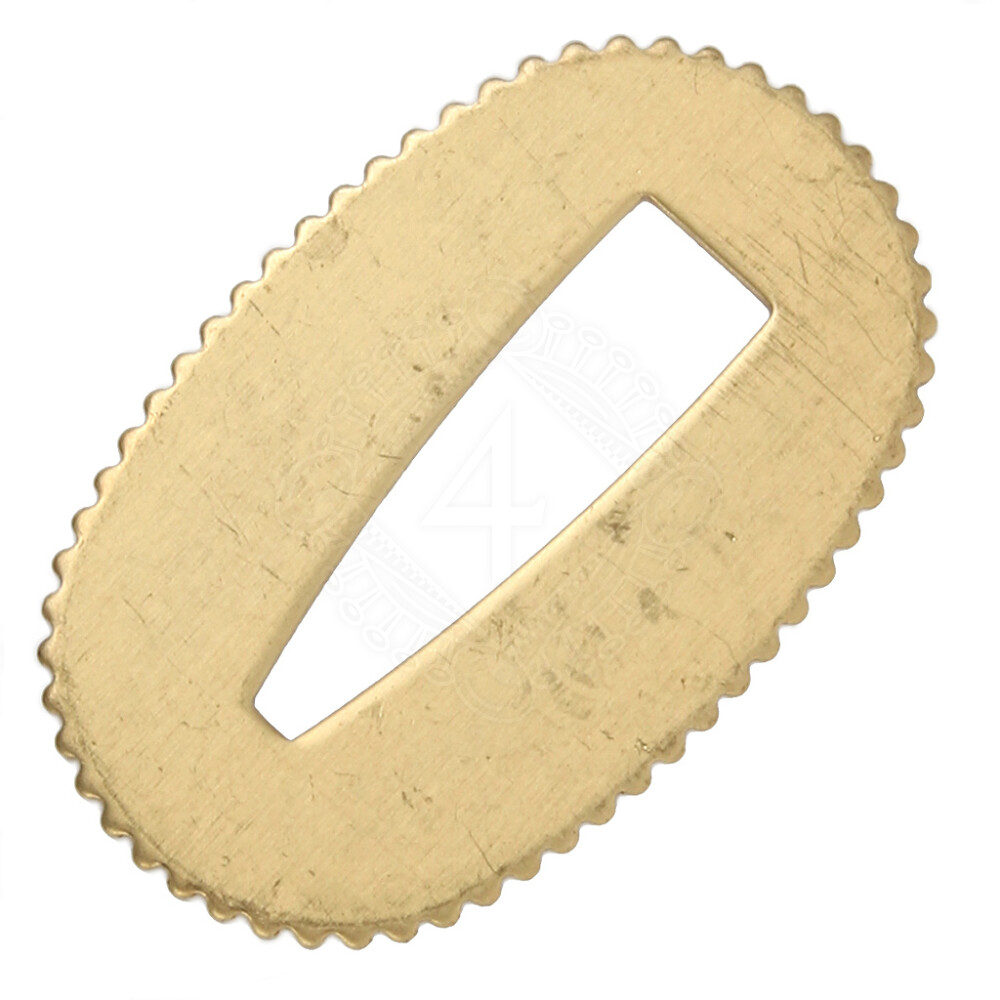
Building your own katana, restoring an older sword, or just looking to replace worn-out parts with new ones? The brass Seppa washer is an essential, though often overlooked, part of Japanese sword mounting (koshirae). This tiny but key component serves as a spacer placed on both sides of the guard (tsuba). Its main task is to firmly define the clearance between the tsuba, habaki (blade collar), and handle (tsuka), ensuring the rigidity of the entire assembly and preventing unwanted rattling when handling the sword. Further product information ...

 Delivery options
Brass Seppa Spacer for Katana with Coin Edge
Function and Workmanship
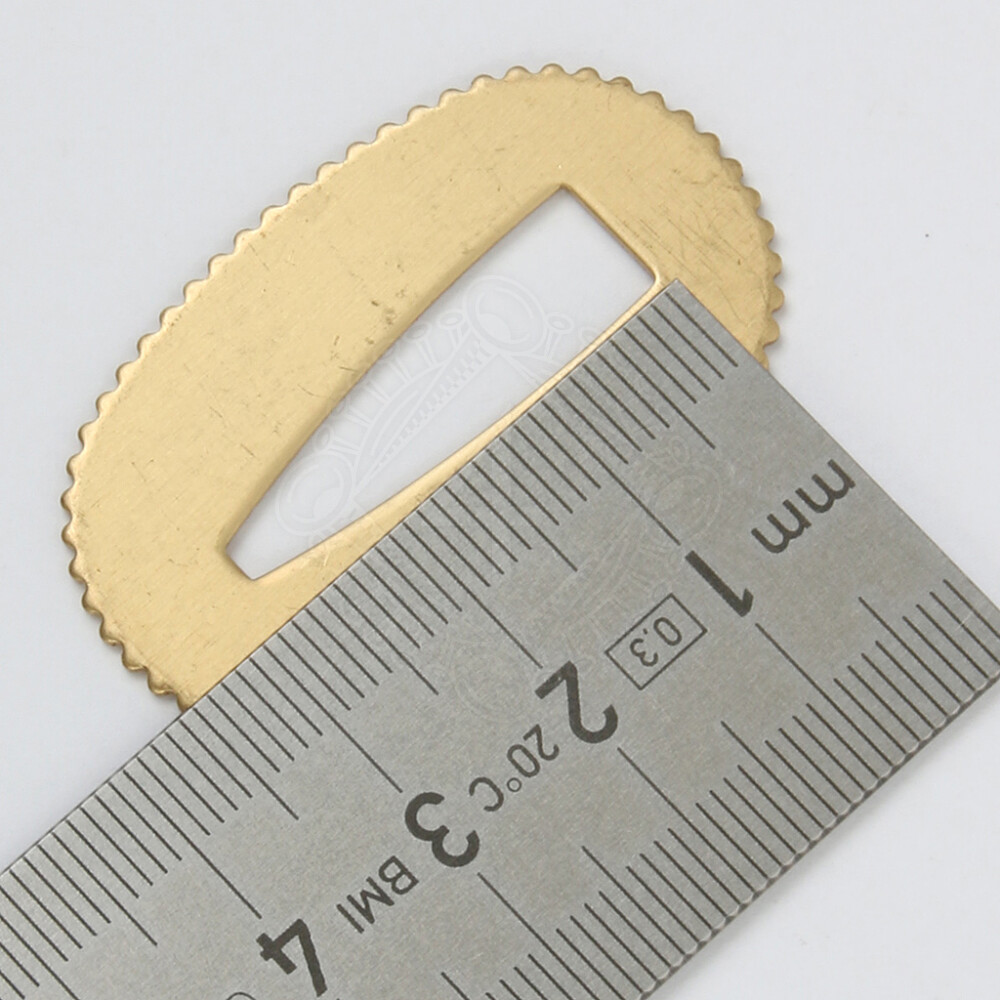
The Seppa is made of brass, a traditional material chosen for its softness relative to steel (it won't scratch the blade) while maintaining sufficient strength. This specific model features an oval shape with a finely serrated (coin edge) rim, a classic decorative element that adds elegance to the mounting. A wedge-shaped hole (nakago-ana) is cut in the centre, precisely following the profile of the sword tang.
Technical Parameters
| Material | Brass |
| Weight | approx. 6 g |
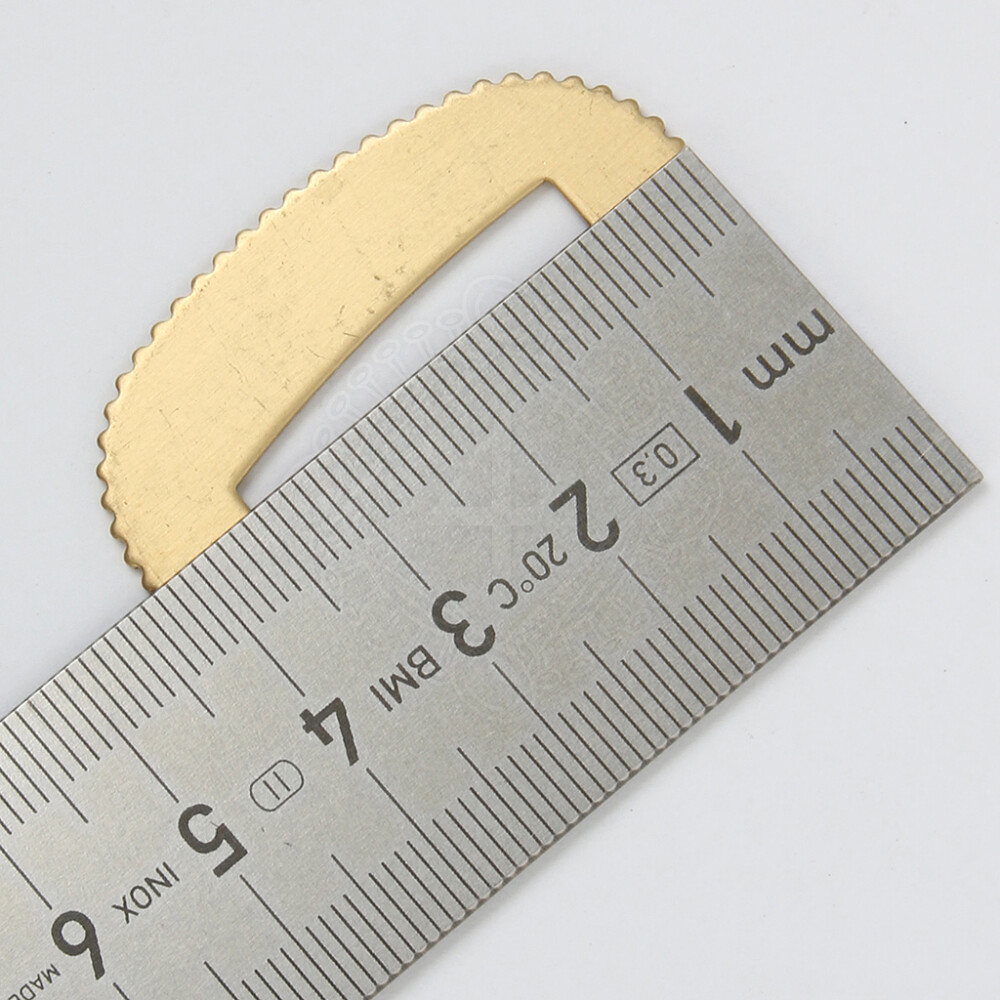
| Length | approx. 43 mm |
| Width | approx. 27 mm |
| Edge Style | Serrated (coin edge) |
Importance in Sword Construction
Although it may seem like just a "washer," the Seppa has an irreplaceable place in the sword hierarchy. During a cut (tameshigiri), it absorbs some of the vibrations transmitted from the blade to the handle. A correctly tightened mounting with fitting seppas is the foundation of safe sword use. If the tsuba on your sword moves, it is often enough to add an extra thin seppa or replace the existing one with a thicker one to eliminate the play.
Installation and Maintenance
- Installation: Seppas are installed in pairs. The first is slipped onto the tang (nakago) right after the habaki, followed by the tsuba, and then the second seppa before attaching the handle (tsuka).
- Adjustment: Since every tang is hand-forged and may have slight deviations, it may be necessary to gently file the inner hole of the seppa with a needle file to make it fit precisely in place.
- Care: Brass naturally oxidizes over time and darkens (acquires a patina). If you prefer high shine, you can polish it with metal polish.
This seppa is an ideal choice for restoration projects or for fine-tuning the look of your iaito or katana.
 Ověřený zákazník
Ověřený zákazník
Ověřený zákazník
We are here for you!





.3773623034.1696456237.png.webp)

.3773623034.1696456268.png.webp)
.3773623034.1696456247.png.webp)