 Čeština
 Deutsch


Traditional Samurai Sword Maintenance Kit
1x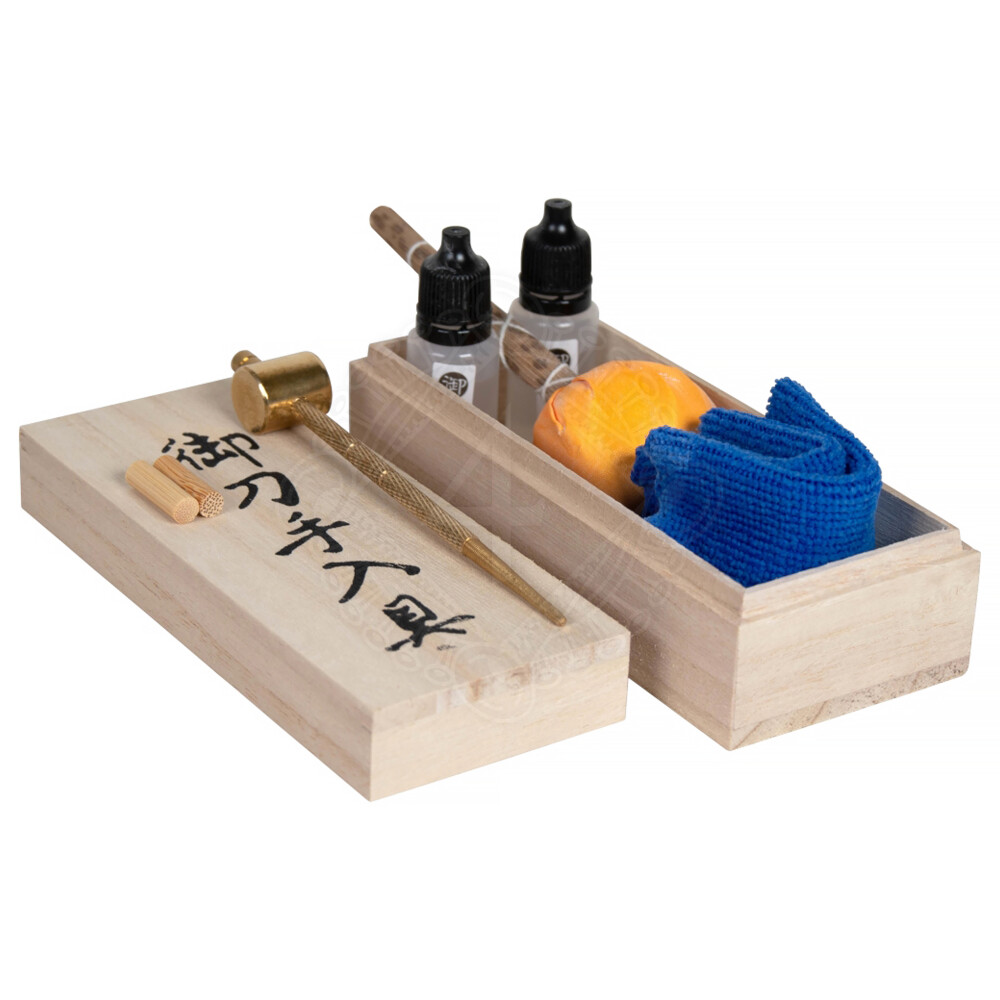
Owning a Katana, Wakizashi, or Tanto is not just about the joy of having a beautiful object, but also about the responsibility towards a piece of history and craftsmanship. To keep your sword sharp, rust-free, and to preserve its soul, it requires regular care. This complete maintenance kit in an authentic wooden box contains everything you need for the traditional cleaning ritual. It is essential gear for every responsible Japanese sword owner, allowing you to care for the blade exactly as samurai have done for centuries. This way, you protect your investment from the ravages of time and corrosion. Further product information ...

Traditional Samurai Sword Maintenance Kit in Wooden Box
Kit Contents and Tool Functions
Inside the lightweight wooden box featuring calligraphy, you will find a set of tools that play an indispensable role in maintenance:
- Mekugi-nuki: A small brass hammer. The top part can be unscrewed to use as a punch (awl) to push out the bamboo peg (mekugi) that holds the handle to the blade tang.
- Uchiko: A silk-covered ball filled with very fine polishing stone powder. By tapping it, the powder is released onto the blade, where it binds old oil and dirt while gently polishing the blade.
- Sword Oil: Two small bottles of oil (traditionally Choji - clove oil, or mineral oil) for preserving the blade against humidity.
- Cleaning Cloth: Used for spreading the oil and the final wipe-down of the blade.
- Spare Pegs (Mekugi): Wooden pegs for potentially replacing a worn connection in the handle (in a small container).
The Teire Ritual – Caring for the Sword's Soul
In Japanese culture, sword care is called Teire. It was not merely a boring duty, but a spiritual ritual. Samurai believed that the sword possessed its own soul (kami), and by caring for it, they showed respect not only to the weapon but also to their ancestors and themselves. The cleaning process was a form of meditation that calmed the warrior's mind. Regular oiling is a necessity for carbon steels because, unlike modern stainless steels, they are prone to corrosion, which can be caused even by the mere touch of a human hand (sweat and acids).
Instructions for Use
Exercise extreme caution when handling a sharp sword. Proceed as follows:
- Using a paper tissue or rice paper, wipe the old oil off the blade. Always wipe from the handle (habaki) towards the tip (kissaki), never against the edge.
- Tap the Uchiko ball lightly along the blade (every few inches) to dust it with white powder.
- Wipe the powder off thoroughly with a clean cloth or fresh rice paper (again towards the tip). The powder acts as a mild abrasive and degreaser.
- Apply a few drops of oil to a clean cloth and apply a very thin, continuous film to the blade. The blade must not be "drowning" in oil; a micro-layer is sufficient.
Points to Watch Out For
Never touch the polished blade with bare fingers—fingerprints can cause rust spots. Do not use aggressive chemicals. The wooden box is supplied as free protective packaging for transporting the kit; any minor damage to it caused during transport is not considered a product defect.
You might find high-quality rice paper useful with this kit for the initial cleaning of the blade before applying the powder.
We are here for you!