
 Čeština
 Deutsch


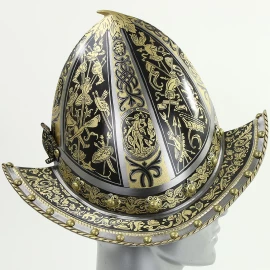
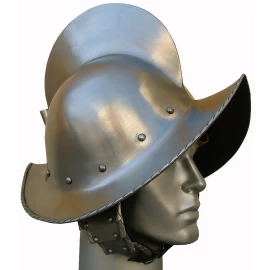
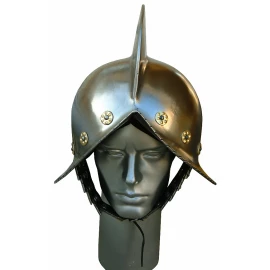
Renaissance Morion Helmet with Brass Fleur-de-lis Ornaments
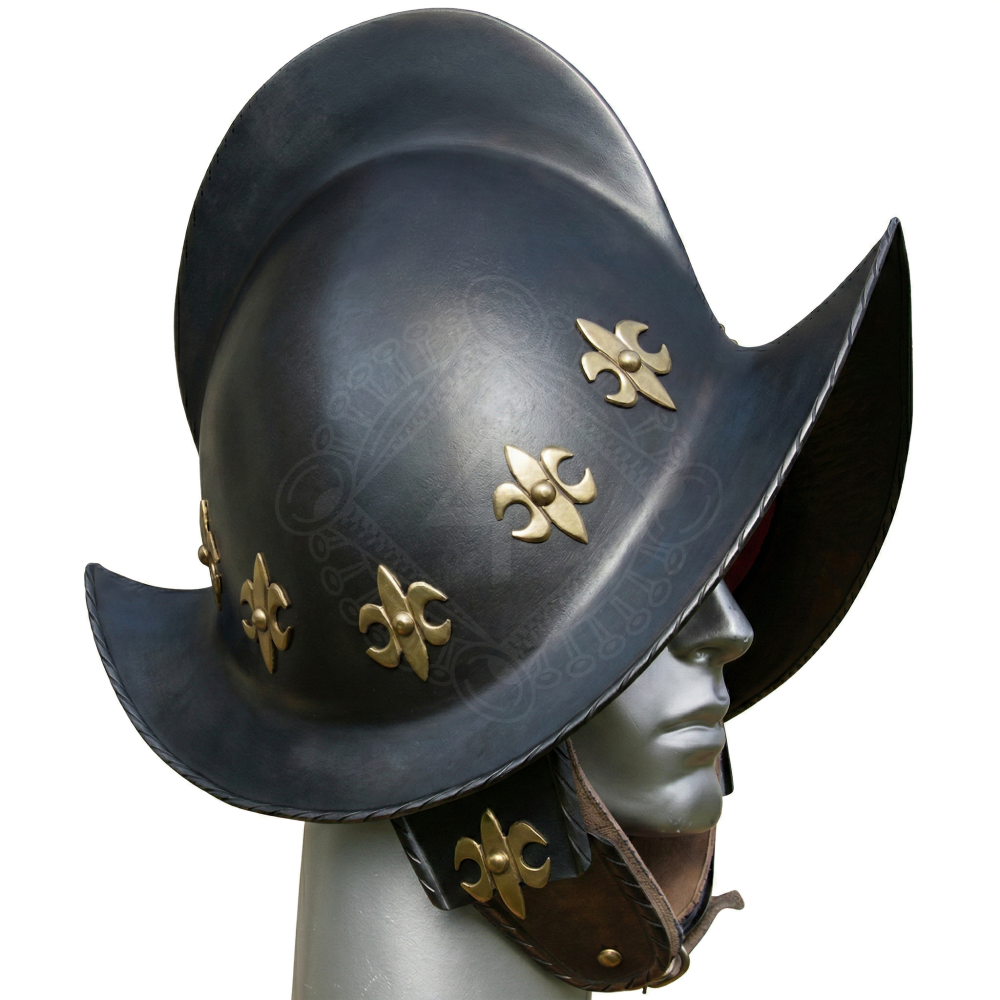
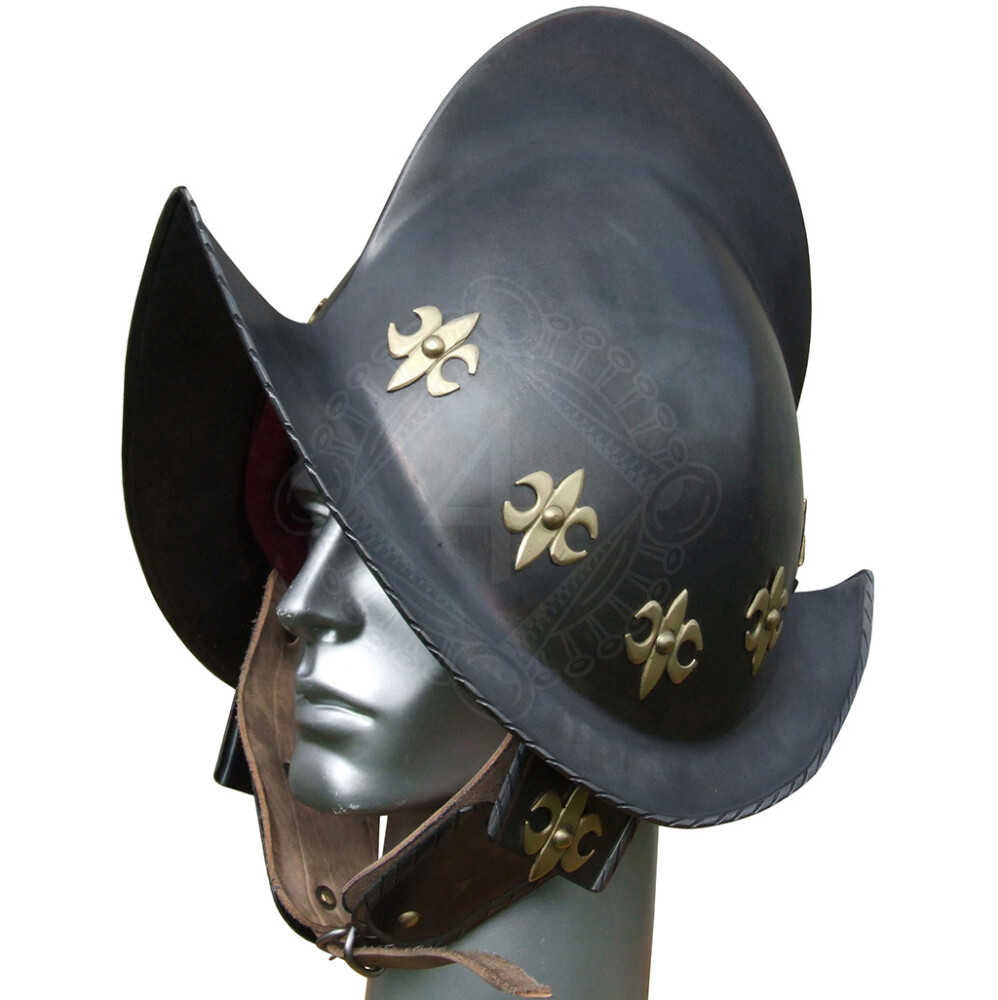
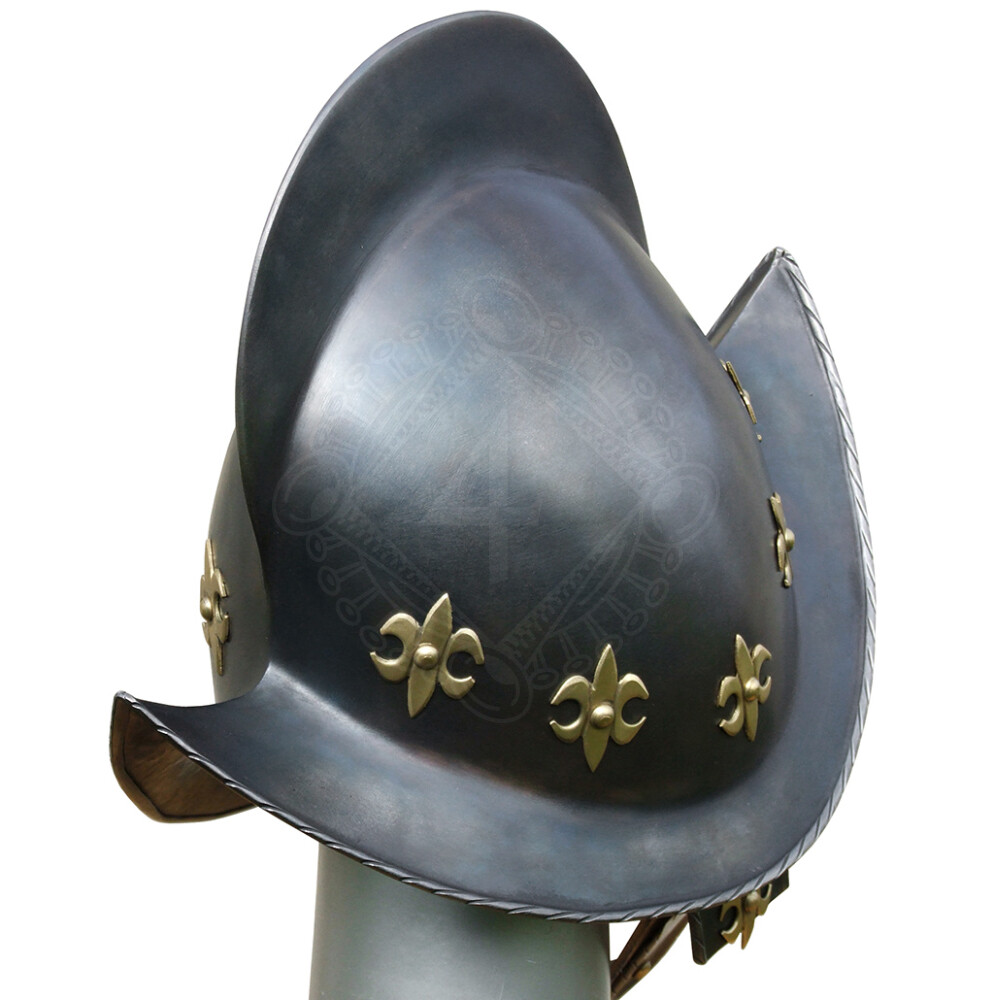
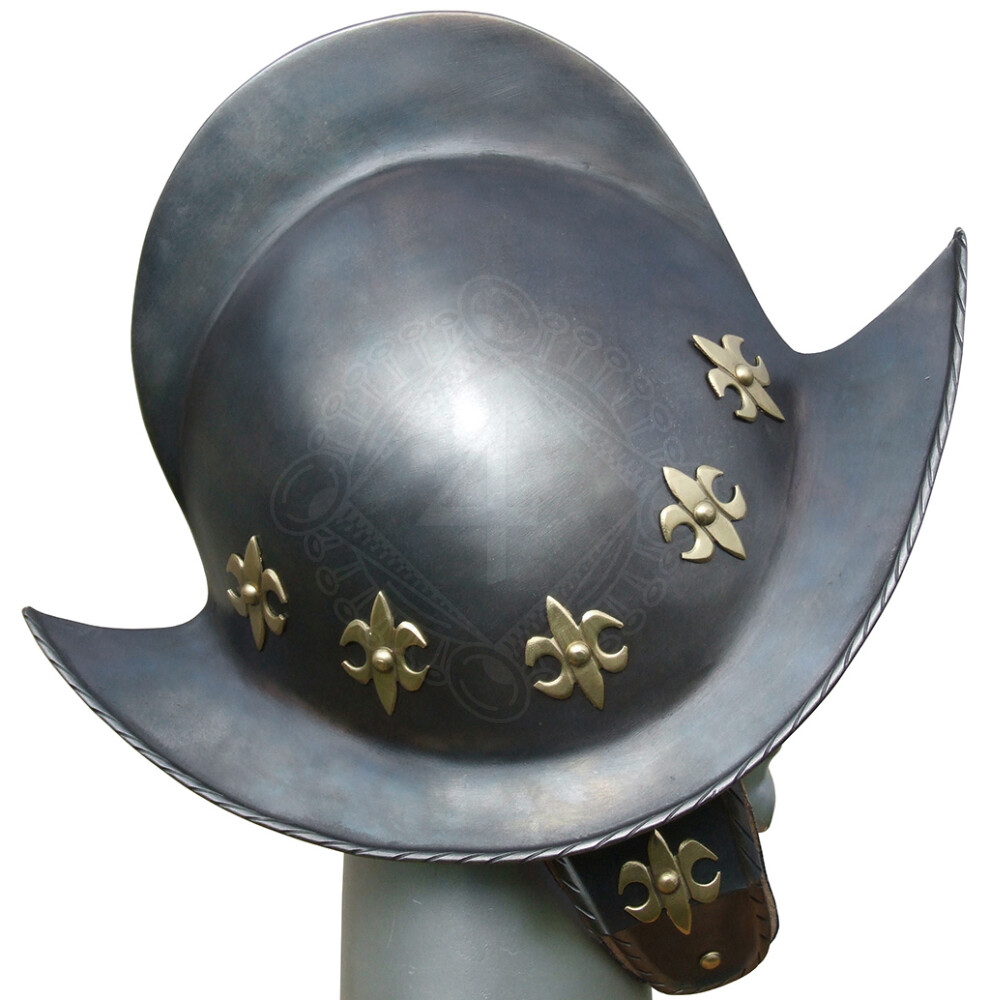

Are you looking for reliable and visually stunning head protection for your next historical festival, LARP, or theatrical performance? This elegant blackened Morion with brass lilies will instantly transport you to the late Renaissance period. Whether you are portraying a proud Spanish conquistador, a palace guard, or a seasoned pikeman, this helmet will give your costume undeniable authenticity. Thanks to the option to choose the sheet metal thickness and inner lining, you get a piece exactly tailored to your needs. Furthermore, the prominent crest and elegant decorations will make you an unmissable figure on any battlefield. Further product information ...

Blackened Renaissance Morion Helmet with Brass Fleur-de-lis Ornaments
Historical Context: From Battlefields to Palace Guards
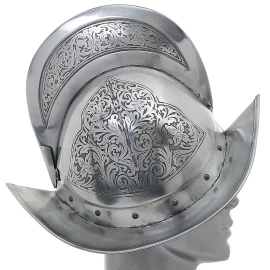
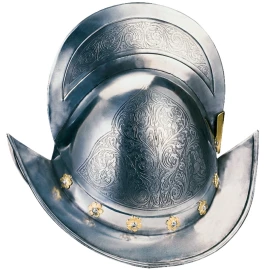
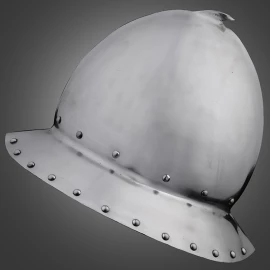
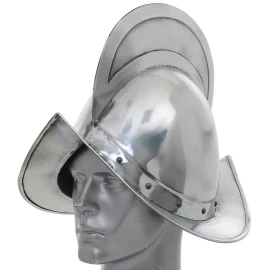
The Morion helmet is a typical open helmet that evolved in the first half of the 16th century, likely from the older kettle hat, and was widely used across Europe until the early 17th century. It went down in history as the iconic headgear of the Spanish Conquistadors during the conquest of the New World, but it was also the standard equipment of European infantry, especially pikemen and arquebusiers. The high comb (crest) served not only as an aesthetic element but primarily strengthened the helmet's construction against downward slashing blows. The brass lilies (Fleur-de-lis) refer to French heraldry, but in the Renaissance, it was a very popular and widespread decorative motif throughout Europe.
Construction and Visual Details
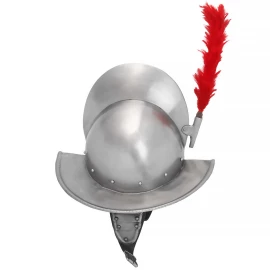
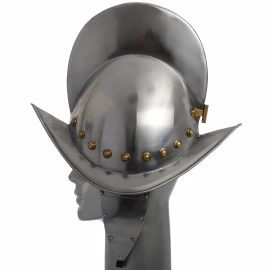
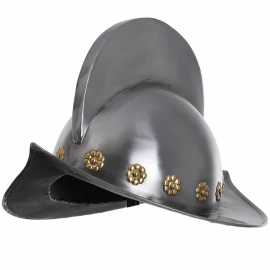
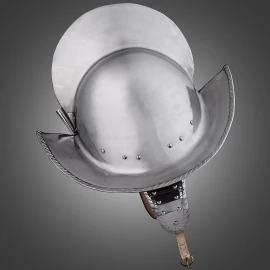
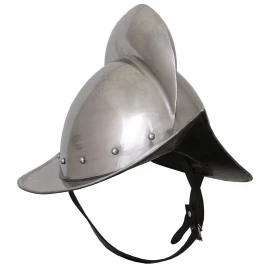
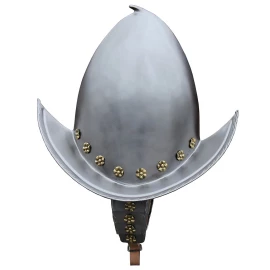
This model stands out with its characteristic shape featuring a high central comb and an elegantly curved brim that sweeps sharply upwards at the front and back. The surface in the photos is treated with a historicising blackened finish, but the helmet is also offered in a polished or brushed version. Along the perimeter of the skull and on the cheekpieces, the product is richly decorated with brass applications in the shape of lilies. For a secure fit on the head, the helmet is equipped with metal cheekpieces that are firmly riveted to a leather strap fastened under the chin.
How to Properly Wear and Use the Helmet
The helmet is primarily intended as a historical costume accessory for re-enactment, LARP, cosplay, or theatre. Please note that this is not protective armour suitable for full-contact combat such as Buhurt or Battle of the Nations. However, if a thicker material is chosen (2.0 mm / approx. 14 gauge), it can withstand light stage fencing or HEMA training with a focus on weapon control. For maximum comfort and additional shock absorption, we strongly recommend wearing a suitable base layer under the helmet, ideally a thickly padded arming cap (coif).
Maintenance and Armour Care
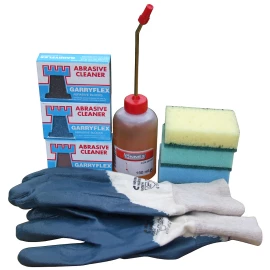
To ensure the helmet serves you well for a long time and maintains its appearance, regular maintenance is necessary. Steel parts (even blackened ones) must be protected from moisture. After every use, especially if you sweat or get caught in the rain, wipe the helmet dry and lightly treat it inside and out (unless covered by a lining) with gun oil (e.g., WD-40 or Ballistol). Treat the leather parts with beeswax leather balsam. This will prevent the formation of surface rust and the cracking of the straps.
Technical Product Parameters
| Type of Armour: | Open Renaissance Helmet - Morion |
| Finish (optional): | Brushed, polished, or blackened mild steel |
| Sheet Thickness (optional): | 1.3 mm (approx. 18 gauge) / 1.5 mm (approx. 16 gauge) / 2.0 mm (approx. 14 gauge) |
| Inner Lining (optional): | Leather or fabric (or unlined) |
| Sizes: | S, M, L, XL, XXL or custom-made |
| Decoration: | Brass rivets and Fleur-de-lis (lily) appliques |
| Fixation: | Metal cheek guards on a leather chin strap |
This Morion with brass lilies can be custom-made according to your individual head measurements.
A padded linen coif, a steel Renaissance gorget, and a halberd make the perfect accessories for this helmet, completing the silhouette of a true Renaissance soldier.
This helmet can be made to measure after your measurements ‘1a’ to ‘1j’ in this measurement chart.
Please read our instructions, how to determine a helmet size correctly.
We are here for you!



.3773623034.1696456237.png.webp)


.3773623034.1696456268.png.webp)
.3773623034.1696456247.png.webp)