 Čeština
 Deutsch


Katana Handle Tsuka with Cotton
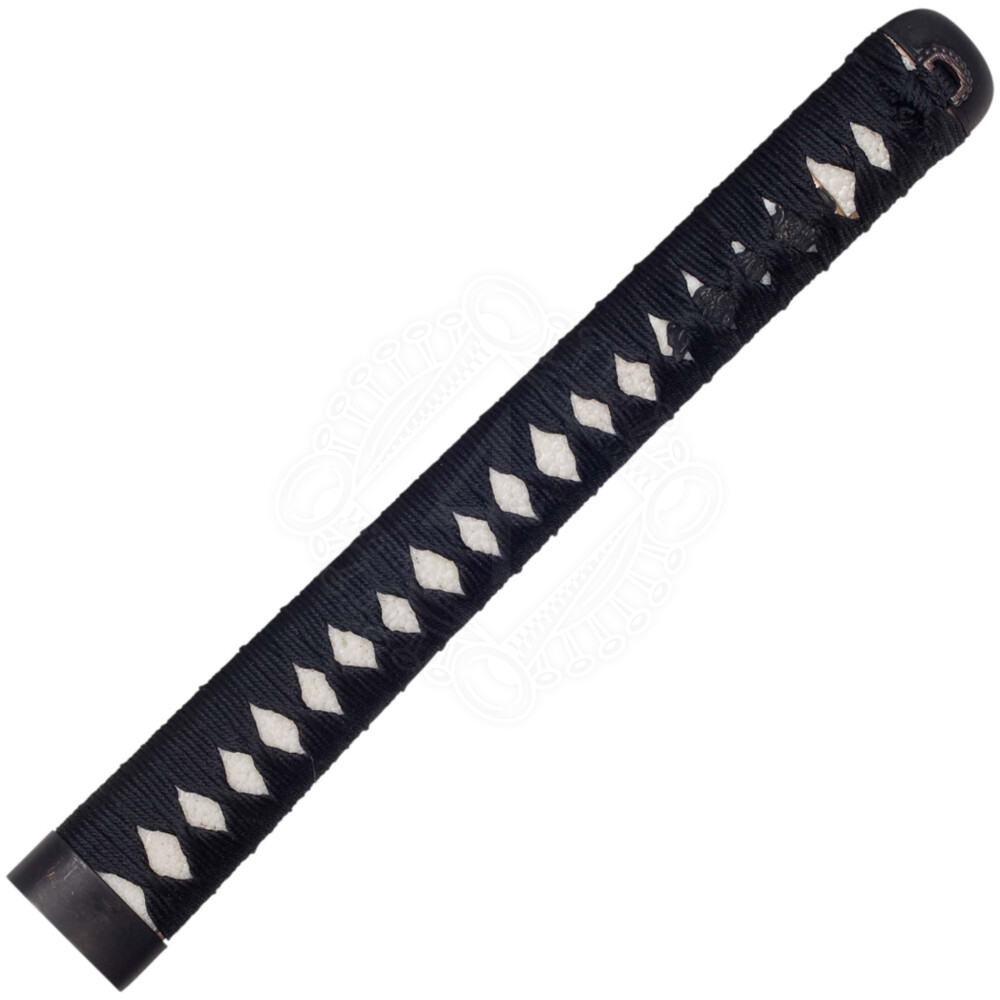

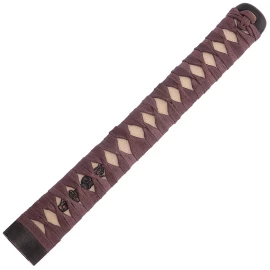
Does your Japanese sword need a new soul? This traditionally crafted handle, known in Japanese as a tsuka, is exactly the part that will breathe new life into your weapon. The meticulous workmanship combines a solid wooden core with luxurious, genuine ray skin, ensuring the uncompromising strength of the entire assembly. The classic black cotton wrap not only gives the sword a formidable and elegant appearance, but above all guarantees a firm, sweat-absorbing, and secure grip in any combat situation. Gain perfect control over your strikes and transform your sword into a masterpiece that any samurai warrior of the Edo period would be proud of. Further product information ...

Traditional Samurai Katana Handle Tsuka with Genuine Rayskin and Cotton
History and Anatomy of the Tsuka Handle
The handle (tsuka) has always formed the crucial link between the samurai and his weapon. Its construction evolved over centuries with maximum functionality in mind. The foundation of this product is a sturdy wooden core (ho), reinforced on the sides with strips of genuine ray skin (samegawa). Throughout Japanese history, ray skin was prized for its extreme mechanical durability and unique nodular texture. This prevented the handle wrap from slipping, even when the warrior's hands were covered in mud, sweat, or blood.
Tightly and precisely bound over the skin is the traditional diamond-patterned wrap (tsuka-ito), made here of high-quality black cotton. Cotton is very comfortable in the palm and absorbs sweat excellently. Firmly fixed under the wrap on both sides are metal ornaments called menuki. These served not only as artistic decorations but primarily helped to anatomically position the fingers for the optimal sword grip. The ends of the handle are reinforced with massive cast iron fittings – the collar (fuchi) near the guard and the pommel cap (kashira) at the very end of the sword.
How to Properly Mount the Handle on the Blade
This handle is intentionally supplied without pre-drilled holes for the retaining pegs (mekugi-ana). This is a historically correct and necessary standard because every forged blade has the holes on its tang (nakago) positioned slightly differently. For a correct and safe installation, follow these steps:
- Carefully slide the handle onto your blade's tang so that the fuchi collar sits flush against the guard (tsuba) and the spacers (seppa).
- Accurately measure the position of the holes on the steel tang relative to the handle's wooden core.
- Drill the holes through the handle so that they perfectly align with the holes in the steel. The hole should be slightly conical.
- Insert the retaining pegs made of bamboo or horn (mekugi) to firmly and securely lock the blade within the wooden core.
Safety Guidelines and Handle Maintenance
If you intend to mount this handle on a sharp blade for test cutting (tameshigiri) or practicing Japanese martial arts (Iaido, Kenjutsu), remember that safety comes first. The assembly must be carried out with absolute precision. If the retaining pegs are loose or the holes are drilled incorrectly, there is a risk of the blade flying out of the handle during a swing, which can cause fatal injuries to you and your surroundings. If you are not one hundred percent sure about the installation, it is better to entrust it to an experienced swordsmith. To ensure a long lifespan, protect the handle from excessive moisture, which could damage the wooden core. The cotton wrap can be carefully cleaned with a soft brush, and it is advisable to lightly wipe the iron parts (fuchi and kashira) occasionally with a high-quality conservation oil to prevent surface rust.
Technical Product Parameters
| Total Handle Length | approx. 311 mm (12.24 in) |
| Core Material | Wood (ho), profile 37.5 x 16.1 mm (1.48 x 0.63 in) |
| Underlay Material | Genuine ray skin (samegawa), width 28.3 mm (1.11 in), length 280 mm (11.02 in) |
| Wrap Material | Black cotton (tsuka-ito), wrap length approx. 276 mm (10.87 in), outer dimension approx. 36.2 x 28.5 mm (1.43 x 1.12 in) |
| Fittings (Fuchi / Kashira) | Cast iron |
| Fuchi Outer Dimensions | approx. 40.2 x 23.5 mm (1.58 x 0.93 in) |
| Kashira Cap Dimensions | approx. 35 x 20.5 mm (1.38 x 0.81 in) |
| Tang Hole (Nakago) | approx. 28 x 6.2 mm (1.10 x 0.24 in) |
| Menuki Ornament Length | approx. 56 mm (2.20 in) on each side |
| Total Weight | approx. 166 g (5.86 oz) |
We are here for you!