Čeština
 Deutsch


Gothic Cast Iron Speakeasy Door Grille for Viewing Hatch
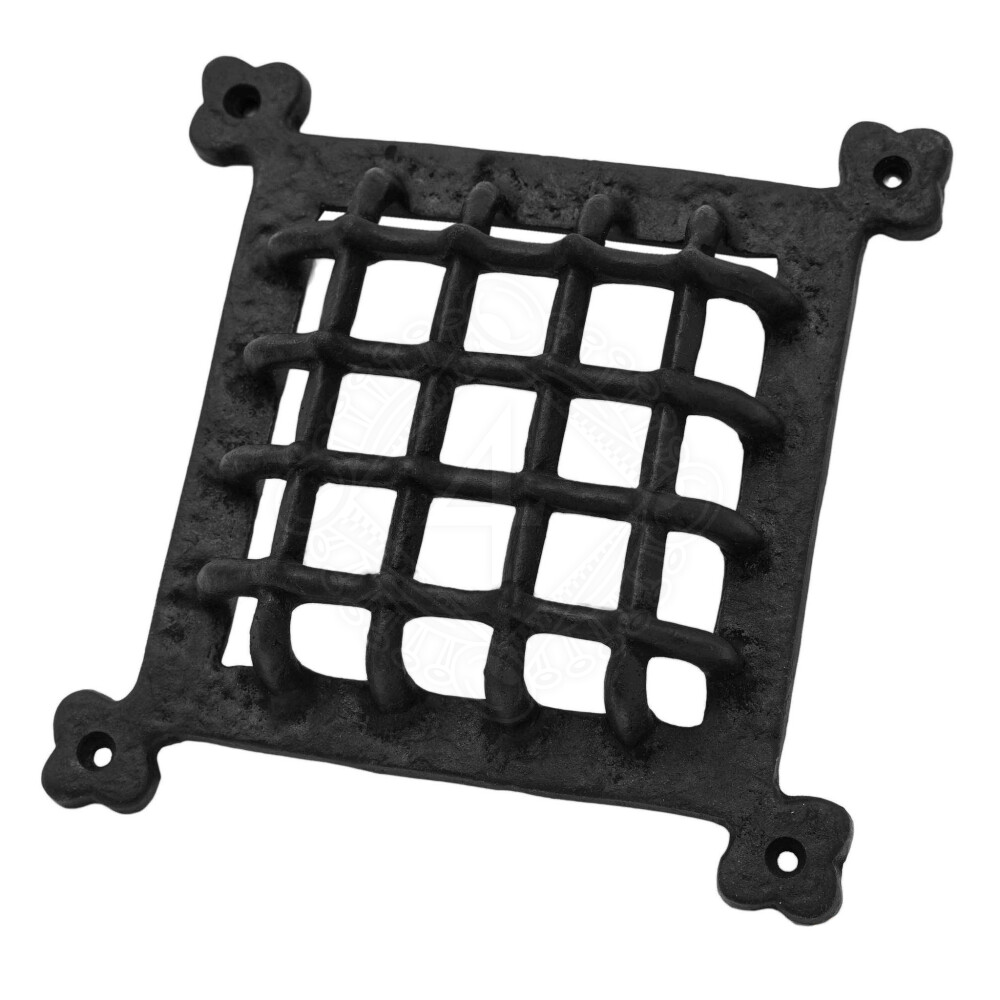
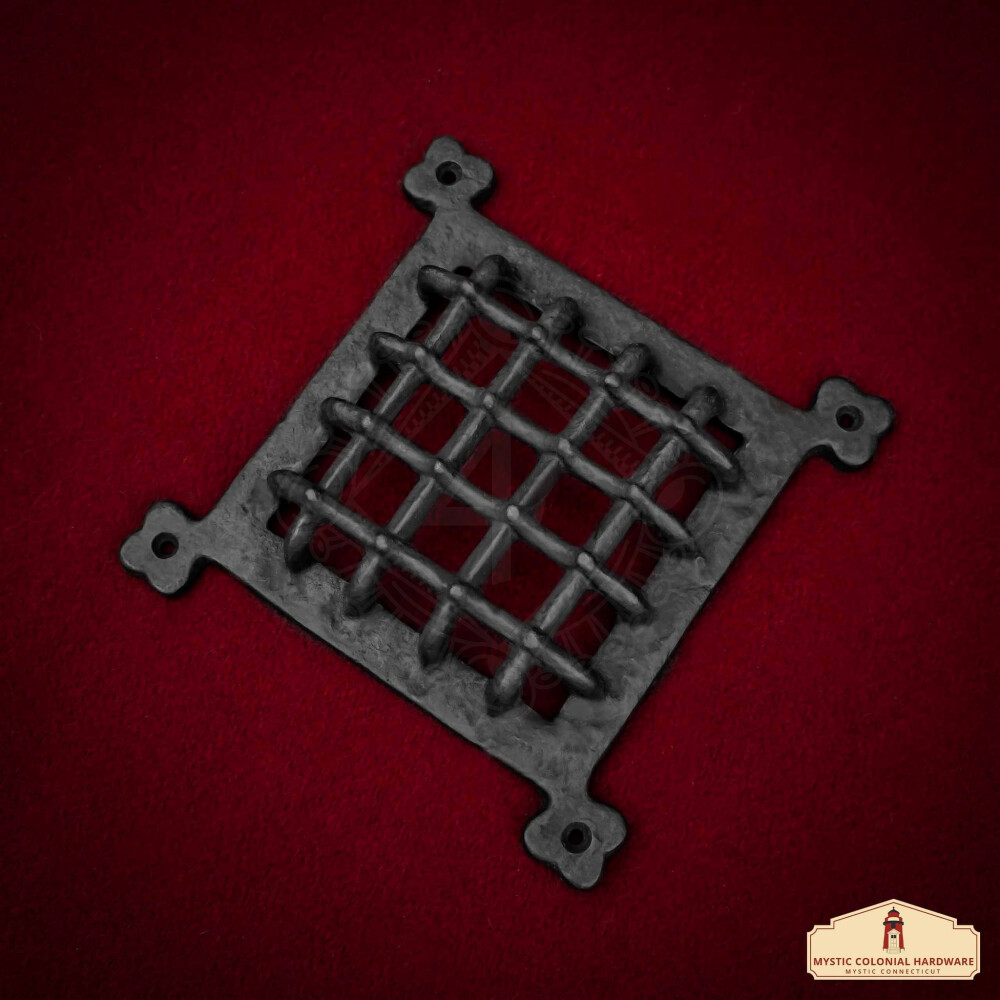
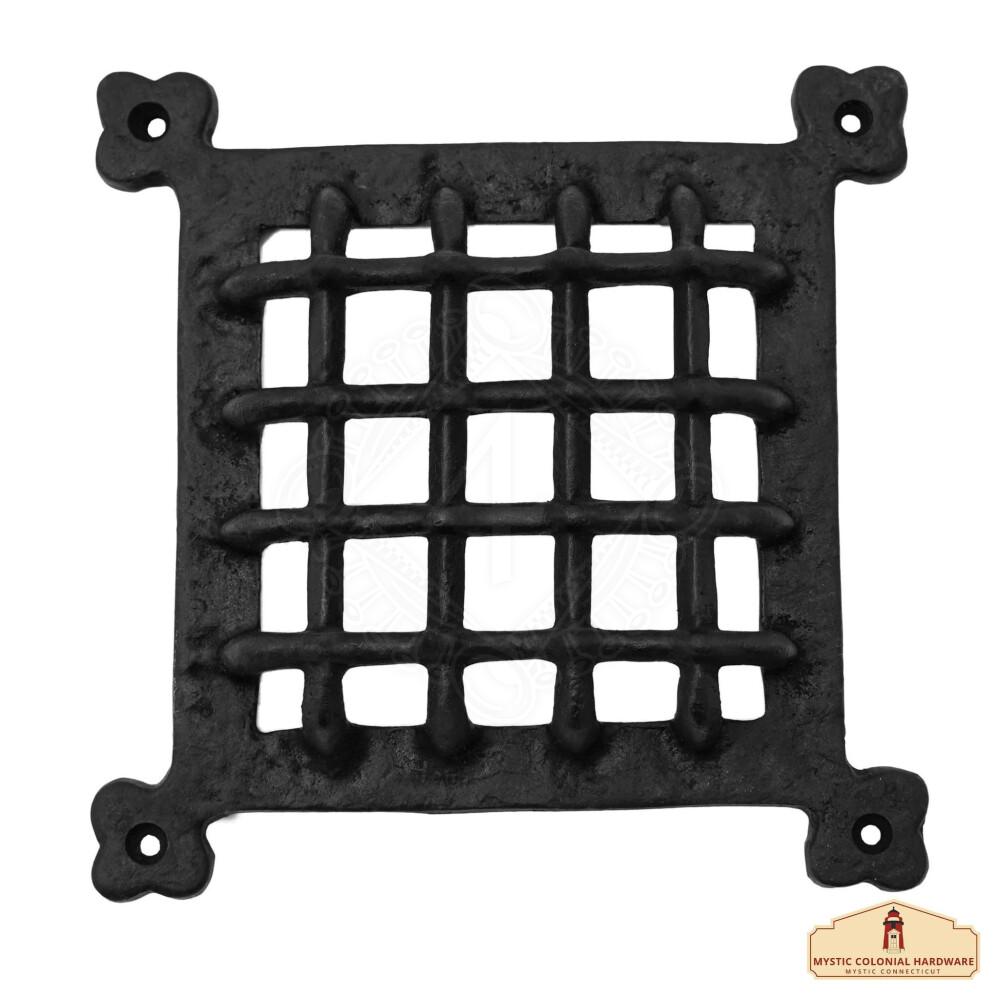
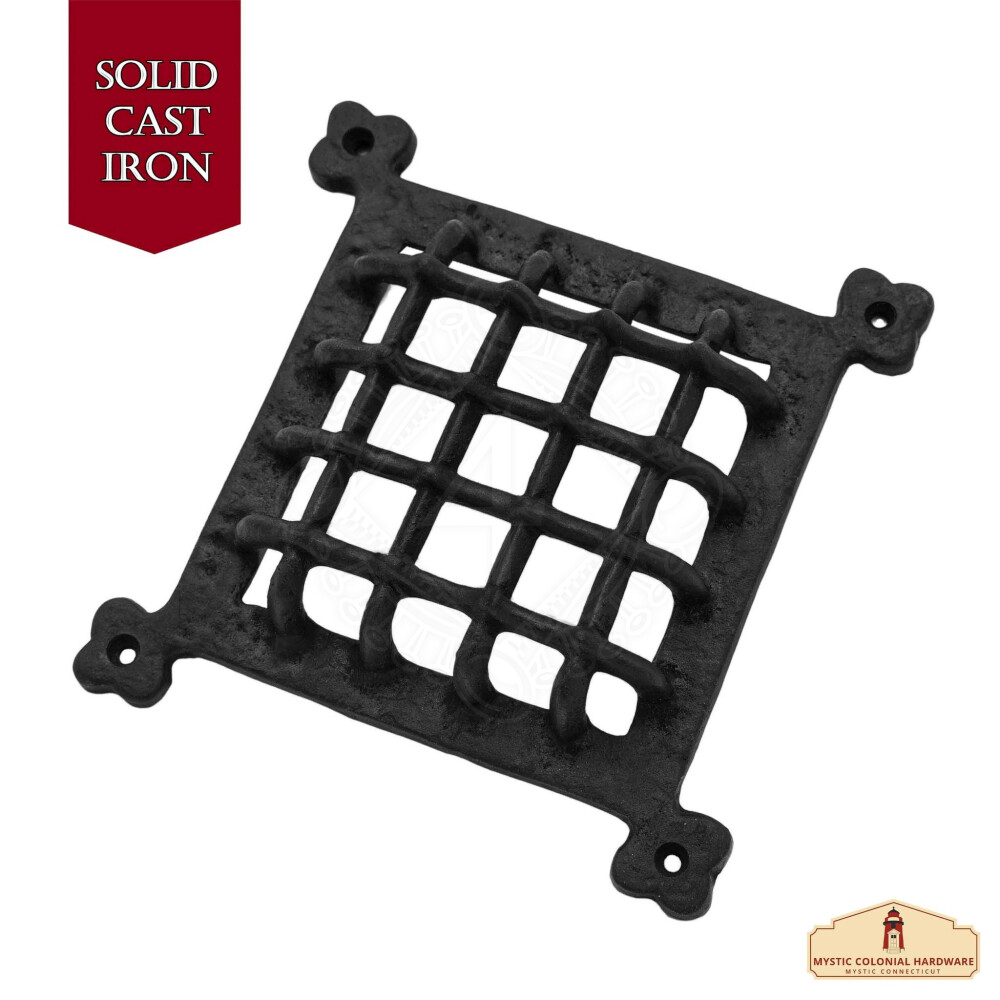
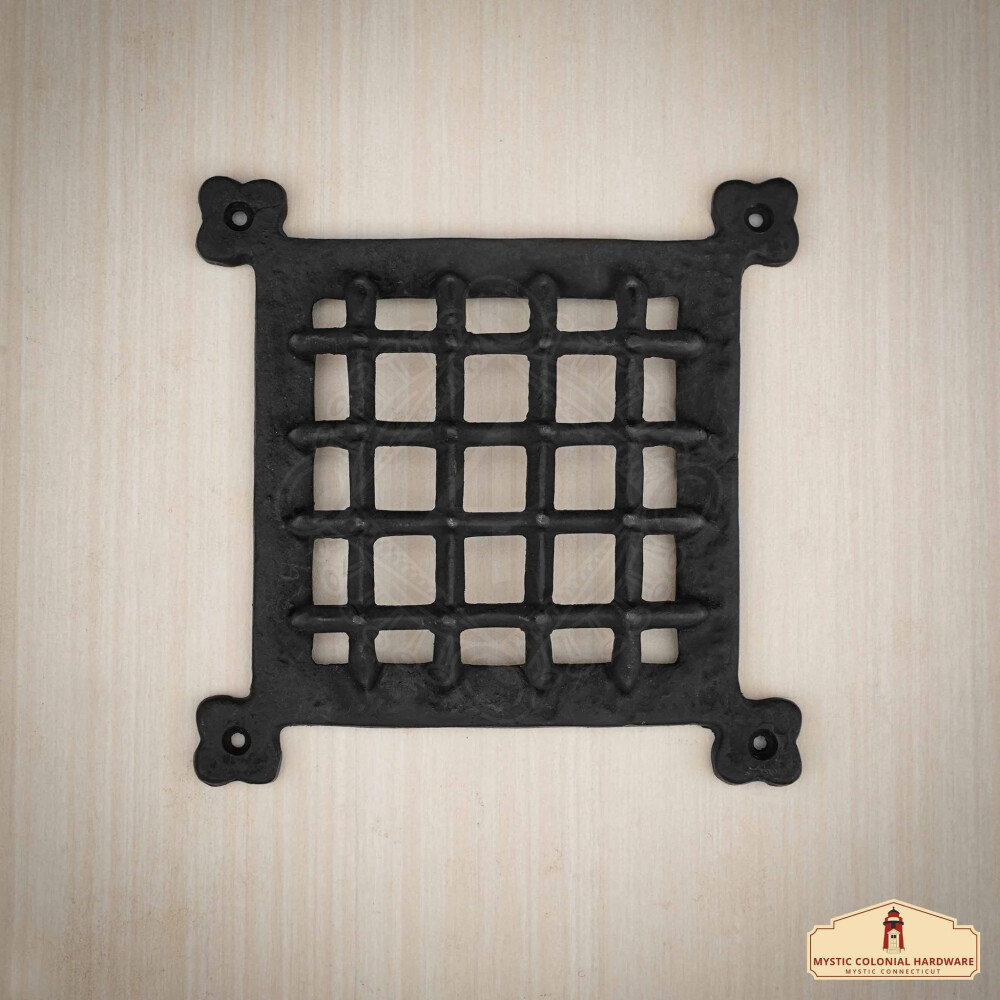
Turn an ordinary doorway into the entrance to a medieval castle, mysterious tavern or secret Prohibition-era bar! This solid cast iron door grille combines impressive historical styling with a practical purpose. Its substantial square frame, robust lattice pattern, decorative Gothic-inspired corners and rustic black finish give any door a distinctive character. Four pre-drilled mounting holes allow you to fit the grille over an existing viewing hatch or small window. It is an excellent finishing touch for wine cellars, historical pubs, fantasy dungeons and period-inspired interiors. Four matching fixing screws are included, making this unusual piece of decorative ironmongery ready for installation. Further product information ...

Would you like to be notified as soon as the item is in stock?
You will receive a short e-mail as soon as we have it back in stock.
Gothic Cast Iron Speakeasy Door Grille for Viewing Hatch
Solid Cast Iron Construction with Gothic-Inspired Details
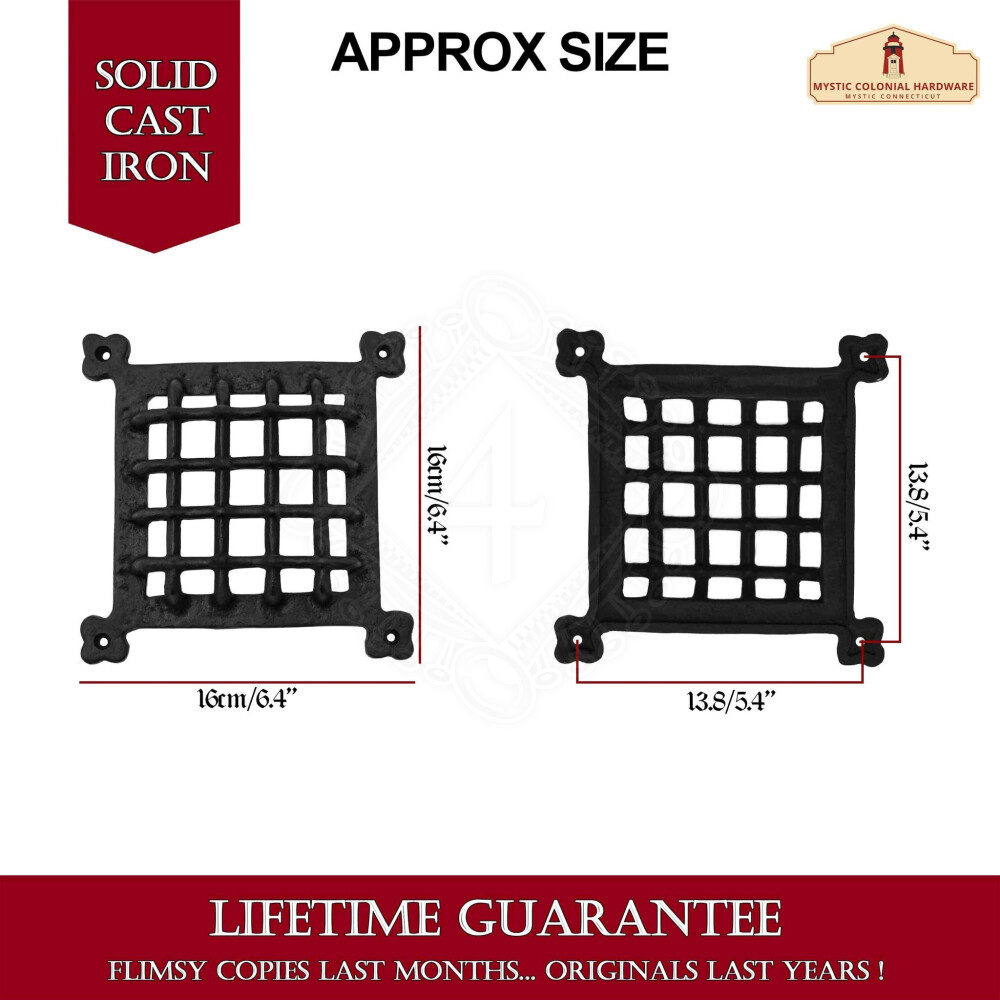
This decorative speakeasy door grille features a square frame measuring approximately 16 × 16 cm (6.3 × 6.3 inches). It is made from solid cast iron, providing a substantial structure and the rugged appearance associated with traditional architectural ironmongery.
Its centre features a regular lattice of substantial intersecting bars. The bars have slightly rounded edges and a subtly irregular surface, creating the impression of traditional historical metalwork. The square openings allow visibility through the grille whilst partially restricting the passage of a hand or larger objects.
The surrounding frame provides space for four mounting points. Each corner terminates in a decorative lobed shape reminiscent of Gothic trefoil ornamentation. These small details soften the otherwise geometric design and create an attractive historical character.
The grille has a rustic oil-blackened finish, giving the surface a matt to slightly satin appearance. Its gently irregular texture complements solid timber doors, traditional iron hinges, historical locks and other black iron fittings.
The product is primarily intended as a fixed decorative grille for a small door viewing hatch or window. It does not incorporate a movable shutter or glass pane and should not be regarded as a certified burglar-resistant security fitting.
Where Can You Use This Door Grille?
- Wine cellars and historical taverns: An attractive fitting for heavy timber doors, cellar viewing hatches and rustic entrances.
- Medieval castles and period interiors: Suitable for wooden doors, shutters and small viewing openings in historically styled settings.
- LARP and fantasy projects: Perfect for dungeon doors, prison cells, fortress gates, alchemists' workshops and mysterious chambers.
- Speakeasy-style bars: Evokes the secret drinking establishments of the American Prohibition era, where staff sometimes checked visitors through small door openings.
- Gothic, steampunk and industrial interiors: A distinctive decorative feature for doors, timber panels and themed scenery.
Historical Background: From Castle Gates to Secret Speakeasies
Small viewing openings in heavy doors and gates served an important practical purpose in medieval buildings. They allowed guards or occupants to identify visitors without opening the main entrance. Similar viewing hatches were used in castles, fortified buildings and other controlled entrances.
Iron grilles and latticework were well-established elements of European architectural ironmongery. During the High and Late Middle Ages, particularly from the 13th to the 15th century, craftspeople produced both straightforward protective grilles and elaborate decorative metalwork.
The trefoil is a characteristic motif of Gothic architecture. It appears in window tracery, carved stonework and decorative fittings. Within Christian symbolism, the three-lobed motif could represent the Holy Trinity – the Father, Son and Holy Spirit. The lobed corner details of this grille refer to similar Gothic design traditions, although they do not establish the piece itself as a medieval artefact.
Small door viewing hatches later gained a different association during American Prohibition, from 1920 to 1933. Illegal drinking establishments, commonly known as speakeasies, sometimes used small peepholes or sliding inspection hatches in their doors. Staff could check who was waiting outside before admitting them.
This historical association explains why decorative door grilles of this type are often described in English as speakeasy door grilles.
The present grille is a modern piece of decorative cast iron architectural hardware inspired by historical designs. It combines Gothic-style ornamentation with a timeless square lattice, making it suitable for both historical-themed settings and contemporary interiors with individual character.
How to Install Your Cast Iron Door Grille
The grille is fitted using four mounting holes positioned in the decorative corners. Four screws, each measuring 38 mm (1.5 inches) long, are included.
- 1. Prepare the surface: Select a sound timber door, shutter or wooden panel with a suitable viewing opening. The grille itself does not create the opening.
- 2. Mark the fixing points: Hold the grille in position and mark the four mounting holes. Their centre-to-centre spacing is approximately 13.8 cm (5.4 inches) horizontally and vertically.
- 3. Drill pilot holes: For timber installation, we recommend drilling appropriate pilot holes according to the screw diameter and hardness of the wood.
- 4. Secure the grille: Tighten the four screws progressively and evenly. Although strong, cast iron is more brittle than ductile steel, so excessive tightening may cause cracking.
- 5. Check the fitting: Ensure that the grille sits firmly against the surface, cannot move and does not interfere with the operation of the door.
For masonry, stone or other construction materials, suitable alternative fixings will be required. The supplied screws may not be appropriate for every mounting surface.
Technical Specifications
| Specification | Details |
|---|---|
| Product type | Door grille for viewing hatch or small window |
| Material | Solid cast iron |
| Historical style | Gothic-inspired architectural ironmongery |
| Overall dimensions | Approx. 16 × 16 cm (6.3 × 6.3 inches) |
| Mounting hole spacing | Approx. 13.8 cm (5.4 inches) horizontally and vertically |
| Number of mounting holes | 4 |
| Fixing screws included | 4 |
| Screw length | 38 mm (1.5 inches) |
| Colour | Black |
| Surface finish | Oil-blackened, rustic texture |
| Shape | Square frame with open latticework |
| Decoration | Lobed Gothic-style corner details |
| Mounting method | Four-point screw fixing |
| Intended use | Doors, viewing hatches, shutters, themed interiors |
| Package contents | 1 grille, 4 fixing screws |
Care and Safety Instructions
- Cleaning: Wipe the grille with a soft, dry or slightly damp cloth. Dry the surface thoroughly after any wet cleaning.
- Rust prevention: Oil-blackened cast iron can develop surface rust when exposed to moisture for extended periods. Inspect the finish regularly and renew the protective coating when necessary using a suitable cast iron care product.
- Outdoor exposure: More frequent maintenance may be required if the grille is exposed to rain and weather. An oil-blackened finish does not provide permanent corrosion protection.
- Installation: Fit the grille only to a sufficiently strong supporting surface. Do not overtighten the screws, as excessive mechanical stress can cause cast iron to crack.
- Mechanical loading: Do not use the grille as a handle, step or load-bearing structural component.
- Security limitations: This product is not a certified security grille. The actual resistance of a viewing opening depends on the mounting method, strength of the door and dimensions of the opening.
- Unsuitable uses: The grille is not intended for barbecuing, food preparation or use as a fire grate.
- Protecting the finish: Avoid aggressive cleaning agents, prolonged soaking and abrasive treatments that could damage the blackened surface.
- Rough edges: Check the casting for any rough edges before installation and wear suitable protective gloves when fitting it.
Recommended Accessories
- Historical iron door hinges (13th–16th centuries): Complement the grille and help create a coordinated set of fittings for substantial timber doors.
- Gothic door handles and knockers (13th–15th centuries): Enhance the historical character of an entrance inspired by Gothic architecture.
- Iron door locks and bolts (14th–17th centuries): Practical additions for historical cellars, taverns and castle-themed interiors.
- Wooden viewing shutters and hatch covers (13th–19th centuries): Suitable for creating a closable viewing hatch through which visitors can be checked before opening a door.
We are here for you!