
 Čeština
 Deutsch


Celtic swords
Filter products


 Weapons
The sword. Simply hearing the word evokes images of clashing steel, blood-soaked battles, and legendary heroes. Much like the warriors who wielded them, swords have left an indelible mark on European history, standing as timeless symbols of…
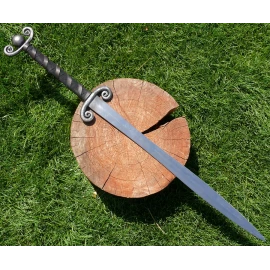
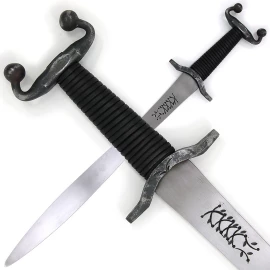
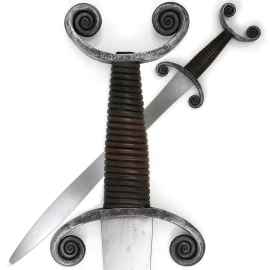
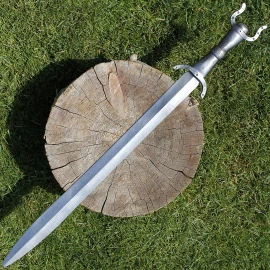

Celtic swords
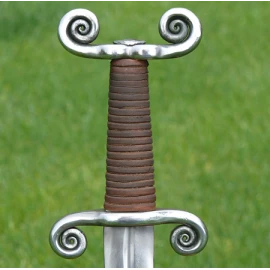
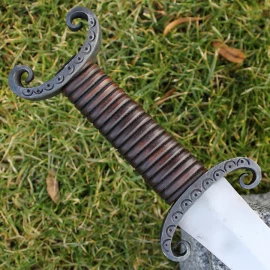
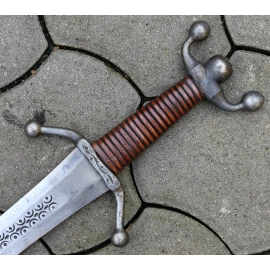
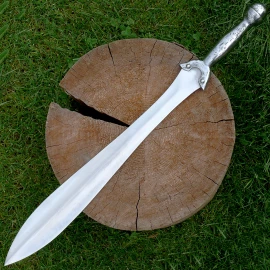
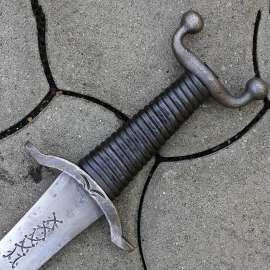
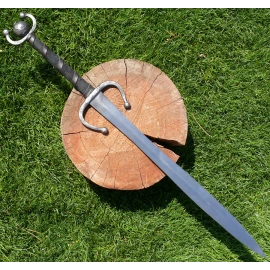
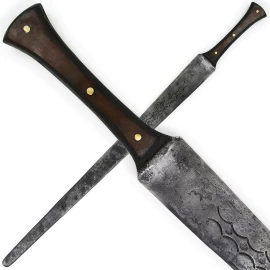
The Celts were described by classical writers as fighting like "wild beasts", and as hordes. Thus, at one moment they would raise their celtic swords aloft and smite after the manner of wild boars, throwing the whole weight of their bodies into the blow like hewers of wood or men digging with mattocks, and again they would deliver crosswise blows aimed at no target, as if they intended to cut to pieces the entire bodies of their adversaries, protective armour and all". Such descriptions have been challenged by contemporary historians.
Polybius (2.33) indicates that the principal Celtic weapon was a long bladed celtic sword which was used for hacking edgewise rather than stabbing. Celtic warriors are described by Polybius and Plutarch as frequently having to cease fighting in order to straighten their sword blades. This claim has been questioned by some archaeologists, who note that Noric steel, steel produced in Celtic Noricum, was famous in the Roman Empire period and was used to equip the Roman military. However, Radomir Pleiner, in The Celtic Sword (1993) argues that "the metallographic evidence shows that Polybius was right up to a point", as around one third of surviving swords from the period might well have behaved as he describes.