Čeština
 Deutsch


Teutoburg Hand-Forged Germanic Javelin Head, 25 cm


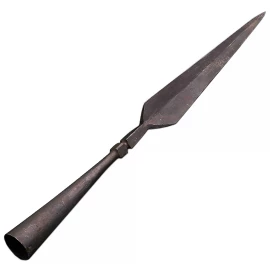
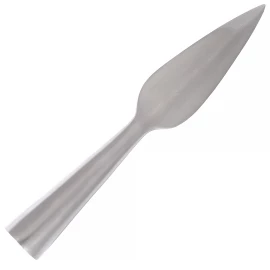
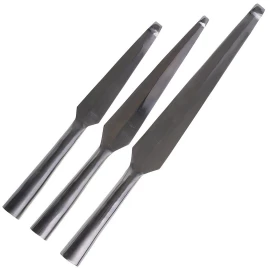
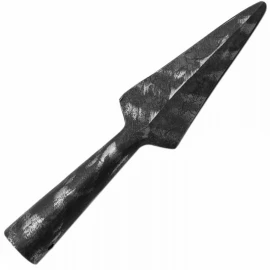
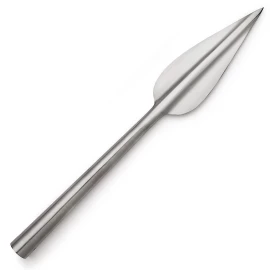
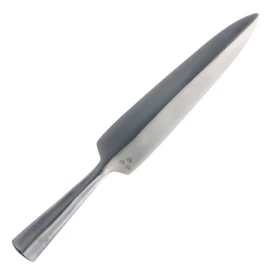
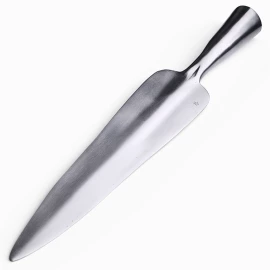
Planning to assemble your own Germanic javelin and add a distinctive weapon inspired by the warriors of ancient Germania to your historical equipment? The Teutoburg hand-forged javelin head, made from mild steel, features a slender, elongated blade, a pronounced central ridge and a long tapered socket. Its dark surface, marked by irregular traces of hand finishing, creates a rugged historical appearance. Measuring approximately 25 cm (9.84 inches) overall, it is ideal for making a Germanic-style spear or javelin replica for reenactment, historical presentations or your collection. Fit it with a suitable wooden shaft to create an impressive piece inspired by the equipment of ancient Germanic warriors. Further product information ...

Would you like to be notified as soon as the item is in stock?
You will receive a short e-mail as soon as we have it back in stock.
Teutoburg Hand-Forged Germanic Javelin Head, 25 cm
Elongated Blade with a Central Ridge and Long Socket
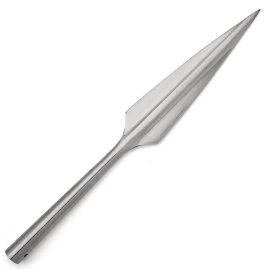
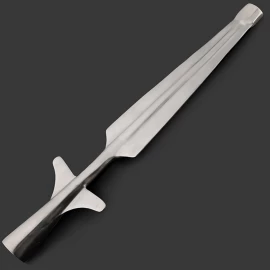
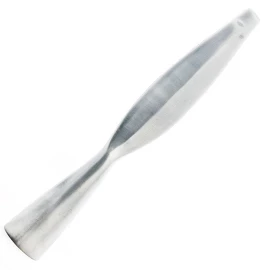
The spearhead features a narrow, symmetrical blade with a long, tapered point. From its broadened base, the blade gradually narrows towards the tip. Its maximum width is approximately 28 mm (1.10 inches). A pronounced longitudinal ridge runs along the centre, with the blade faces sloping towards the edges. On historical spearheads, this design helped increase stiffness without adding unnecessary weight.
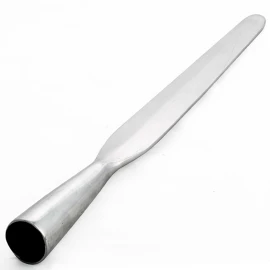
Below the blade is a short transitional neck leading into a long, hollow socket. The socket gradually widens towards its open end, allowing the head to be mounted onto a suitably shaped wooden shaft. The diameter of the socket opening is approximately 21 mm (0.83 inches).
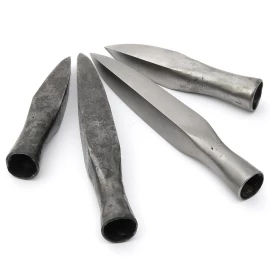
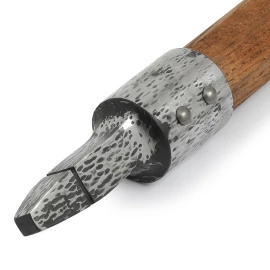
The entire head is hand-forged from mild steel. Its dark grey to black surface features irregular lighter patches and visible grinding marks. Small imperfections and variations in texture emphasise the traditional handcrafted appearance. Because every piece is made individually, minor differences in shape and colour may occur.
Germanic Spears and Javelins in the Roman Period
Spears and javelins were among the most important weapons used by Germanic warriors from approximately the 1st century BC to the 6th century AD. Their relatively straightforward construction, consisting of a metal head and a wooden shaft, made them practical and widely used weapons.
The Roman historian Tacitus described a Germanic weapon called the framea in his work Germania, written in AD 98. He characterised it as a spear with a relatively narrow but sharp iron head that could be used both in close combat and as a thrown weapon. However, the exact form of the framea remains uncertain, so not every surviving Germanic spearhead can automatically be identified as one.
Archaeological finds reveal considerable variation in historical spearheads. Their length, blade width, cross-section and socket construction differed according to their design and intended use. Lighter javelins were suitable for throwing, while more substantial spears were primarily employed for thrusting in close combat.
This product follows the general appearance of Germanic socketed spearheads from the Roman Iron Age and Migration Period. However, it is not a documented reproduction of a particular archaeological find or a precisely identified type of framea.
Why Is This Javelin Head Named Teutoburg?
The name Teutoburg commemorates the famous Battle of the Teutoburg Forest, fought in AD 9. During this confrontation, Germanic tribal forces led by Arminius defeated three Roman legions commanded by Publius Quinctilius Varus. The battle remains one of the best-known military events of the early Roman Empire.
It became a symbol of Germanic resistance to Roman expansion. The name Teutoburg therefore recalls the historical setting in which spears and javelins formed an essential part of a warrior's equipment. It does not imply that this particular spearhead is based on an artefact discovered at the battlefield.
How to Mount the Head onto a Wooden Shaft
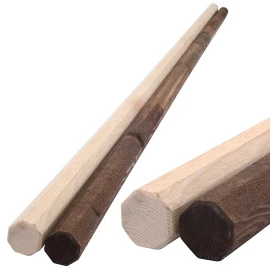
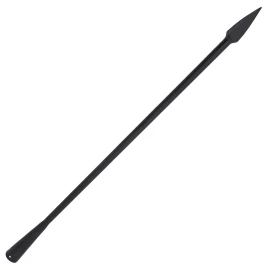
The spearhead is designed to be fitted onto a separate wooden shaft. For a historically inspired appearance, we recommend straight, well-seasoned timber with suitable mechanical properties, such as ash.
- Choose a straight, sound wooden shaft free from major knots, cracks or other defects.
- Gradually shape its upper end to match the internal profile of the tapered socket.
- Fit the spearhead so that it sits firmly and remains correctly aligned with the shaft.
- The fastening method must be suitable for the construction of the head and its intended decorative use.
- Before handling the assembled replica, check that the head is securely fitted and cannot accidentally come loose.
If you have no experience fitting historical polearm heads, we recommend having the work carried out by an experienced craftsperson.
Important safety notice: Although the manufacturer describes the possibility of assembling a functional javelin, no specific testing or safety specifications for throwing or contact combat have been provided. We therefore recommend using the completed item primarily as a historical replica, display piece or prop. Even correct mounting does not guarantee safety under throwing or impact loads.
Technical Specifications
| Specification | Details |
|---|---|
| Product type | Germanic socketed javelin head / spearhead |
| Material | Mild steel |
| Manufacture | Hand-forged |
| Overall length | Approx. 25 cm (9.84 inches) |
| Maximum blade width | Approx. 28 mm (1.10 inches) |
| Socket opening diameter | Approx. 21 mm (0.83 inches) |
| Blade shape | Narrow, elongated, with a pronounced central ridge |
| Mounting | Long, hollow tapered socket |
| Surface appearance | Dark, rustic finish with visible hand-working marks |
| Historical inspiration | Germanic weapons, 1st century BC to 6th century AD |
| Wooden shaft | Not included |
| Brand | House of Warfare |
All measurements are approximate. Due to individual hand-forging, slight variations in shape, dimensions and colour may occur.
Care and Safety
- After handling, wipe the spearhead with a soft, dry cloth to remove moisture.
- Regularly apply a thin coating of suitable protective oil intended for iron and steel items to help prevent corrosion.
- Store the spearhead in a dry environment, preferably with a protective cover over the tip.
- Avoid harsh cleaning chemicals and coarse abrasives that could damage its distinctive finish.
- Before handling an assembled replica, check that the head remains securely attached to the wooden shaft.
- The pointed tip can cause serious or fatal puncture injuries, even if the edges are not sharpened.
- Never point the spear at people or animals. Do not use it for throwing at people, contact reenactment combat or actual fighting.
- Protect the tip against accidental contact during transportation and keep the product out of reach of children.
Recommended Accessories
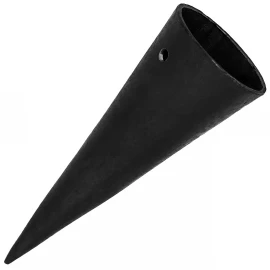
We recommend pairing this spearhead with a suitable wooden shaft, such as one made from ash, and a protective leather tip cover. To complete a Germanic warrior's outfit inspired by the 1st–3rd centuries AD, consider adding a wooden shield, a simple woollen tunic, a leather belt and historically appropriate footwear. A polearm display stand is also useful for presenting your completed replica.
A quality branded product from House of Warfare.
We are here for you!