Čeština
 Deutsch


David Battle Axe Head, 13th Century


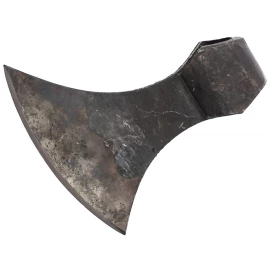
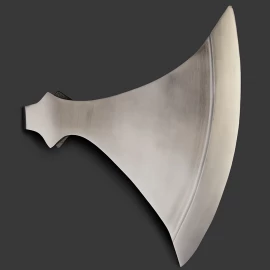
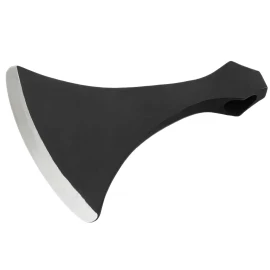
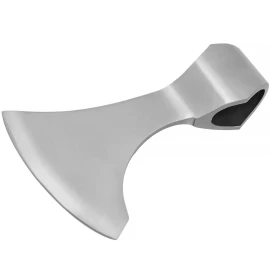
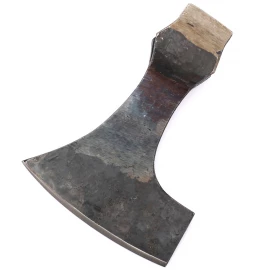
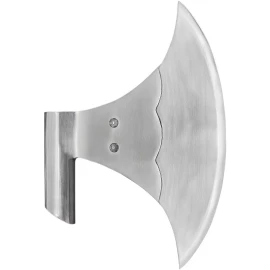
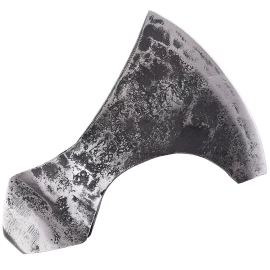
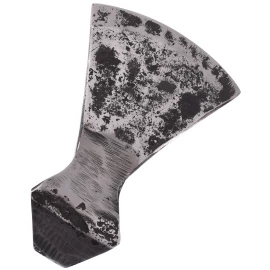
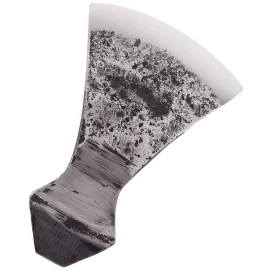
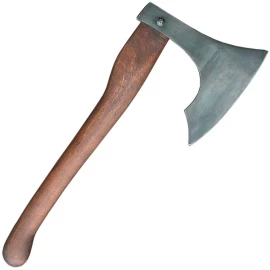
Looking for an unusual addition to your collection of medieval weapons? The David medieval battle axe head draws its inspiration from an illustration in the famous 13th-century Maciejowski Bible. Its imposing, widely flared blade, sweeping curved edge and two prominent points create an instantly recognisable silhouette. Three decorative rivets and subtle detailing around the neck complement its smooth steel surface. Made from unhardened high-carbon steel, the head measures approximately 35.1 × 22 cm (13.82 × 8.66 inches). It makes a striking collector's item, historical exhibition piece or decorative accessory for a 13th-century-inspired display. Supplied without a wooden haft. Further product information ...

Would you like to be notified as soon as the item is in stock?
You will receive a short e-mail as soon as we have it back in stock.
David Medieval Battle Axe Head, 13th Century
Broad Blade with a Sweeping Curved Edge
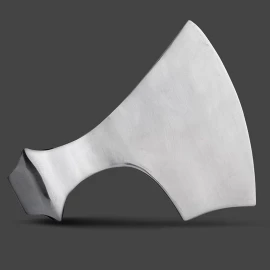
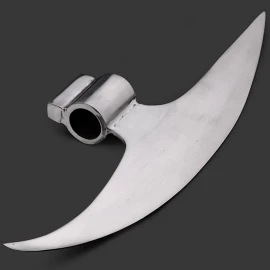
The most distinctive feature of this reproduction is its wide, fan-shaped axe blade, with a pronounced curved cutting edge extending between two elongated points. Both the upper and lower corners sweep backwards towards the socket, creating a striking crescent-like silhouette.
The broad blade has a smooth, bright metallic finish with subtle grinding marks. It is free from large perforations or figurative decoration. The transition to the narrower neck features a decoratively scalloped edge, accompanied by parallel engraved lines and three raised circular rivet heads.
At the opposite end is a cylindrical socket with an oval opening designed to receive a wooden axe haft. The opening measures approximately 4 × 3.2 cm (1.57 × 1.26 inches). Its interior is darker than the polished exterior.
The imposing proportions and unusual blade profile make this axe head an impressive example of weapon forms represented in medieval art.
Historical Inspiration: The Maciejowski Bible
The design is inspired by an illustration from the Maciejowski Bible, also known as the Morgan Bible or Crusader Bible. This famous illuminated manuscript was produced in France around the middle of the 13th century, commonly dated to the 1240s.
The manuscript contains remarkably vivid depictions of biblical stories. Although its narratives are set in ancient Israel, many figures wear clothing and carry weapons reflecting contemporary European fashions and military equipment from the period when the illustrations were created.
As a result, the Maciejowski Bible is an important visual source for studying 13th-century arms, armour and clothing. Its illustrations show mail-clad knights, infantrymen, swords, spears and a variety of axes.
According to the original product information, this axe design is inspired by page 39, depicting David defeating the Philistines. The reproduction captures the characteristic weapon shape represented in this illustrated tradition.
It is important, however, to distinguish medieval artistic imagery from archaeological evidence. An illustration demonstrates how a contemporary artist depicted a weapon, but does not necessarily establish the precise dimensions, materials or manufacturing methods of a real historical axe. This product is therefore inspired by a period visual source rather than being a documented exact reproduction of a surviving original.
Why Is the Axe Called David?
The name David refers to the biblical king of Israel, one of the most prominent figures in the Old Testament. He is best known for defeating the Philistine warrior Goliath, although the biblical accounts also describe his further military campaigns and conflicts with the Philistines.
The Maciejowski Bible presents these stories in the visual language of medieval warfare. The name therefore connects this axe with both the biblical hero and its artistic inspiration.
Uses for Your Decorative Axe Head
This axe head is intended exclusively for collecting, decoration and historical displays. Its unusual shape makes it particularly attractive as part of a collection of medieval weapon reproductions or an educational exhibition.
- Collecting: A distinctive addition to a collection of European medieval axes and historical weapons.
- Historical exhibitions: An illustrative example of a weapon form depicted in 13th-century French manuscript art.
- Reenactment and LARP: A static decorative object for equipment displays or historical settings, not for combat activities.
- Interior decoration: An imposing metal display piece for a study, clubroom or medieval-themed interior.
The axe head is supplied without a wooden haft. If you wish to mount it on a wooden handle for display, have the fitting carried out by a suitably experienced person. Fitting a haft does not make the assembled axe safe for practical use.
Technical Specifications
| Feature | Specification |
|---|---|
| Product type | Decorative medieval battle axe head |
| Model | David |
| Historical inspiration | Maciejowski Bible, 13th century |
| Date of illustrated source | Approximately mid-13th century |
| Material | High-carbon steel |
| Heat treatment | Unhardened |
| Metal axe head dimensions | Approx. 35.1 × 22 cm (13.82 × 8.66 inches) |
| Oval socket opening | Approx. 4 × 3.2 cm (1.57 × 1.26 inches) |
| Blade shape | Broad and fan-shaped, with curved cutting edge and two points |
| Decoration | Three raised rivets, engraved lines and scalloped neck detail |
| Finish | Silvery metallic, ground |
| Intended use | Decoration and collecting |
| Suitable for historical fencing | No |
| Package contents | 1 metal axe head without a wooden haft |
All dimensions are approximate.
Care and Maintenance
High-carbon steel requires regular protection against corrosion, particularly when exposed to humidity or perspiration.
- Cleaning: Regularly wipe the metal surface with a soft, dry cloth.
- Corrosion protection: Apply a thin film of suitable protective oil to clean, dry steel.
- Handling: Minimise unnecessary contact with bare hands and remove fingerprints after handling.
- Storage: Store the axe head in a dry environment away from excessive moisture.
- Surface protection: Avoid aggressive cleaning agents, coarse abrasives and unqualified alterations that could damage its appearance.
Safety Information
Warning! This axe head is a decorative reproduction only and is not intended for practical use. Although its appearance and materials resemble those of historical weapons, the manufacturer does not provide the servicing necessary for practical combat use.
Do not use this axe head for historical fencing, stage combat, HEMA, contact fighting, chopping wood, cutting tests or axe throwing. The unhardened steel has no declared performance characteristics for such activities.
The substantial metal head features projecting points and edges that may cause serious injury if handled carelessly. Secure it firmly against falling when displayed. Keep it away from children and unauthorised persons.
Even if mounted on a wooden haft, the assembled axe must not be used for striking or any other practical activity.
Recommended Accessories
For displaying the axe head, we recommend a stable historical weapon stand or suitable wall mount. To build a coherent collection, combine it with reproductions of 13th-century swords, spears and shields. A mail shirt, great helm or period surcoat can also help illustrate the equipment of a European warrior from the time when the Maciejowski Bible was created.
We are here for you!