
 Čeština
 Deutsch


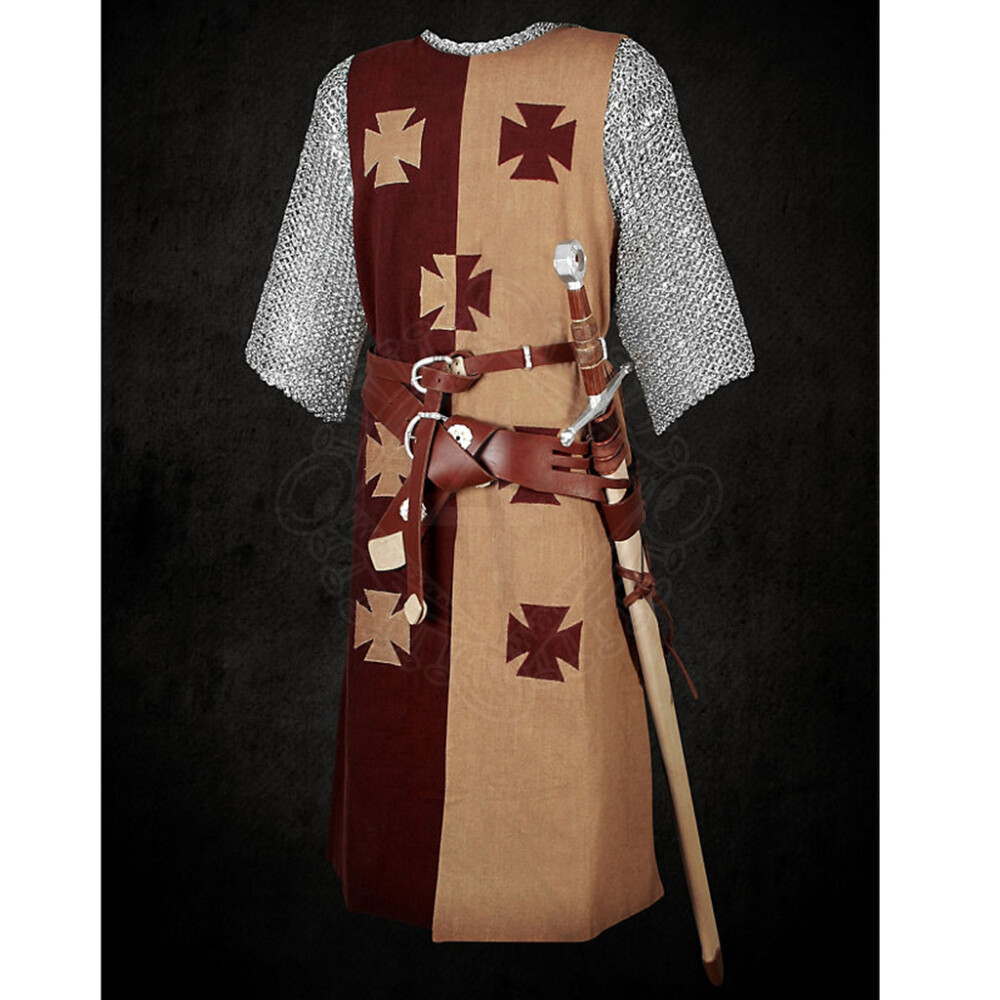
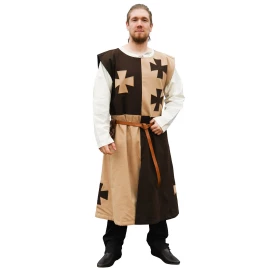
Knight's Surcoat of Ibelin, Brown-Beige
1x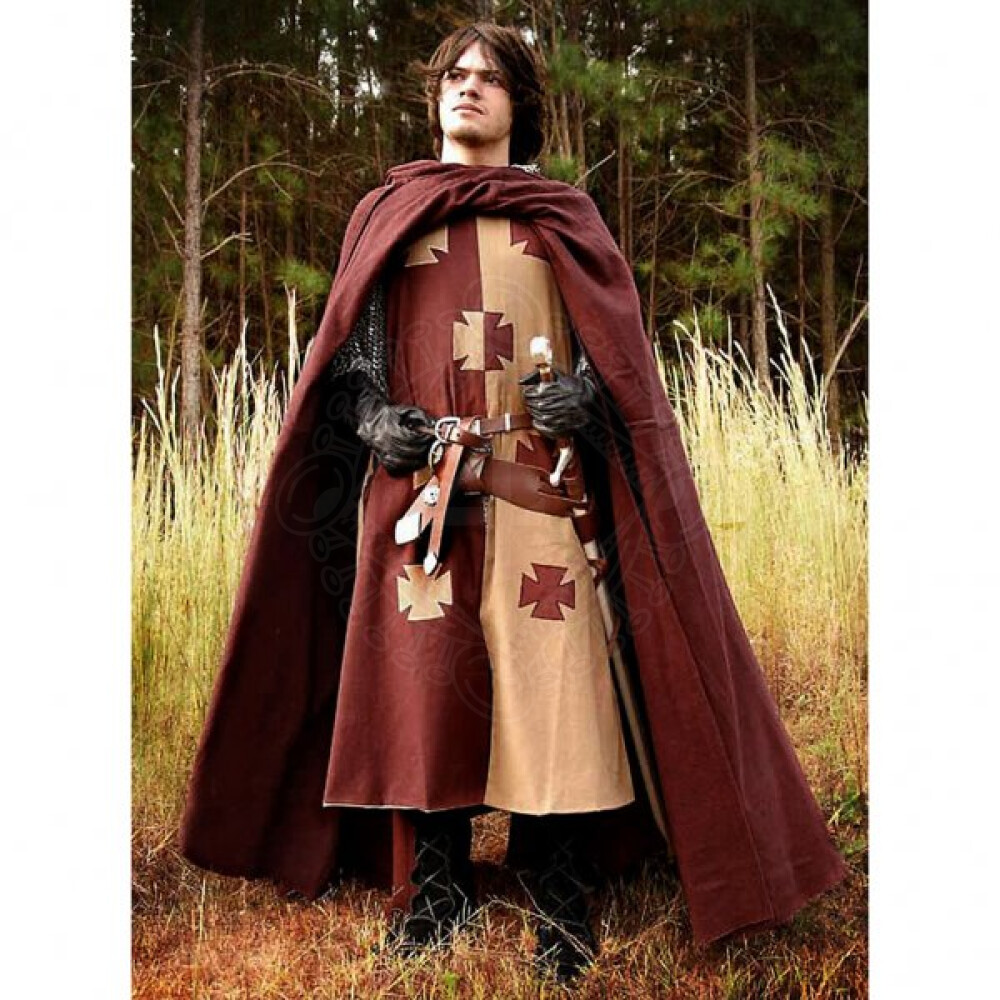
Step into the boots of a valiant Crusader knight from the esteemed House of Ibelin with this faithfully crafted surcoat. Inspired by the 12th century and the defenders of the Kingdom of Jerusalem, this garment is more than just a costume—it's your gateway to history. Made from a tough yet comfortable fabric, its design accurately reflects the heraldic colours and symbols of one of the most influential families in the Crusader states. Further product information ...

Knight's Surcoat of Ibelin, Brown-Beige
Design and Construction
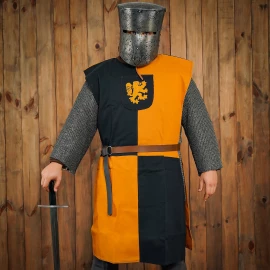
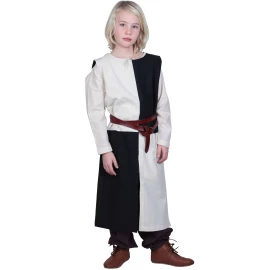
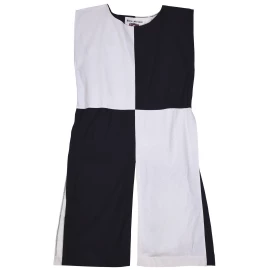
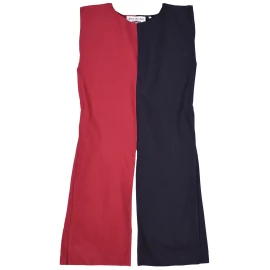
This high-quality medieval surcoat is crafted from durable 100% cotton twill, which holds its shape excellently while remaining comfortable to wear. The garment is vertically divided into two coloured sections—one dark brown and one beige—creating a striking visual contrast.
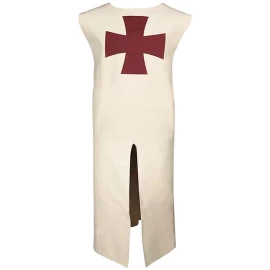
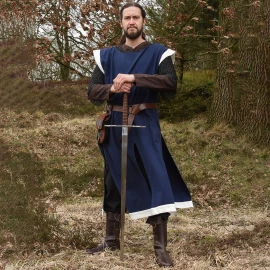
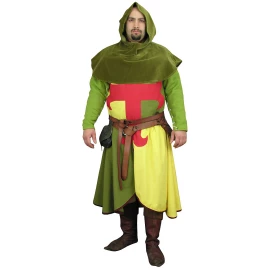
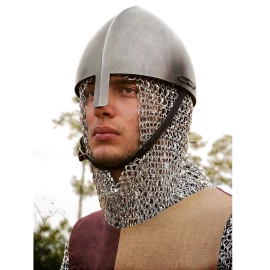
Adorning the chest and skirt are a total of four large Crosses Pattée, a style typical of knightly orders, including the Templars. The crosses are always in the opposite colour of their background, making the motif stand out even more. The surcoat features a loose, sleeveless cut, designed to be worn comfortably over chainmail or a gambeson. To ensure maximum freedom of movement, whether in battle or on the march, it is equipped with deep slits in the front and back.
Perfect For Any Occasion
This knight's garment is the ideal choice for a wide range of events. It will perfectly complement your attire for:
- LARP (Live-Action Role-Playing)
- Renaissance faires and medieval markets
- Historical reenactments and parades
- Theatrical productions and film shoots
- Themed weddings and celebrations
A Garment Steeped in History
The surcoat was the typical outer garment for knights during the High Middle Ages, especially during the Crusades. It served several purposes: it protected the metal armour from the hot sun and rain, and it also served as a means of identification. The colours and symbols on the surcoat (heraldry) clearly indicated which house or sovereign the knight served. The House of Ibelin was a prominent noble family in the Crusader Kingdom of Jerusalem during the 12th and 13th centuries.
A Link to a Legend
The most famous member of the family was Balian of Ibelin, renowned for his defence of Jerusalem against Sultan Saladin in 1187. Although the city eventually fell after a siege, Balian negotiated terms that allowed the inhabitants to leave safely, preventing a massacre. His character was popularised in the film Kingdom of Heaven.
Care Instructions
To ensure your surcoat lasts as long as possible while retaining its colour and shape, we recommend the following care:
- Washing: Machine wash on a gentle cycle at a temperature up to 30°C (86°F). Use a detergent for coloured fabrics.
- Drying: Do not tumble dry. Hang the surcoat on a hanger and let it air dry away from direct sunlight.
- Ironing: Iron on a medium setting (cotton), ideally from the reverse side to protect the appliquéd crosses.
Material and Inclusions
Material: Twill (100% cotton)
Colour: Dark brown, beige
Included in delivery: one surcoat without the belt, sword, or other accessories shown.
Please refer to our size chart, as Outfit4Events sizing may not be the same as your usual size.
We are here for you!






.3773623034.1696456237.png.webp)

.3773623034.1696456268.png.webp)
.3773623034.1696456247.png.webp)