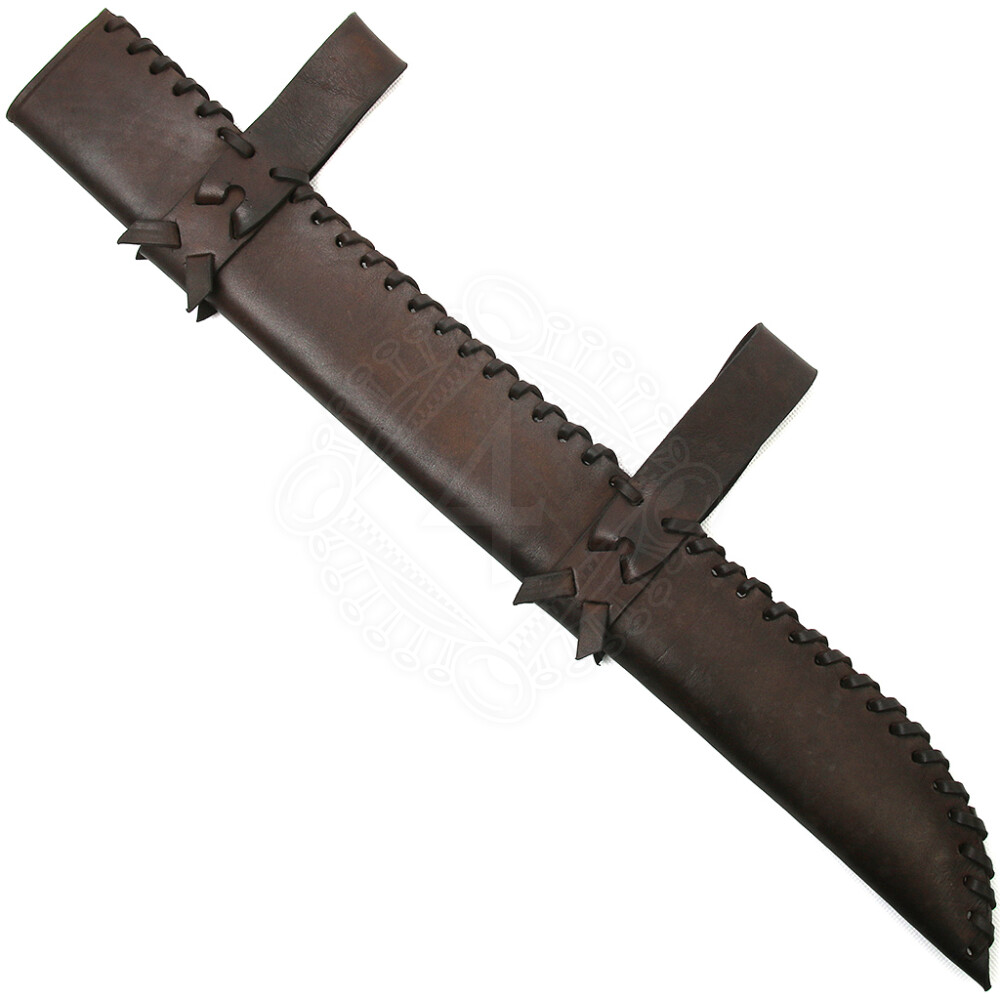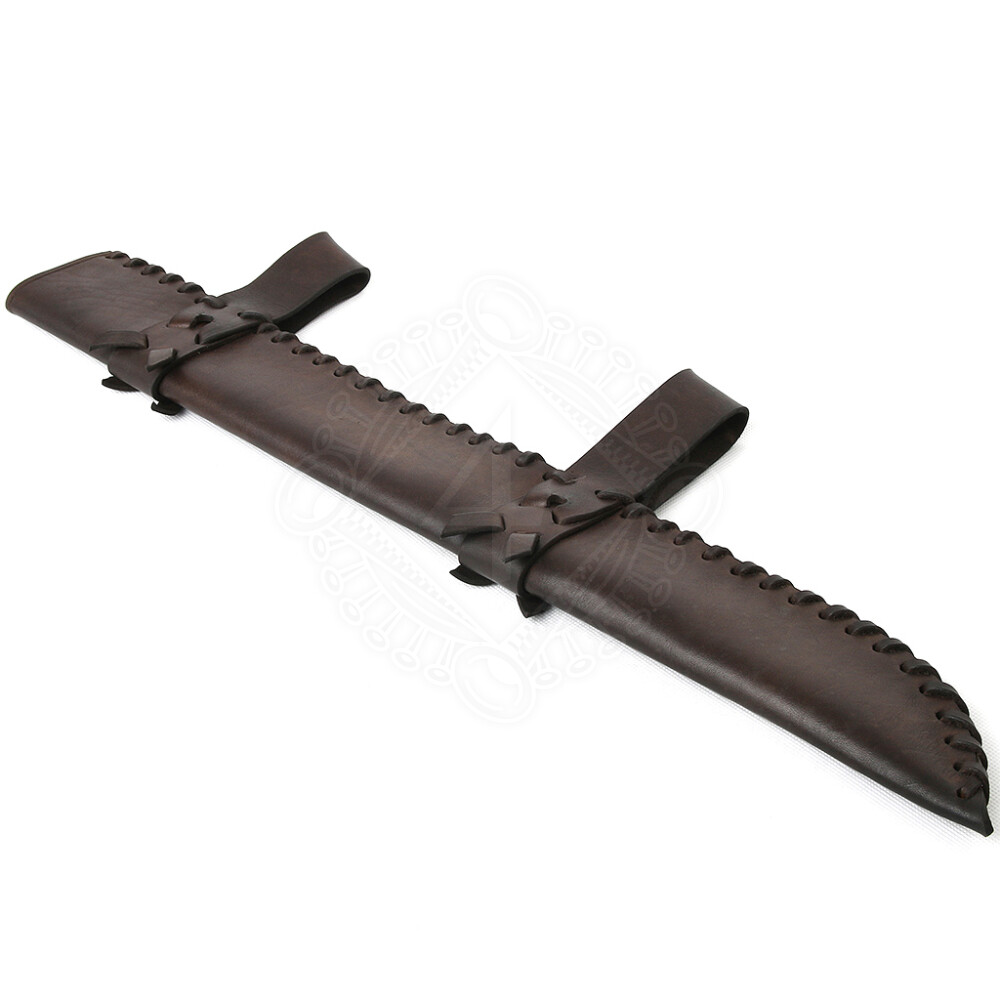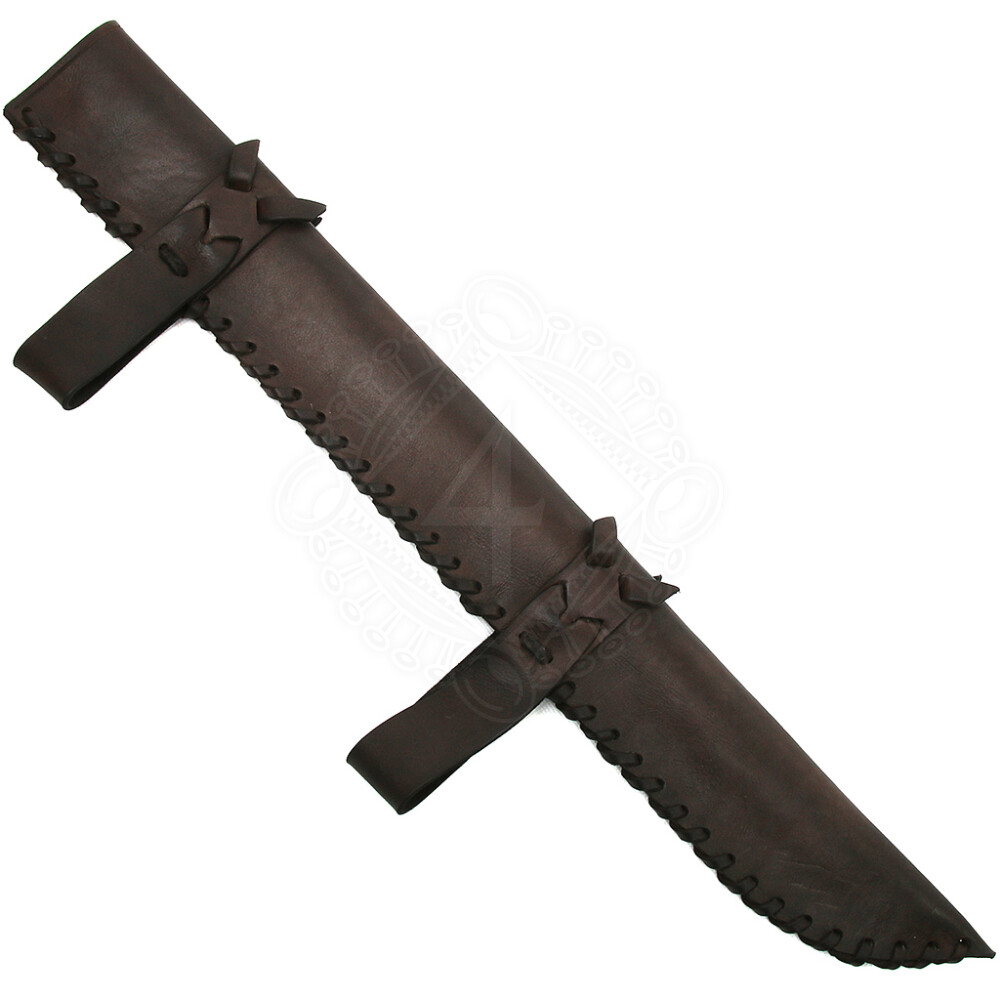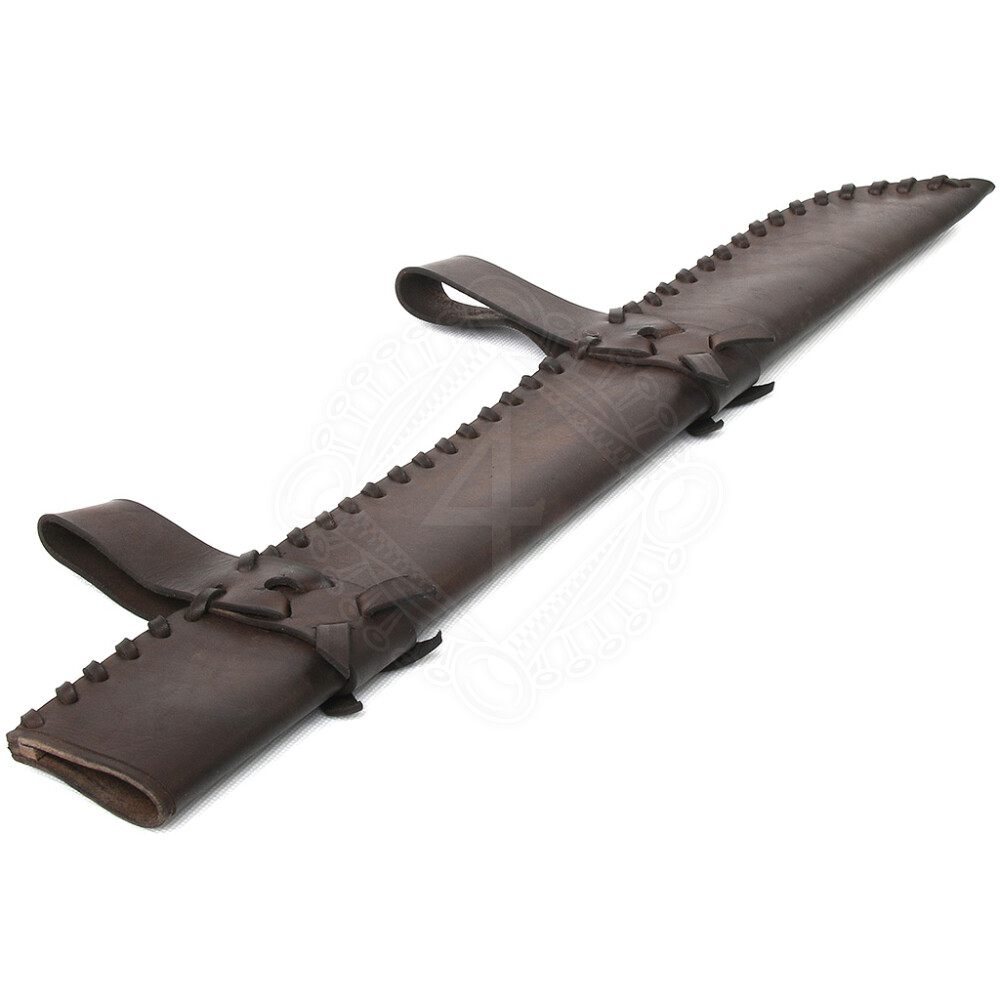

Leather Seax Scabbard with Lacing
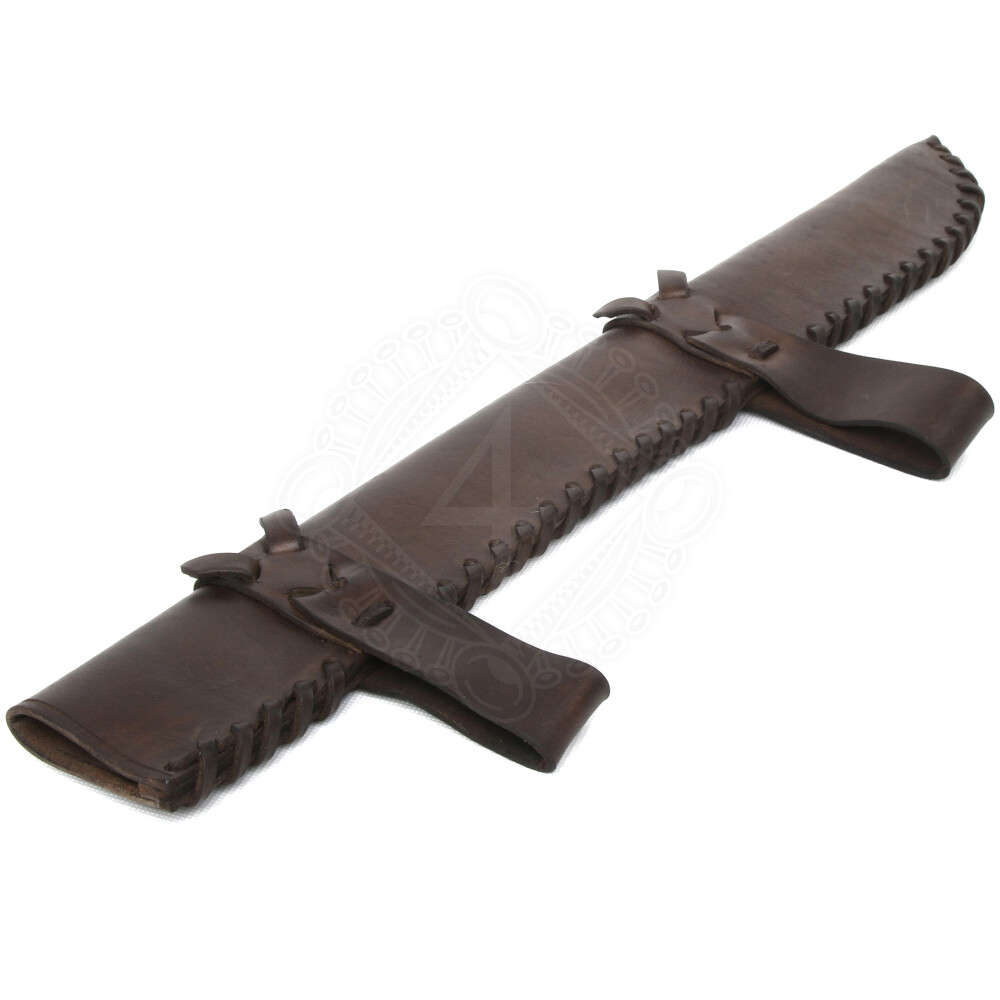
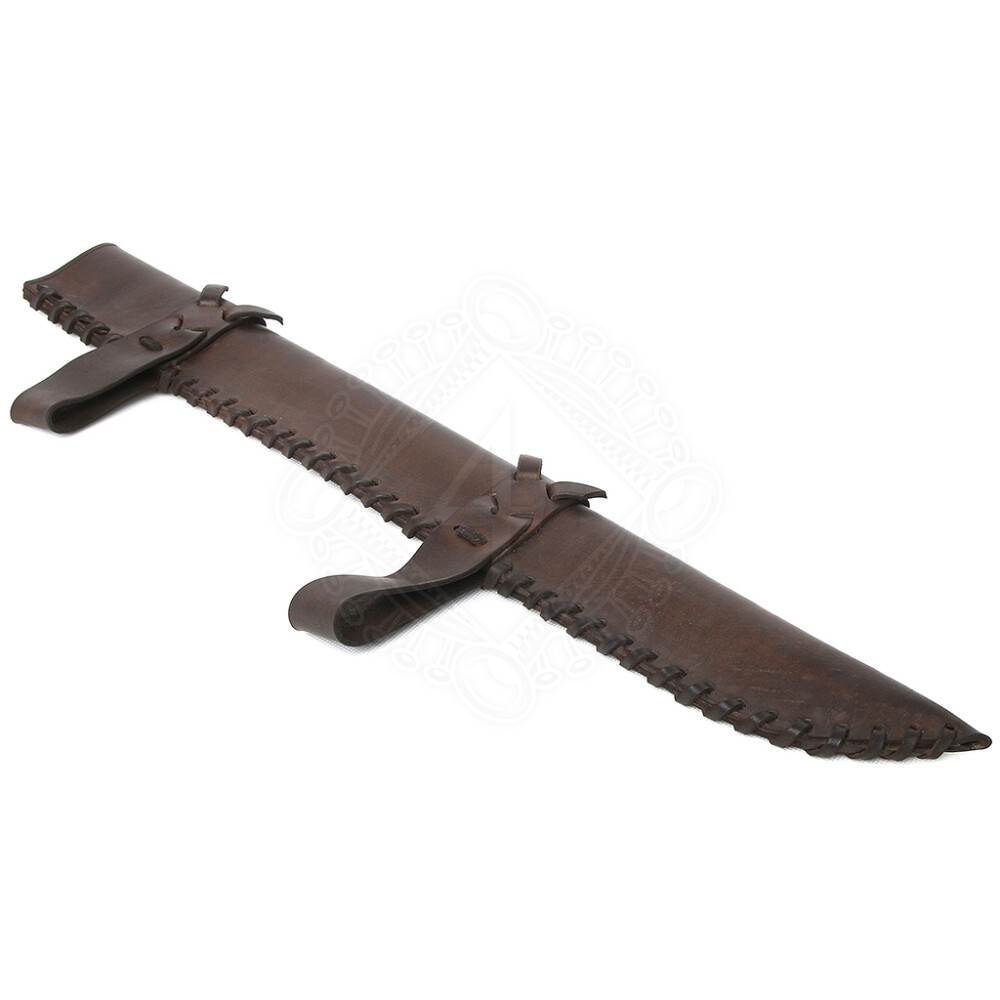
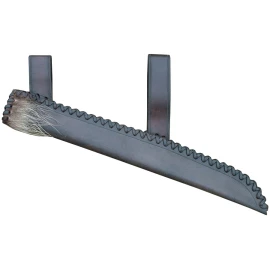
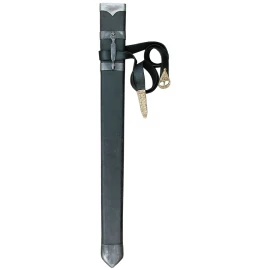
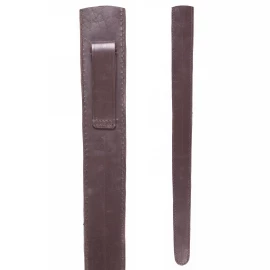
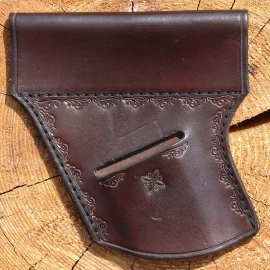
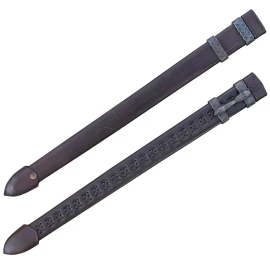
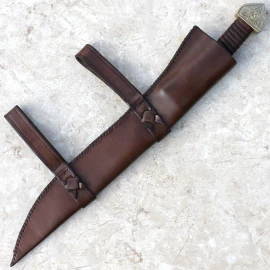
Do you own an honest Viking seax and are looking for an authentic coat for it? This custom-made leather scabbard, based on historical finds from the late 8th century, is exactly what your early medieval costume needs. It will captivate you not only with its massive construction from thick cowhide but above all with the historically accurate method of horizontal suspension using effectively braided loops. Your weapon will be perfectly protected from the weather and mechanical damage, while you will have it safely and comfortably at hand at all times. Bring your rugged Nordic warrior look to absolute perfection. Further product information ...
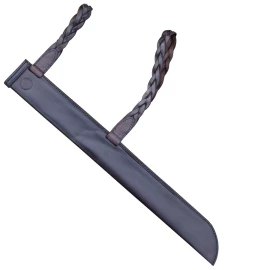
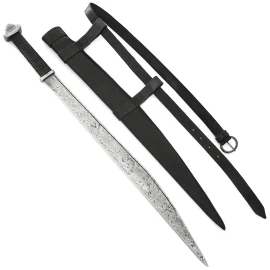
Horizontal Viking Leather Seax Scabbard with Lacing, 8th Century
Historical Context and Method of Wearing
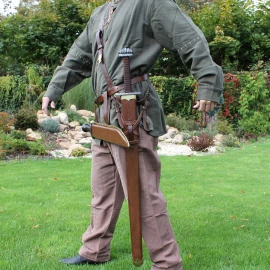
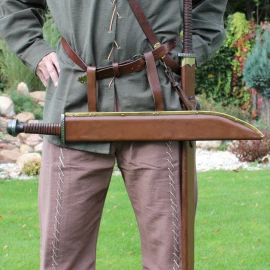
The seax (or scramasax) was a highly popular single-edged weapon and utility tool of the early Middle Ages, extensively used by Germanic tribes and Vikings. Unlike long swords, the seax was traditionally worn suspended from the belt in a horizontal position, most commonly across the abdomen or on the back, with the edge pointing upwards. This method of wearing allowed for a very quick draw of the weapon and at the same time did not restrict the warrior's movement, even when sitting on a bench or in the saddle.
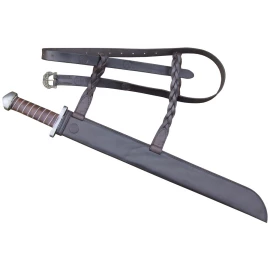
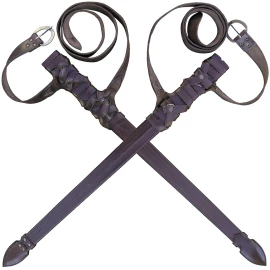
The model for this specific scabbard dates back to the late 8th century. It is characterised by the typical hand-lacing with a leather thong along the entire spine of the sheath. The suspension is handled in an absolutely authentic way using two massive leather loops, which are not sewn to the scabbard, but are ingeniously braided directly around its body. You simply thread your period belt through these loops.
Custom Manufacture and Technical Parameters
To ensure that the weapon holds firmly in the scabbard and does not fall out, it is essential to manufacture the sheath exactly to fit the given blade. If the scabbard is ordered together with a seax from our range, it is automatically made specifically for it. If it is ordered separately, it is absolutely essential for production that you send your physical seax to our address by post. Only in this way can it be guaranteed that the sheath will fit perfectly.
| Historical Period | Late 8th Century (Early Middle Ages / Viking Age) |
| Scabbard Material | Genuine smooth cowhide leather |
| Leather Thickness | up to 3.5 mm (approx. 0.14 inches) |
| Joining Method | Hand-laced with a leather thong along the spine |
| Method of Wearing | Horizontal on the belt |
| Loop Attachment | Traditional braiding around the body of the scabbard |
| Package Contents | 1x leather scabbard (the weapon and belt shown in the photos are not included) |
Leather Care and Safety Instructions
Leather is a durable natural material, but it requires regular care to maintain its shape retention and flexibility. We recommend occasionally greasing the outside of the scabbard with a high-quality leather balm containing beeswax. If you get caught in the rain on an expedition, let the scabbard dry naturally and slowly at a normal room temperature upon your return. Strictly avoid drying it on a radiator, near an open flame, or in direct sunlight. The intense heat would dry out the leather, cause it to harden, and potentially crack irreversibly.
Always exercise extra caution when sheathing the weapon back into the scabbard. If you own a sharply honed seax, careless or crooked insertion of the blade could easily slice the leather from the inside, causing injury or the destruction of the product. Also, bear in mind that slight variations in colour and surface texture compared to the photographs are a natural characteristic of genuine leather, making every piece a unique original.
Recommended Accessories
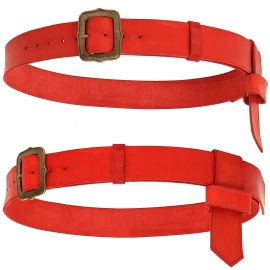
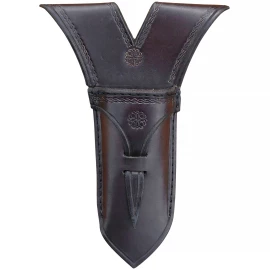
To accompany this horizontal scabbard, we highly recommend acquiring a sturdy Viking leather belt with a bronze buckle and a replica of a period pouch, bringing your early medieval clothing to absolute perfection.
We are here for you!