
 Čeština
 Deutsch


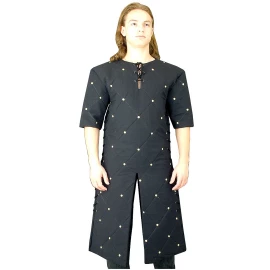
Brigantine with steel plates and short sleeves
1x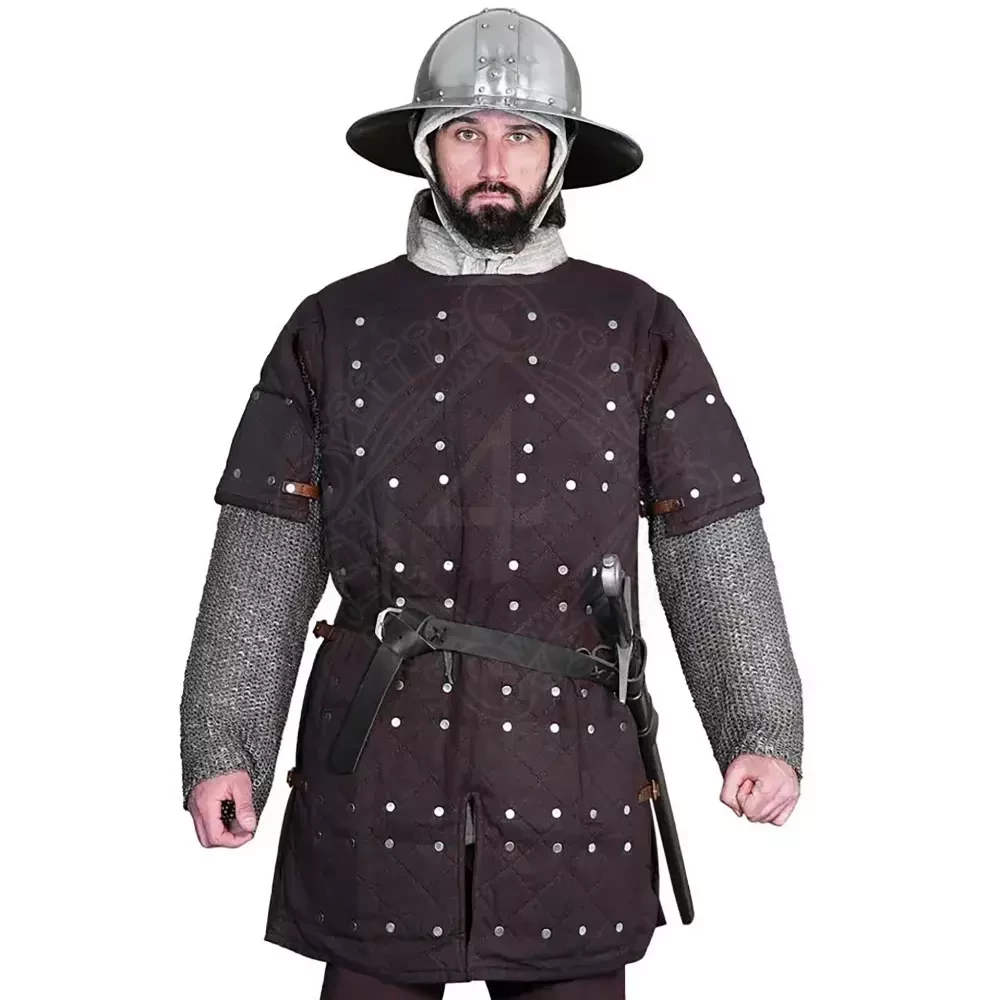
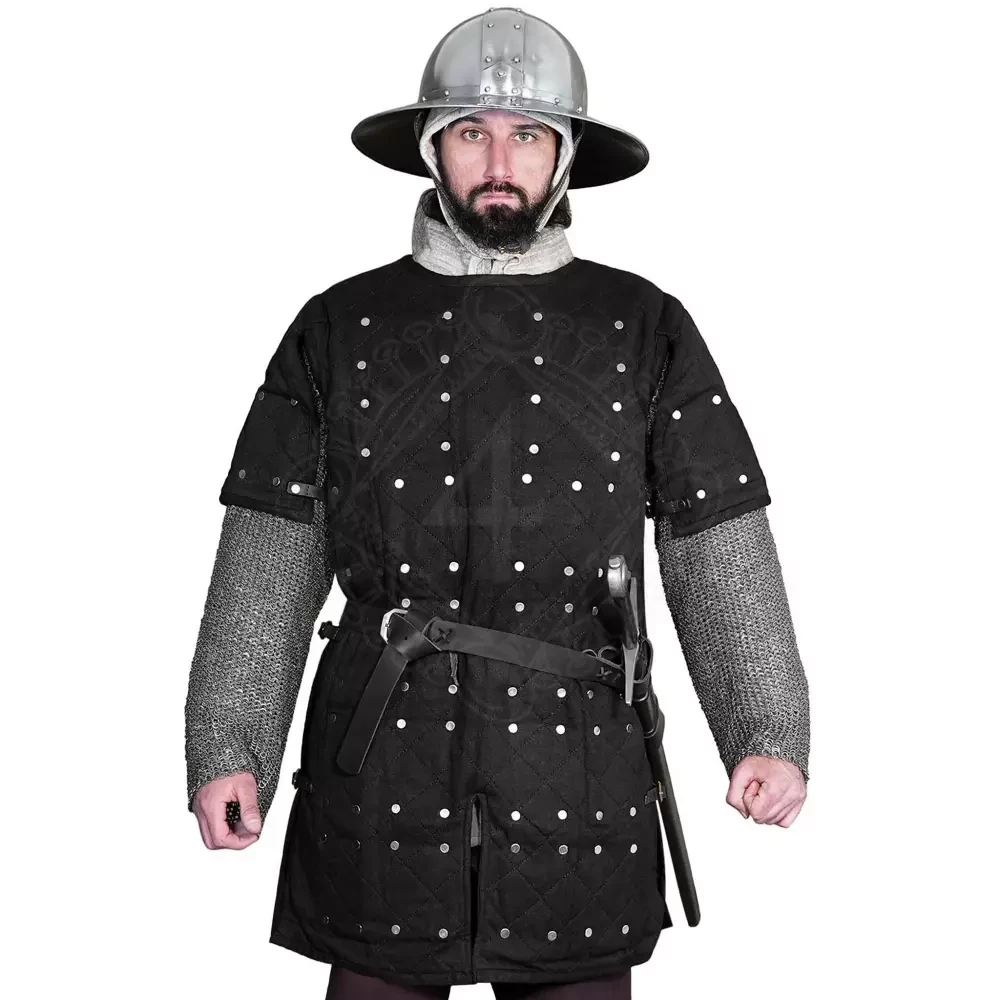
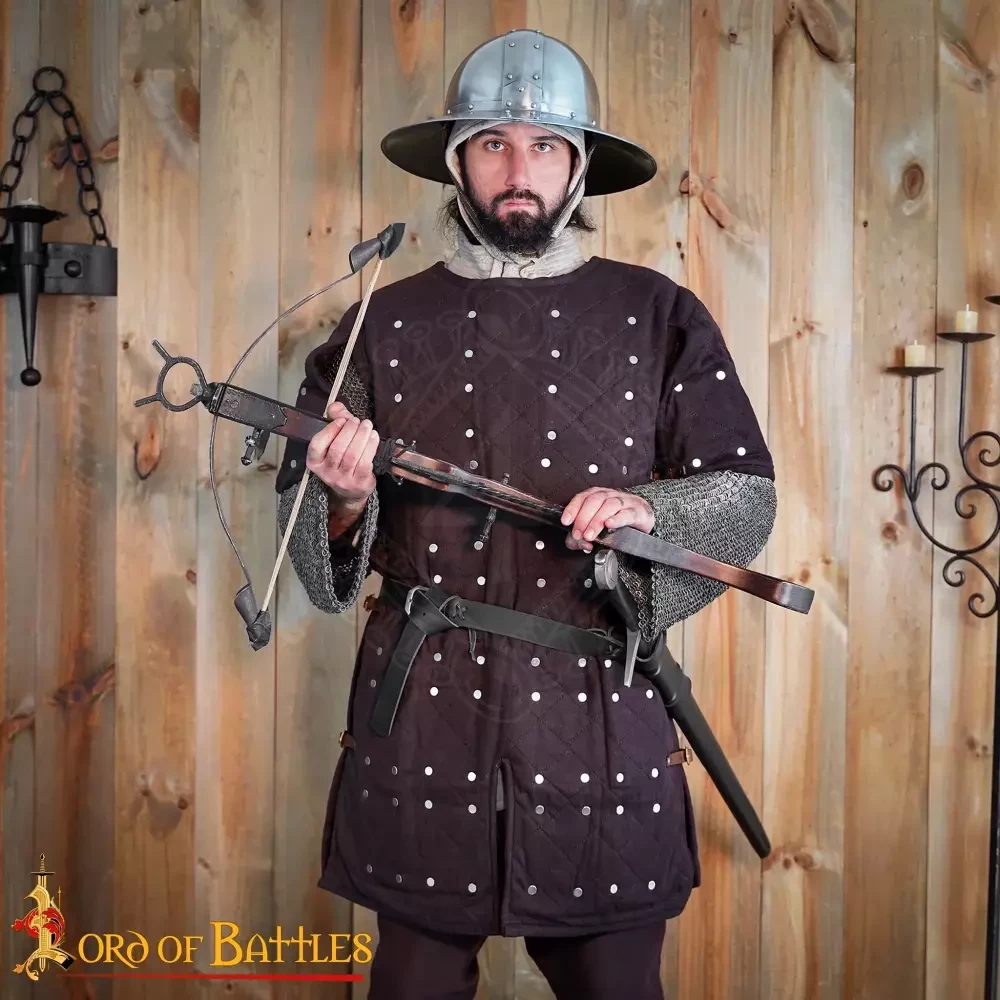
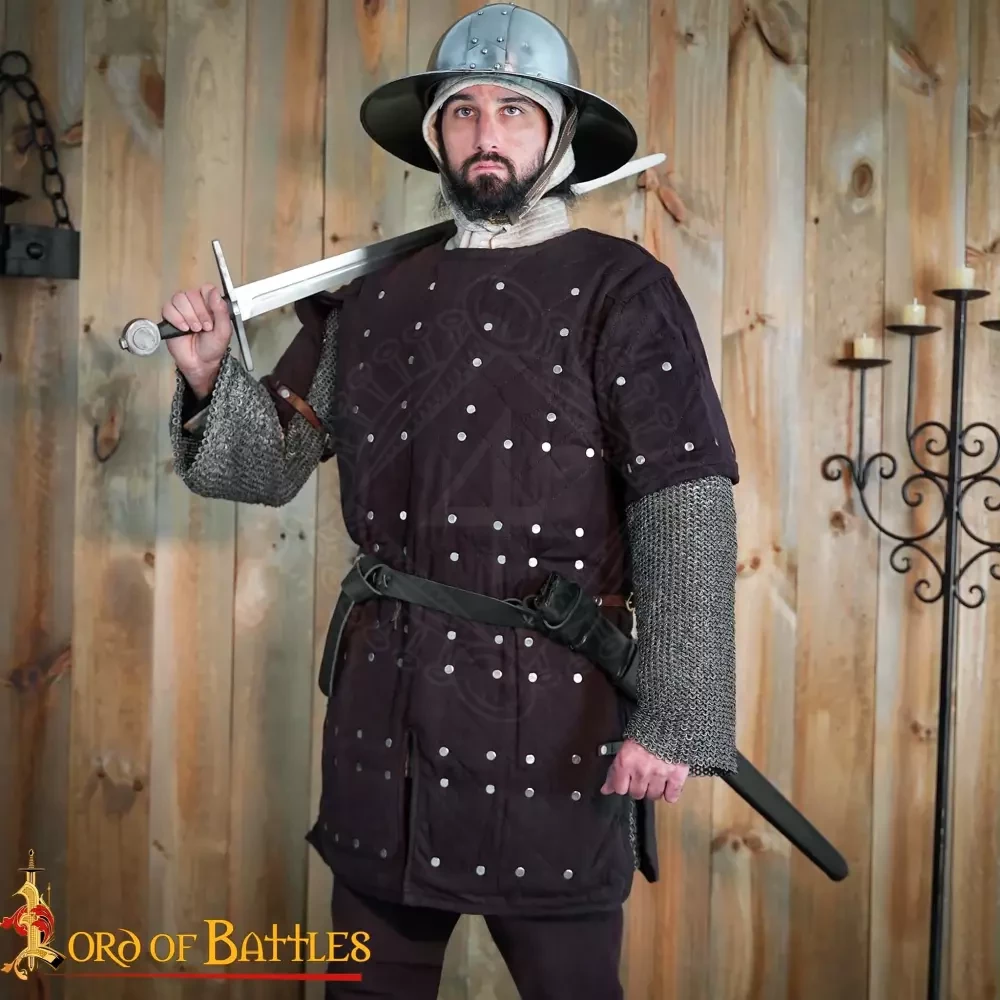
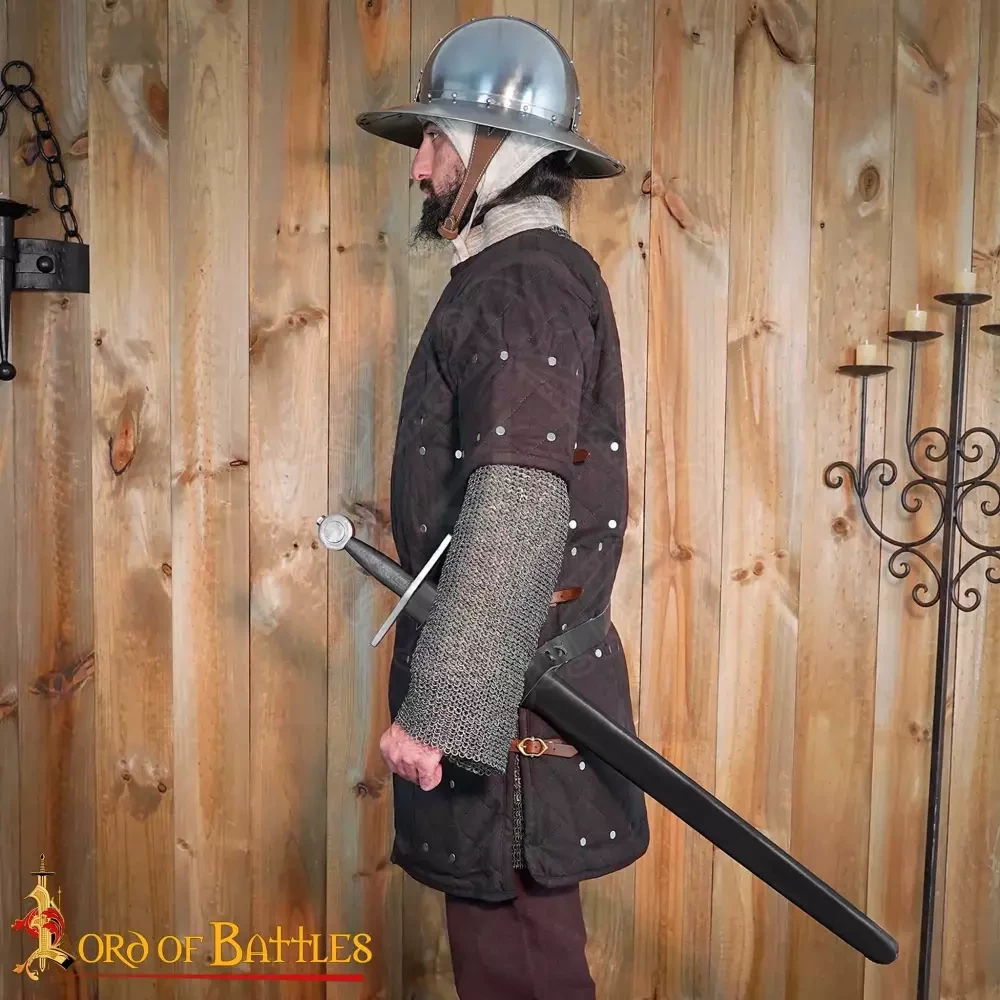

Equip yourself with protection and style! This medieval brigandine, inspired by historical designs of the 14th and 15th centuries, offers you solid protection for the torso and shoulders while maintaining excellent mobility. It is made from durable 100% cotton with an inner lining and reinforced with overlapping steel plates. The ideal choice for reenactment, LARP, or as part of your historical costume. Further product information ...

Medieval Brigandine Body Armour with Steel Plates and Short Sleeves
This high-quality brigandine combines an outer layer of strong 100% cotton fabric (canvas) with an inner cotton lining for comfortable wear. Firmly riveted between these layers are overlapping steel plates, approximately 1.2 mm thick and measuring around 127 x 83 mm. The rivets are visible on the exterior, creating a characteristic pattern. Short sleeves and added reinforcements in the shoulder and upper arm areas (compared to some historical examples) enhance protection without significantly restricting arm movement. Breathability is ensured by both the natural cotton material and the short-sleeved cut. Fastening is practically handled on the sides with three pairs of leather straps (approx. 15.8 mm wide, 2.7 mm thick) and durable brass buckles (approx. 42.9 x 28.5 mm), allowing for easy adjustment to fit your figure. The brigandine is available in black and brown colours.
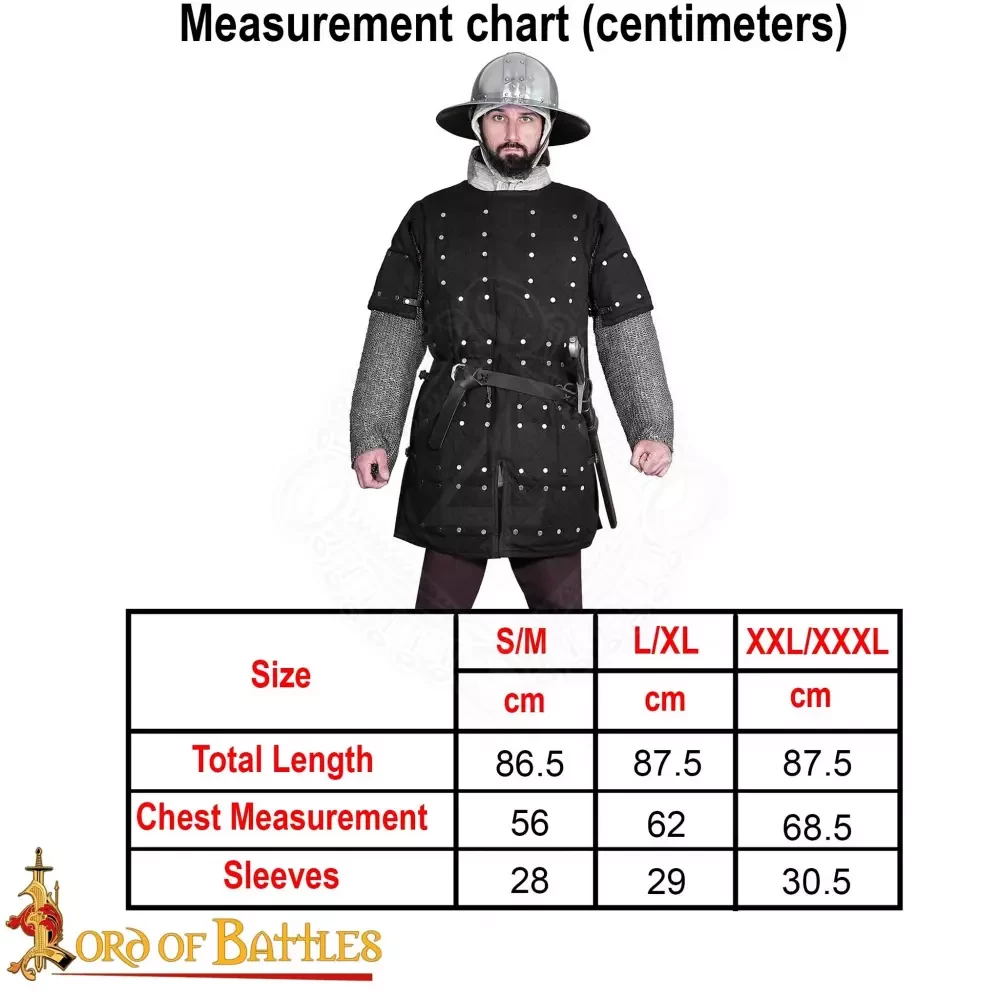
Size chart (approximate values)
| Size | Shoulder Width | Length (from neck) | Overall Length (from shoulder) | Chest Width (half circumference) | Sleeve Length (top edge) | Slit Length | Weight |
|---|---|---|---|---|---|---|---|
| S/M | ca. 52 cm (approx. 20.5") | ca. 97 cm (approx. 38.2") | ca. 93 cm (approx. 36.6") | ca. 61 cm (approx. 24.0") | ca. 28 cm (approx. 11.0") | ca. 21 cm (approx. 8.3") | ca. 4550 g (4.55 kg / 10.0 lbs) |
| L/XL | ca. 53 cm (approx. 20.9") | ca. 99 cm (approx. 39.0") | ca. 94 cm (approx. 37.0") | ca. 64 cm (approx. 25.2") | ca. 30 cm (approx. 11.8") | ca. 22 cm (approx. 8.7") | ca. 4700 g* (4.7 kg / 10.4 lbs) |
| 2XL/3XL | ca. 56 cm (approx. 22.0") | ca. 102 cm (approx. 40.2") | ca. 96 cm* (approx. 37.8") | ca. 68 cm (approx. 26.8") | ca. 32 cm (approx. 12.6") | ca. 23 cm (approx. 9.1") | ca. 4900 g (4.9 kg / 10.8 lbs) |
Historical use
Brigandines were a popular type of body armour in the 14th and 15th centuries. They represented a compromise between protection, cost, and mobility. They were constructed by riveting metal plates (most commonly steel) between layers of fabric (canvas, velvet) or leather. This provided protection comparable to plate armour but was often cheaper to produce and offered greater flexibility. They were used by knights, men-at-arms, mercenaries, and city militias. Typically, they were worn over a gambeson and sometimes over a mail shirt for enhanced protection.
Modern use
Today, this brigandine is an excellent choice for:
- Historical Reenactment: Faithfully portraying a soldier or knight of the 14th and 15th centuries.
- LARP (Live Action Role Play): Effective and stylish armour for your warrior character.
- Historical Fencing (HEMA): Provides torso protection during training or light sparring (always prioritise safety and follow your group's rules).
- Cosplay and Theatre: An authentic element for historical costumes.
- Display: An impressive display piece for history enthusiasts.
A note from history
The name "brigandine" derives from the word "brigand," which originally referred to a foot soldier or mercenary. Although the term later acquired negative connotations (robber, bandit), it initially referred to the type of soldiers who frequently used this form of armour. The construction, with plates concealed beneath fabric, also allowed the outer layer to be decorated according to the owner's wealth – from simple canvas to expensive velvet or brocade.
Care and storage
- Cleaning: Clean the outer cotton layer locally only, using a damp cloth. Do not saturate, to avoid corrosion of the steel plates. The inner lining can be wiped clean.
- Moisture: Protect the brigandine from rain and prolonged dampness. If it gets wet, allow it to dry thoroughly in an airy place, away from direct heat sources.
- Storage: Store in a dry, ventilated place. Ideally, hang it on a wide hanger or mannequin to prevent deformation under its own weight and creasing. For long-term storage, lightly oiling the plates (through the lining or with careful access from inside) might be advisable to prevent rust.
- Handling: Avoid forceful bending or folding, which could damage the fabric or loosen rivets.
Don't hesitate – get this fantastic brigandine! It offers not only protection but also an authentic look for your historical adventures. Be ready for battle, tournaments, or your next LARP campaign with style and confidence!
We are here for you!









.3773623034.1696456237.png.webp)

.3773623034.1696456268.png.webp)
.3773623034.1696456247.png.webp)