Čeština
 Deutsch


Hand-and-a-Half Sword Alvir for Stage Combat
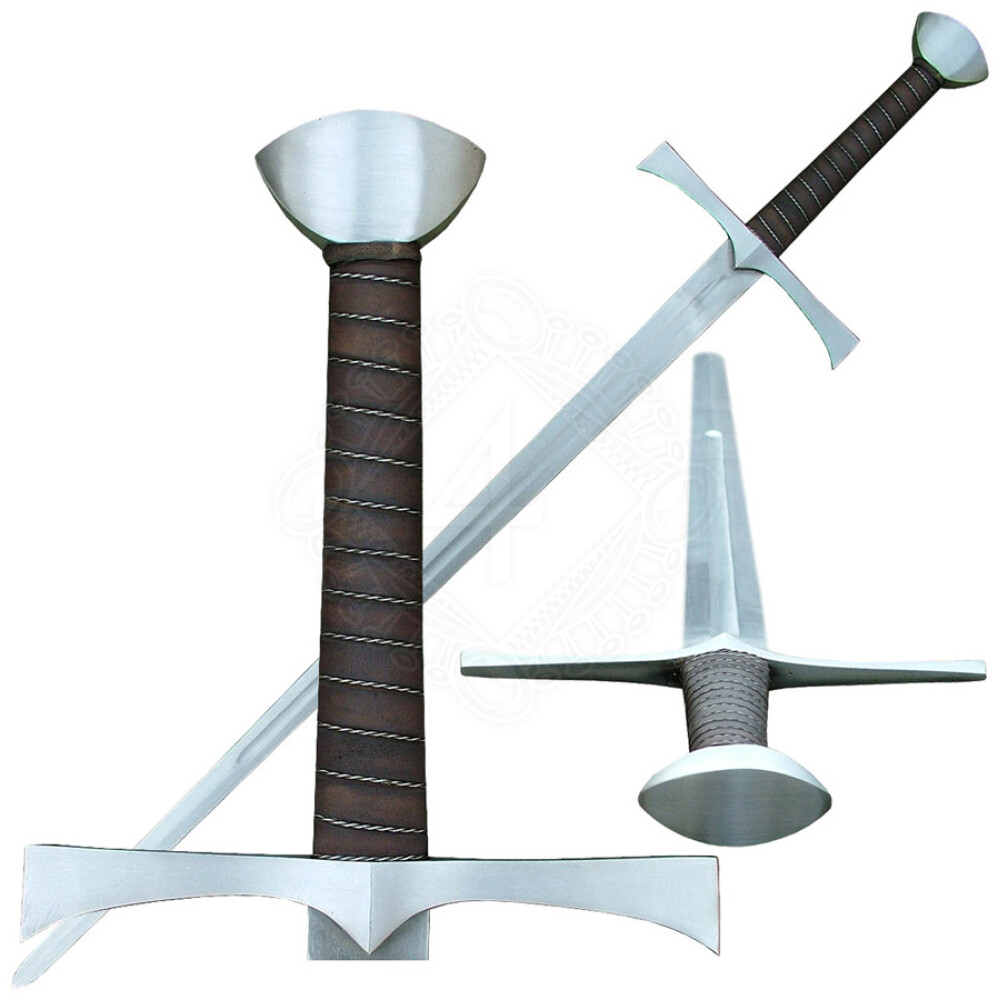

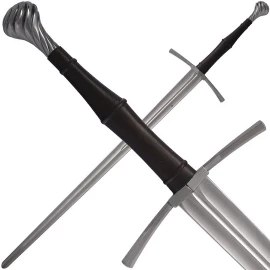
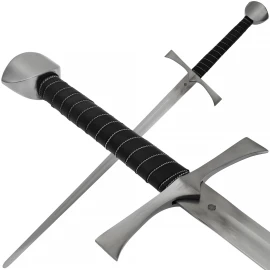
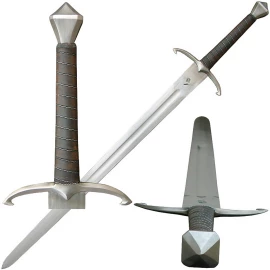
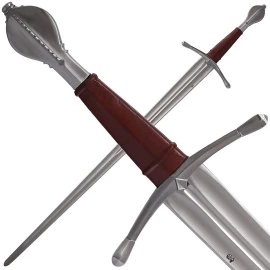
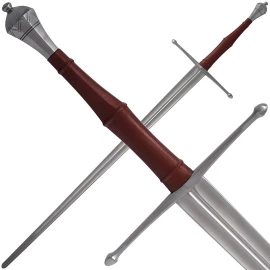
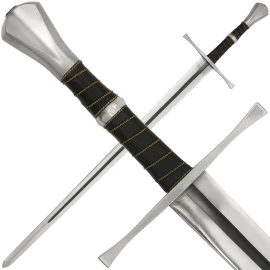
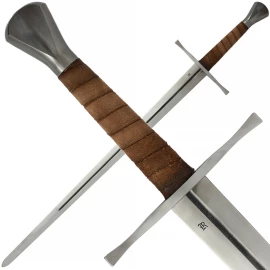
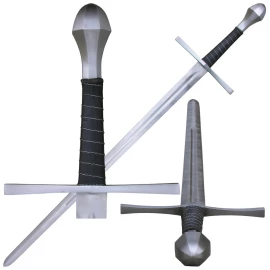
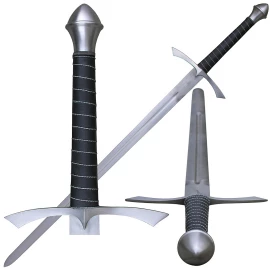
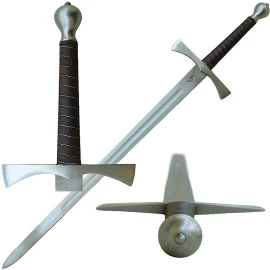
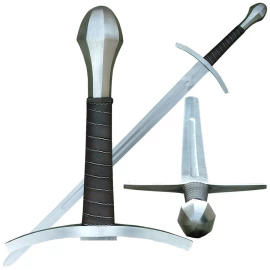
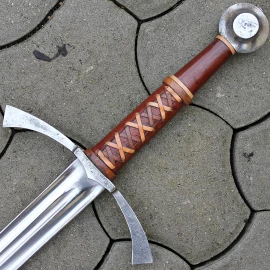
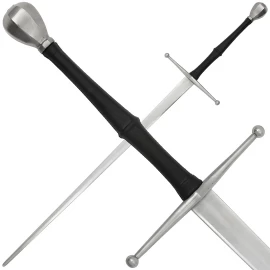
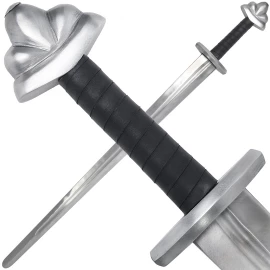
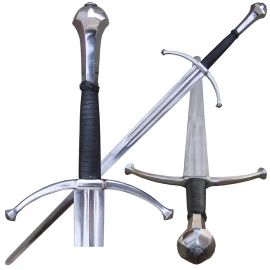
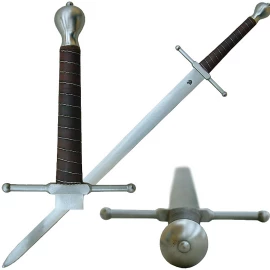
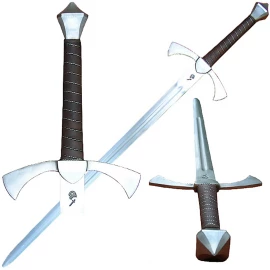
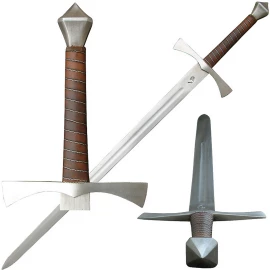
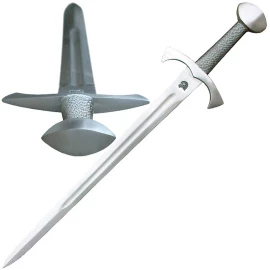
Are you looking for a reliable and perfectly balanced weapon for historical fencing, training sessions, or stage combat performance? The Gothic hand-and-a-half sword Alvir represents a seamless fusion of traditional Czech blacksmithing and functional design. We recommend this longsword for its excellent handling and sturdy craftmanship. Forged from high-quality ČSN 14260 spring steel and oil-tempered to approx. 47 HRC, the blade offers outstanding resilience and flexibility. The leather and wire-wrapped wooden grip fits firmly in hand for precise sword control. Rated as a Class B fencing weapon, it features a 2–3 mm blunt edge and a rounded safety tip for contact sparring. Further product information ...

Gothic Hand-and-a-Half Sword Alvir for Stage Combat
Historical Background and Functionality
Hand-and-a-half swords, frequently called longswords or bastard swords, reached their peak popularity during the 14th and 15th centuries. They evolved as a direct response to the introduction of full plate armour. Warriors needed a weapon capable of generating powerful two-handed cuts and thrusts while remaining balanced enough for one-handed use paired with a shield. The wide central fuller lightens the overall blade weight without compromising structural rigidity.
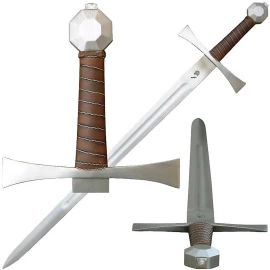
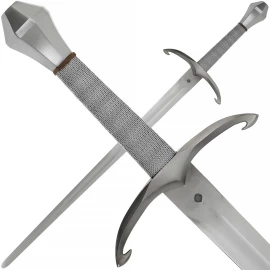
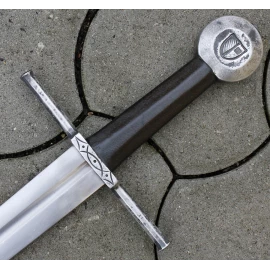
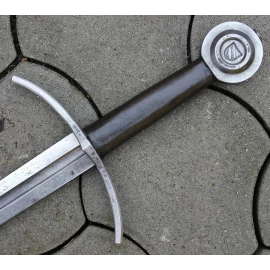
Typologically, this sword displays late Gothic design elements (Oakeshott Type XVIII or XIIIa) featuring a mushroom/scalloped pommel and a curved crossguard with a central rain-guard shield. It is perfectly suited for stage combat training, HEMA martial arts, theatrical fighting, and 14th to 15th-century historical reenactment.
Meaning of the Name Alvir
The name Alvir originates from Old Norse and Germanic roots, roughly translating to "all-protector" or "guardian of all". The name symbolizes vigilance, steadfast protection, and chivalric honour—traits that this longsword exemplifies through its dependable construction in battle.
Technical Specifications
| Specification | Value |
|---|---|
| Overall length | approx. 120 cm / 47.24 in |
| Blade length | approx. 92.5 cm / 36.42 in |
| Crossguard width | approx. 24.5 cm / 9.65 in |
| Weight | approx. 2.20 kg / 4.85 lbs |
| Weapon classification | Class B (fencing weapon classification) |
| Blade material | ČSN 14260 spring steel (oil-hardened) |
| Steel hardness | approx. 47 HRC |
| Edge thickness | 2–3 mm / 0.08–0.12 in (blunt safety edge) |
| Tip execution | Rounded safety tip |
| Grip material | Wood core wrapped in leather and wire, steel guard and pommel |
| Country of origin | Czech Republic |
Care and Safety Instructions
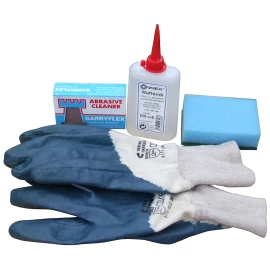
Because the spring steel blade is not rustproof, proper care is required. Clean and dry the blade thoroughly after every training session, applying a protective gun oil (such as Ballistol). As a functional contact fencing weapon, all usage is undertaken strictly at your own risk. Execute strikes with proper martial form rather than raw force, avoiding direct edge-to-edge impacts by catching incoming blows on the flat of the blade.
Inspect the sword before each practice. Regularly smooth down any edge nicks or burrs with a diamond file or fine sandpaper to prevent injuries to your sparring partners. If the guard loosens over time, tighten or repeen the pommel. Store in a dry place out of reach of children.
Directions for the Use of Bladed Weapons from Outfit4Events
Recommended Accessories
To complete your equipment set for 14th–15th century combat styles, we recommend:
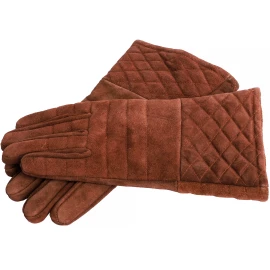
- Padded fencing gloves – essential hand protection for stage combat sparring.
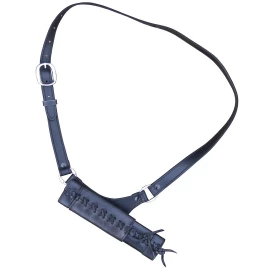
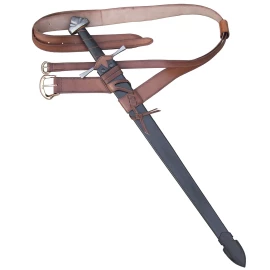
- Custom leather scabbard – for safe carrying on your sword belt.
- Padded gambeson – protective undergarment for martial arts and armour wear.
- Weapon care oil and leather balm – for ongoing maintenance of the steel blade and grip.
We are here for you!