Čeština
 Deutsch


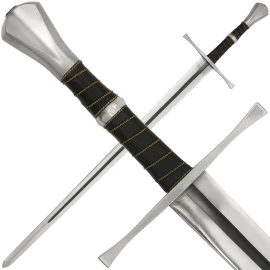
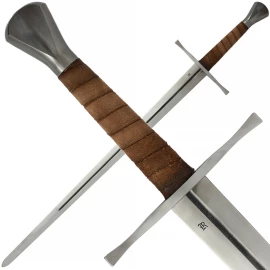
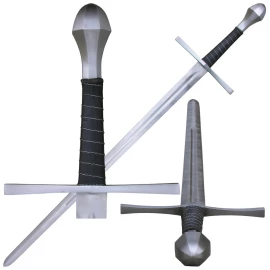
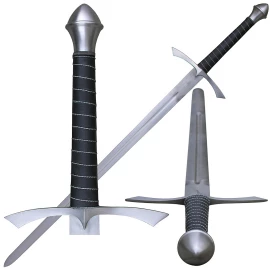
Hand-and-a-Half Fencing Sword Castellan, 15th C.
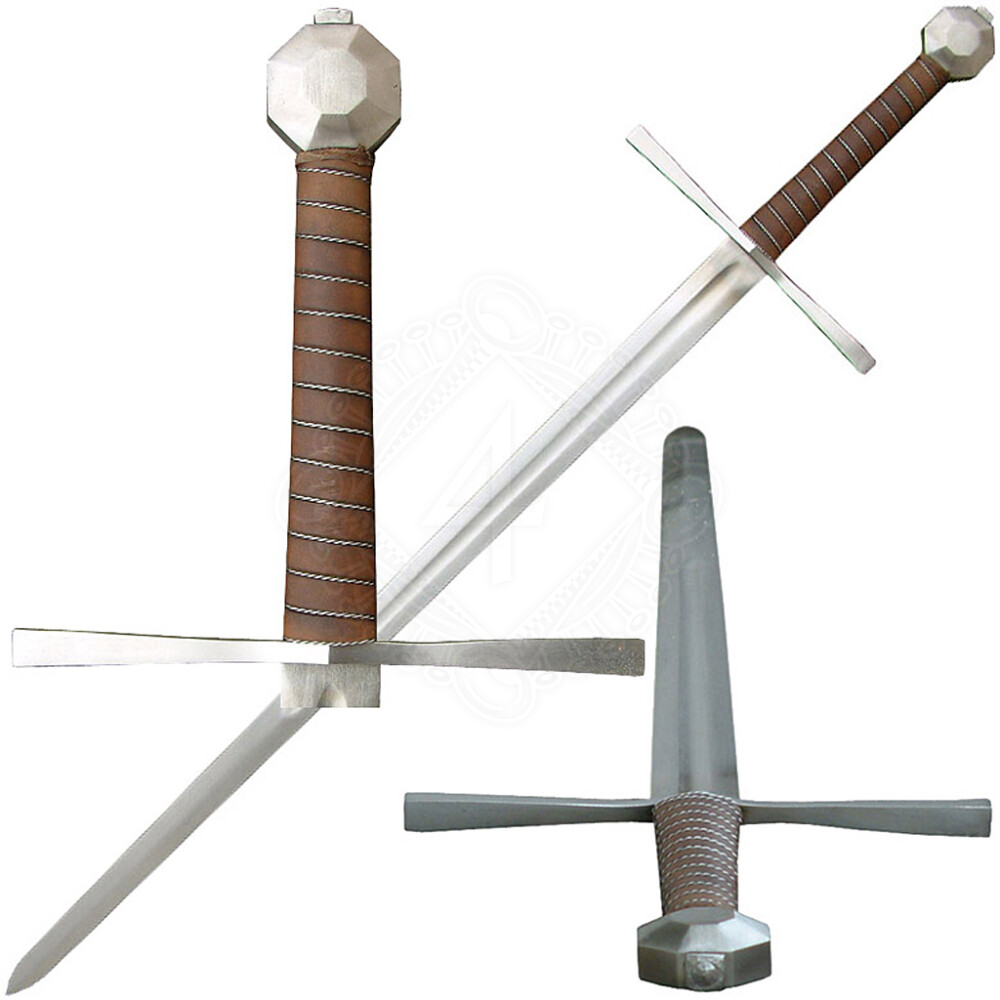

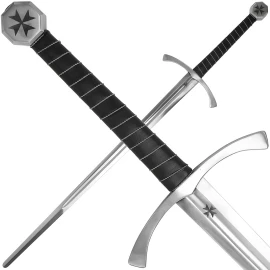
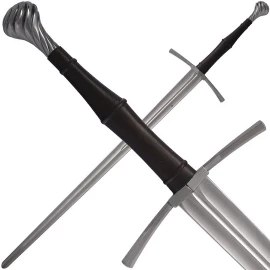
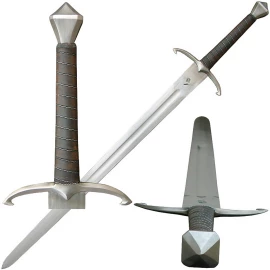
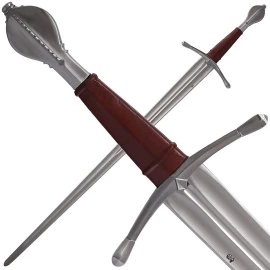
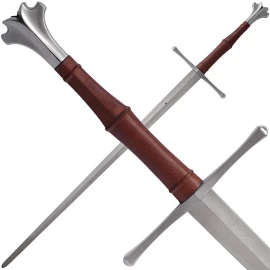
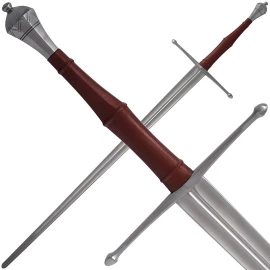
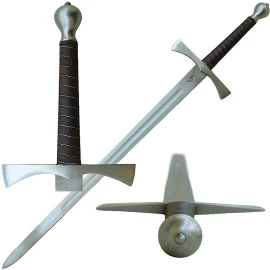
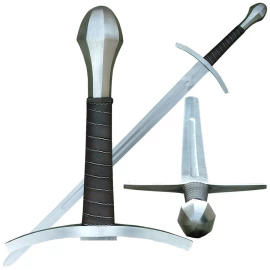
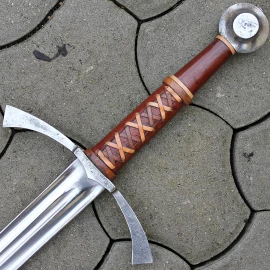
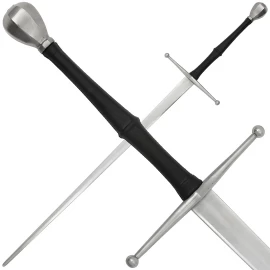
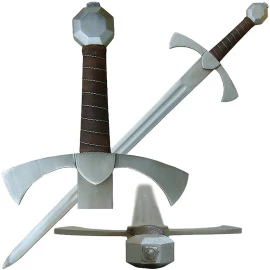
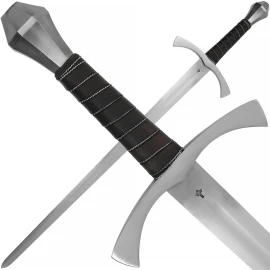
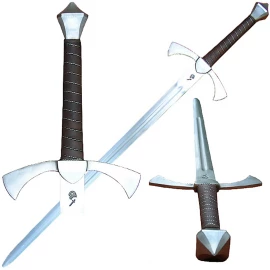
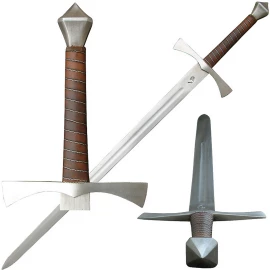
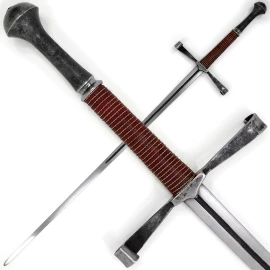
Are you looking for a dependable historical fencing weapon that will not fail you during training or stage combat? The Late Gothic Hand-and-a-Half Fencing Sword Castellan is a quality Czech-made blade crafted specifically for Class B contact fencing. Featuring an oil-tempered spring steel blade, an octagonal pommel, and a secure leather-and-wire-wrapped grip, it offers complete control during every strike and parry. We recommend this well-balanced bastard sword as a reliable partner for HEMA practice, 15th-century reenactment, and theatrical duels. Further product information ...

Late Gothic Hand-and-a-Half Fencing Sword Castellan, Class B, 15th C.
Historical Inspiration and Martial Arts Context
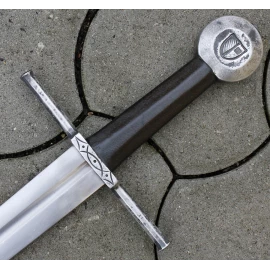
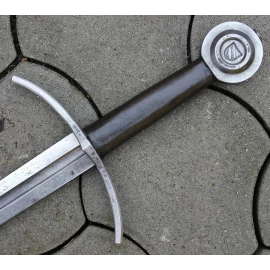
The design of this sword is inspired by late Gothic hand-and-a-half weapons, commonly referred to as bastard swords, which dominated European battlefields during the 15th century. According to Oakeshott typology, the blade corresponds to Type XVIIIa, featuring a steady taper and a short fuller. The hilt is defined by a straight crossguard with a central ridge and a heavy octagonal pommel (Type I/T), providing superb balance and an ergonomic palm rest.
In the 15th century, these swords served as primary sidearms for knights, castellans, and professional mercenaries across Europe. The extended grip allowed swordsmen to rapidly shift between single-handed and two-handed grips as demanded by combat conditions. This sword type was central to European martial arts traditions, particularly the German school of Johannes Liechtenauer and the Italian system of Fiore dei Liberi, where the bastard sword formed the foundation of swordsmanship instruction.
Origin of the Name Castellan
The name Castellan refers to the historical officer or commander appointed to govern a medieval castle and its surrounding lands. In the 15th century, a castellan was a vital figure in territorial defense, requiring expertise in both personal combat and garrison leadership. By naming this sword in honor of this noble role, we pay tribute to the leadership, strength, and chivalric martial tradition of the High Middle Ages.
Construction and Stage Combat Suitability
The blade is forged from high-grade ČSN 14260 spring steel (54SiCr6), oil-tempered to a hardness of approximately 47 HRC. The hilt features a full tang encased in wooden scales, wrapped in genuine leather and bound with wire for a non-slip grip. The stage combat version features a rebound edge thickness of 2–3 mm (approx. 0.08–0.12 in) and a rounded safety tip. It is classified under Class B fencing standards.
Technical Specifications
| Parameter | Value |
|---|---|
| Weapon Type | Hand-and-a-Half Sword (Bastard Sword) |
| Overall Length | approx. 121 cm / 47.6 in |
| Blade Length | approx. 92 cm / 36.2 in |
| Crossguard Width | approx. 27.5 cm / 10.8 in |
| Weight | approx. 2.50 kg / 5.51 lbs |
| Blade Material | ČSN 14260 spring steel (oil-tempered to approx. 47 HRC) |
| Hilt Material | Steel, wood, genuine leather, wire |
| Fencing Classification | Class B (Contact / Stage Combat) |
| Edge Thickness | 2–3 mm / approx. 0.08–0.12 in (blunt) |
| Country of Origin | Czech Republic |
Care, Maintenance, and Safety
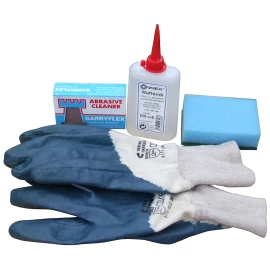
The spring steel blade is not stainless. After every practice or performance, thoroughly wipe off moisture and dirt, then treat the blade with protective oil (such as Ballistol or WD-40). Burrs and nicks along the cutting edge resulting from edge-to-edge contact are normal symptoms of wear. Inspect the blade prior to use and file down sharp burrs with a diamond file or fine sandpaper. For safety reasons, this blunt sword is not intended for heavy buhurt combat without proper full-plate protection.
Endeavor to block incoming strikes with the flat side of the blade rather than direct edge-to-edge impacts. Execute cuts with proper technique and without excessive force. No manufacturer can guarantee absolute immunity against blade breakage if subjected to improper use. A loose crossguard can be temporarily secured by wrapping heavy fishing line into the gap. Keep out of reach of children.
Directions for the Use of Bladed Weapons from Outfit4Events
Recommended Accessories
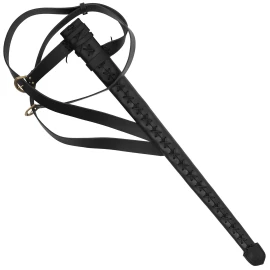
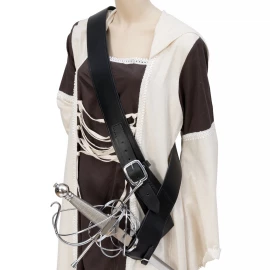
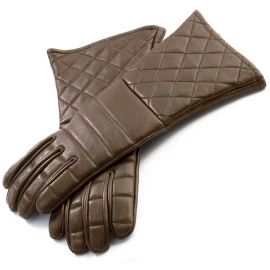
To ensure safe practice and complete your 15th-century historical kit, we recommend equipping yourself with proper protective gear. Ideal complements for this sword include a custom-fitted leather scabbard, a padded gambeson for impact absorption, heavy leather fencing gloves or steel gauntlets, and an arming cap beneath your helmet.
We are here for you!