Čeština
 Deutsch


Mored Single-Handed Knightly Arming Sword
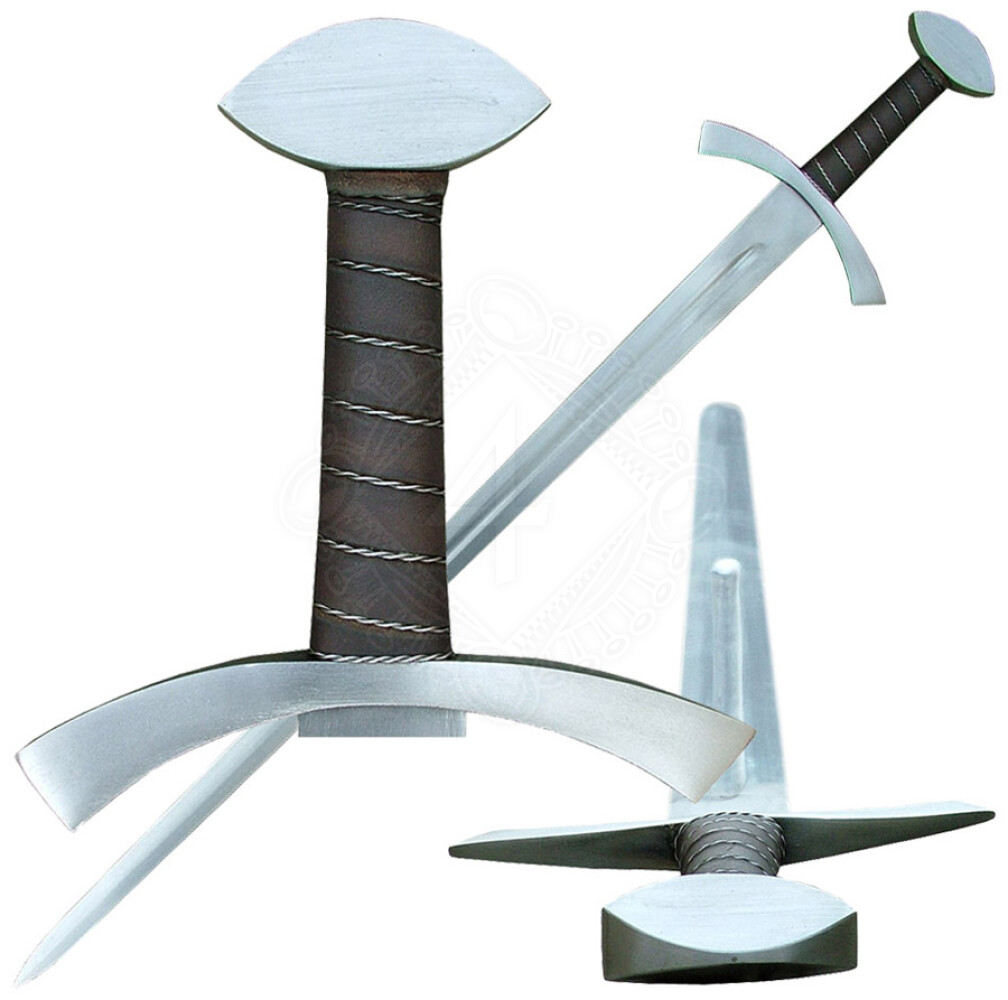

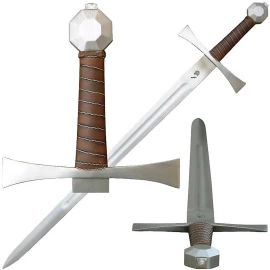
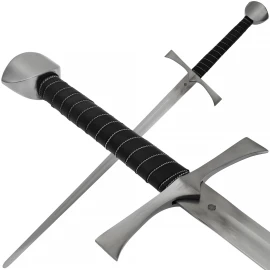
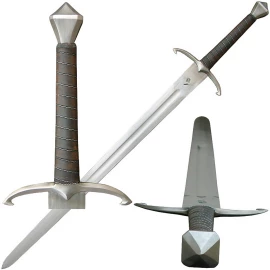
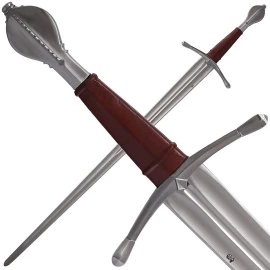
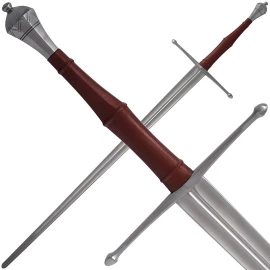
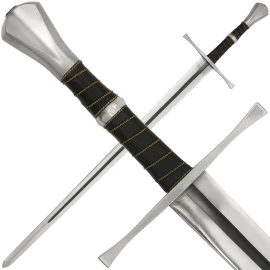
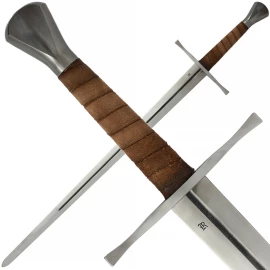
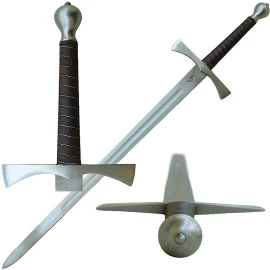
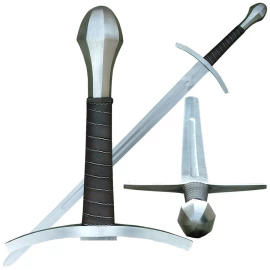
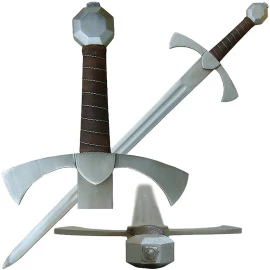
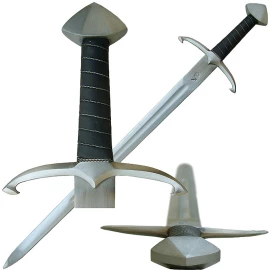
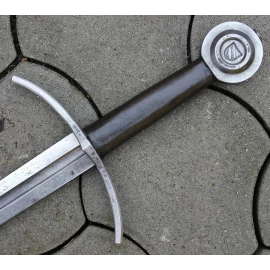
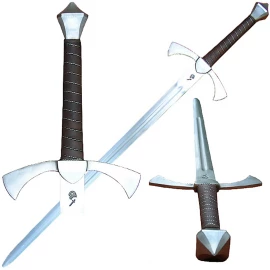
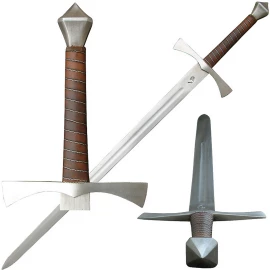
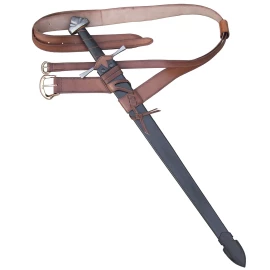
Looking for a lightweight, agile, and reliable weapon for historical fencing, training, or reenactment to dominate the battlefield? The Mored single-handed knightly arming sword is a fine piece of Czech craftsmanship built specifically for practical stage combat. At first glance, it impresses with its distinctive flat almond-shaped pommel and gracefully down-curved crossguard. Weighing approximately 1.40 kg (3.09 lbs), it delivers exceptionally fast blade handling. Equip yourself with a sword that combines tough spring steel, historical style, and a supreme grip. Further product information ...

Mored Single-Handed Knightly Arming Sword for Stage Combat
Historical Origin and Construction
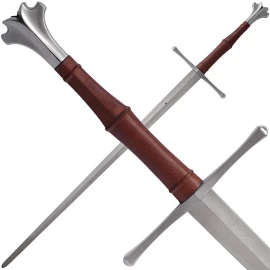
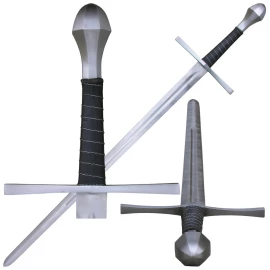
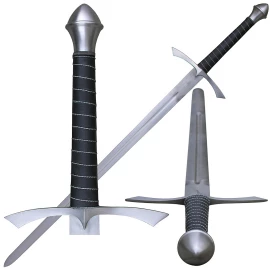
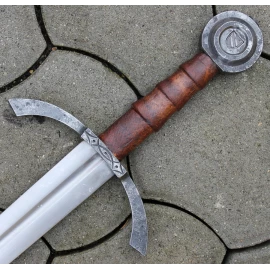
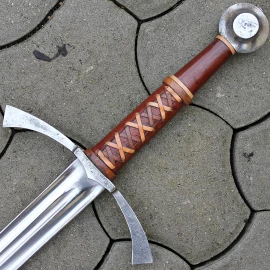
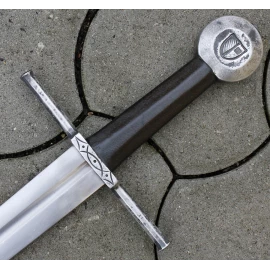
This single-handed arming sword draws its form and function from high-medieval knightly weapons of the 13th to 14th century. According to the recognized Oakeshott typology, the blade with its shallow fuller corresponds to Type Xa or XI. The defining features of the hilt are the flattened pommel shaped like a Brazil nut or almond (Type A to B) and the down-curved guard (Style 6), offering the fencer excellent hand protection. The grip features a solid wooden core wrapped in leather and reinforced with wire binding to ensure a firm hold even in thick combat gloves.
Historically, arming swords like this served as the primary sidearm for knights and heavy infantrymen, frequently paired with a heater shield, pavise, or buckler. Designed for swift cuts and flexible footwork in close engagements, speed and precision were key in fight scenarios.
Significance of the Name Mored
This sword is named Mored in honor of an ancient noble lineage and historical fortifications tied to medieval defense. The name evokes resolve, stamina, and fortitude in battle—qualities represented directly in the sturdy steel construction of this combat sword.
Technical Specifications
| Parameter | Value |
|---|---|
| Weapon Type | Single-handed arming sword (Class B Stage Combat) |
| Overall Length | approx. 96 cm (37.80 in) |
| Blade Length | approx. 80 cm (31.50 in) |
| Guard Width | approx. 17.5 cm (6.89 in) |
| Weight | approx. 1.40 kg (3.09 lbs) |
| Blade Material | CSN 14260 Spring Steel (oil-tempered to approx. 47 HRC) |
| Hilt Construction | Wooden core with leather and wire wrap |
| Edge Finish | Blunt edge (2–3 mm / 0.08–0.12 in thickness), rounded safety tip |
| Origin | Czech Republic |
Classification of Battle-Ready-Weapons
Maintenance and Safety Guidelines
Inspect the sword thoroughly before every practice session. The blade is forged from high-carbon spring steel, which is not stainless. We recommend wiping off moisture and sweat after each session and applying a protective gun oil (such as Ballistol). Any notches or burrs along the striking edge should be filed smooth immediately using a diamond file or fine sandpaper to prevent injuries to sparring partners.
Safety Notice: The stage combat version features blunt edges (2–3 mm) and a rounded safety tip. However, all combat activities are undertaken strictly at your own risk. This sword is intended for controlled historical fencing—avoid direct edge-to-edge impacts, block with the flat of the blade whenever possible, do not use excessive force, and store out of reach of children.
Directions for the Use of Bladed Weapons from Outfit4Events
Recommended Accessories
To ensure safety and historical accuracy for 13th to 14th-century combat setups, we recommend pairing this sword with:
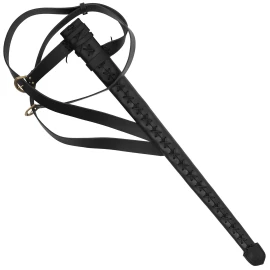
- Leather Scabbard: Custom wood-core scabbard wrapped in leather with belt suspension.
- Fencing Gauntlets: Essential hand and wrist protection for contact swordplay.
- Buckler Shield: The classic companion shield for single-handed swords to block and parry.
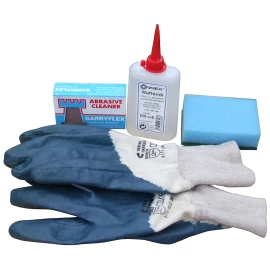
- Blade Maintenance Kit: Protective oil and a fine file for regular edge maintenance.
We are here for you!