Čeština
 Deutsch


14th Century Arming Sword Sir Lawrence


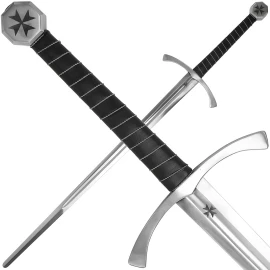
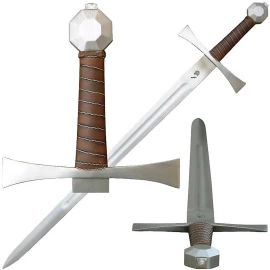
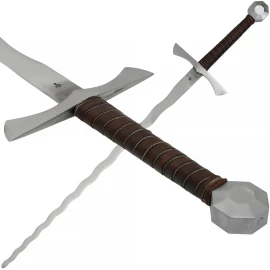
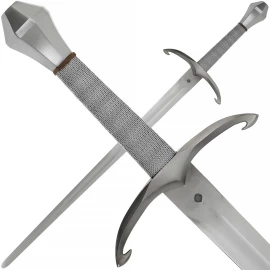
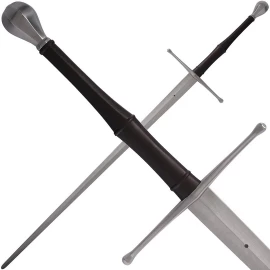
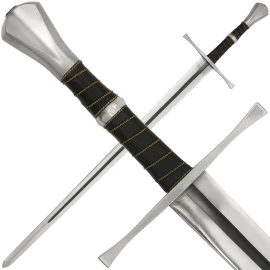
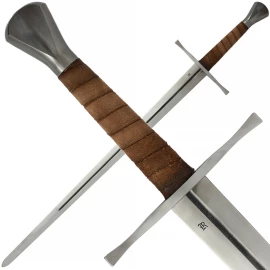
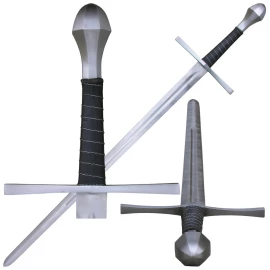
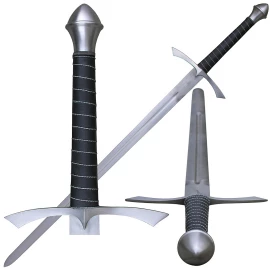
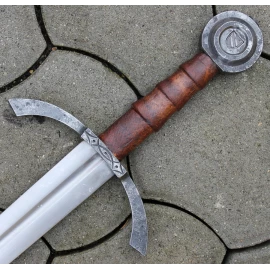
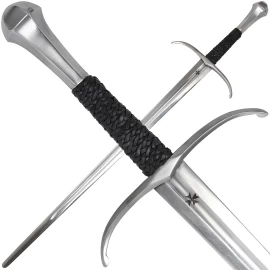
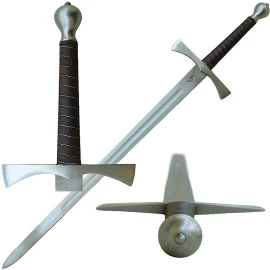
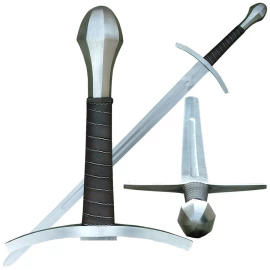
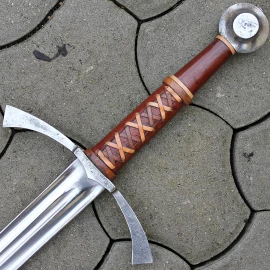
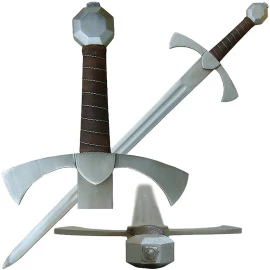
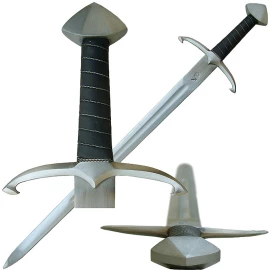
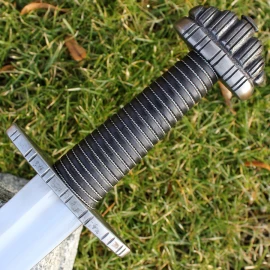
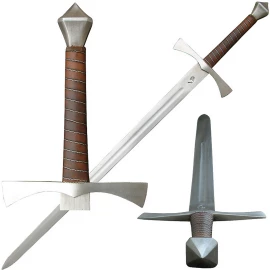
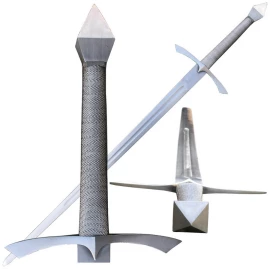
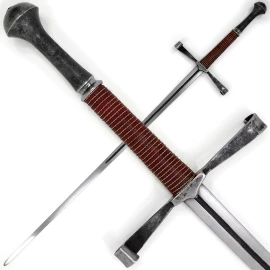
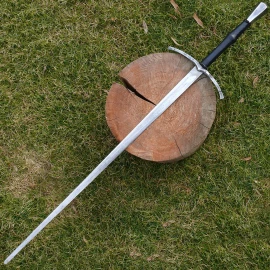
Searching for authenticity, uncompromising durability, and master balance for historical fencing or reenactment, warrior? This High Gothic arming sword Lawrence is a robustly crafted weapon forged from carbon spring steel, designed specifically for practical sparring and faithful reenactment. The sword features a broad blade with a full-length fuller, a characteristically downturned crossguard spanning a wide 24.5 cm (approx. 9.64 in), and a leather-and-wire wrapped wooden grip. Its hilt is crowned by a solid steel octagonal pommel. Made in the Czech Republic, you will appreciate it for practicing historical martial arts techniques, engaging in contact combat at festival battles, and completing a 14th-century knightly harness. Further product information ...

14th Century High Gothic Arming Sword Sir Lawrence
Historical Context and Oakeshott Typology Type XII / XIII
The historical template for this single-handed arming sword is based on surviving museum finds dating from 1300 to 1400 (14th century), the High and Late Middle Ages. According to the recognized Oakeshott typology, the blade corresponds to Type XII or XIII with its characteristic fuller for weight distribution, paired with a Type I6/V octagonal pommel and a downturned Type 6/7 crossguard that effectively trapped opposing blades during parries.
In the 14th century, the single-handed arming sword served as a primary sidearm for knights and heavy infantry. Carried in a scabbard at the waist, it was typically paired with a buckler or pavise shield in combat. Its main purpose was delivering powerful slashing strikes against gambesons and mail armor. Rated as Class B according to fencing weapon classification, this sparring version features blunted 2–3 mm (approx. 0.07–0.11 in) edges and a rounded safety tip suitable for contact historical fencing.
Significance of the Name
This sword is crafted in honor of Sir Lawrence de Hastings (1318–1348), 1st Earl of Pembroke, a valiant 14th-century English knight and military commander who earned renown during the early campaigns of the Hundred Years' War under King Edward III.
Instructions for Use and Practical Fencing Safety
To ensure long service life and safety for yourself and your opponent, observe these guidelines:
- Pre-Combat Inspection: Inspect the blade before every bout. Immediately file down any sharp burrs or nicks using a diamond file or fine sandpaper.
- Fencing Technique: Execute strikes with proper martial technique rather than excessive brute force. Parry incoming strikes primarily with the flat of the blade rather than edge-to-edge to avoid deep burrs.
- Hilt Maintenance: Heavy impacts may eventually cause the crossguard to loosen. Re-peening the pommel will tighten the assembly. As a temporary field fix, wrapping heavy fishing line into the gap between the guard and grip effectively removes play.
- Product Intent & Warranty: This item is sporting equipment intended for historical fencing sparring. Edge burrs and nicks represent natural wear and tear. All practice is conducted at your own risk.
Technical Specifications
| Parameter | Value |
|---|---|
| Product Type | Historical Arming Sword for Contact Fencing |
| Fencing Classification | Class B (Historical Fencing Standard) |
| Historical Era | High to Late Middle Ages (14th Century) |
| Typology (Oakeshott) | Blade Type XII/XIII, Octagonal Pommel Type I6/V, Curved Guard Type 6/7 |
| Blade Material | Spring Steel ČSN 14260 (oil tempered to approx. 47 HRC) |
| Grip Material | Wood core wrapped in brown leather and steel wire |
| Guard & Pommel Material | Forged / Cast Steel |
| Overall Length | approx. 103.5 cm (approx. 40.74 in) |
| Blade Length | approx. 79 cm (approx. 31.10 in) |
| Guard Width | approx. 24.5 cm (approx. 9.64 in) |
| Edge Thickness | approx. 2–3 mm / 0.07–0.11 in (blunt sparring edge) |
| Blade Tip | Rounded (safety tip) |
| Weight | approx. 2.20 kg / 4.85 lbs |
| Origin | Made in the Czech Republic |
Care and Safety Instructions
The carbon spring steel blade is not rustproof and requires regular care:
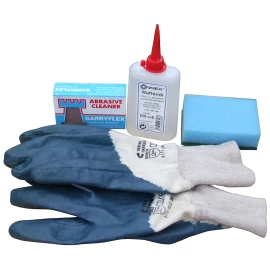
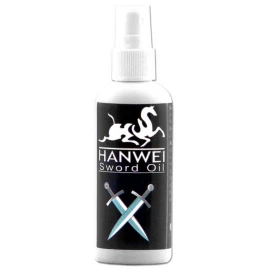
- Corrosion Protection: Wipe the blade dry after every fencing session or handling with bare skin, then apply a coat of protective gun oil (e.g., Ballistol).
- Storage: Store the sword in a dry location out of reach of children. Do not store long-term inside a damp leather scabbard.
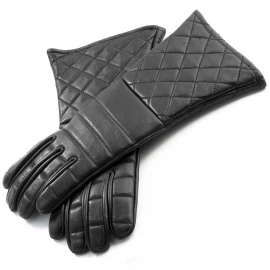
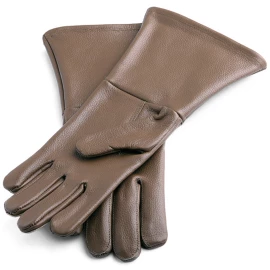
- Safety Gear: Always wear certified protective equipment during sparring – fencing mask, padded gambeson, heavy leather gauntlets, and joint protectors.
- Directions for the Use of Bladed Weapons from Outfit4Events
Recommended Accessories
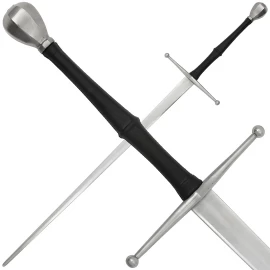
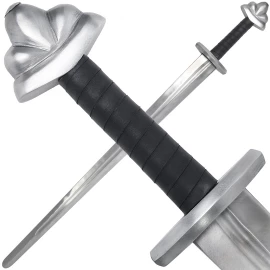
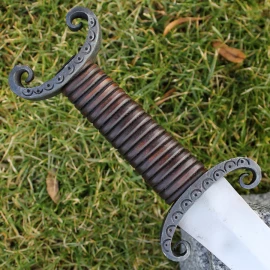
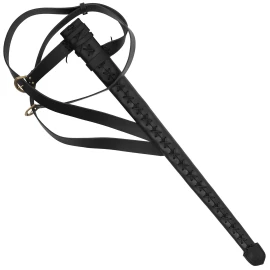
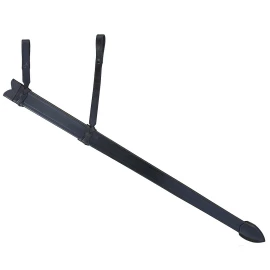
We recommend pairing this High Gothic arming sword with a matching 14th-century leather-covered wooden scabbard with belt suspension, leather fencing gauntlets, a padded gambeson, and a steel buckler shield. These accessories are historically compatible with 14th-century knightly equipment.
We are here for you!