Čeština
 Deutsch


Single-Handed Sword Yrwin for Stage Combat


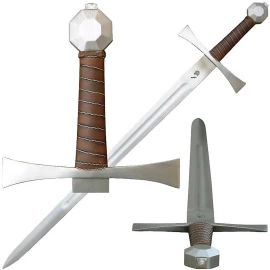
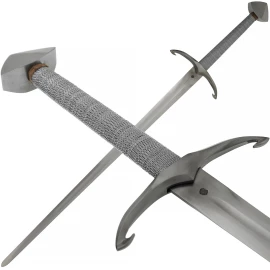
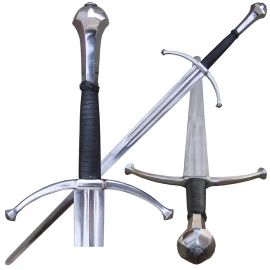
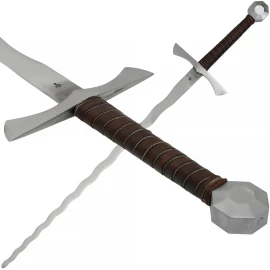
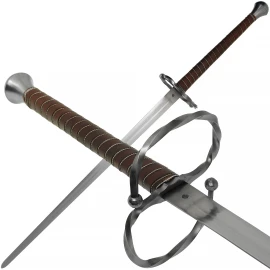
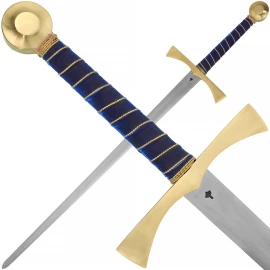
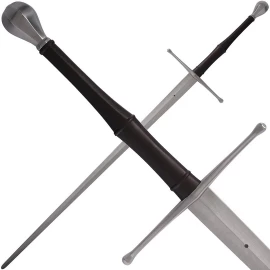
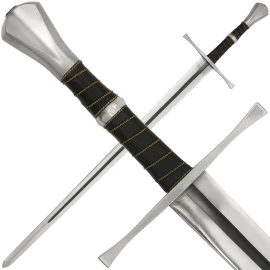
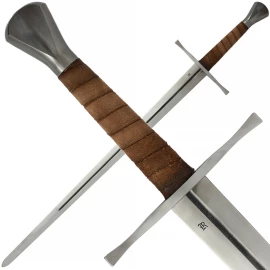
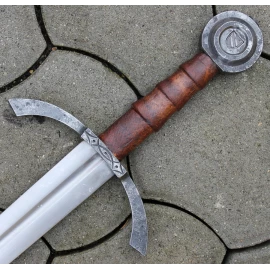
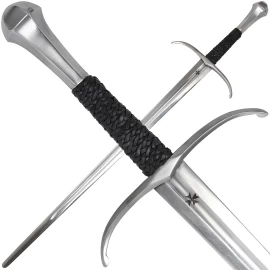
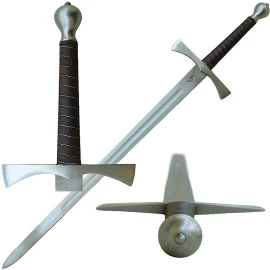
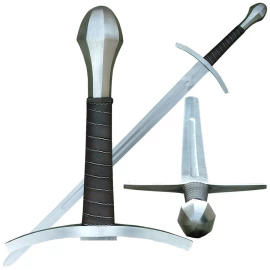
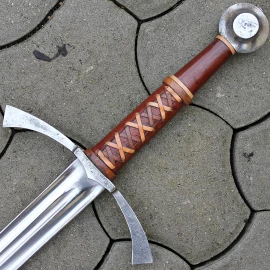
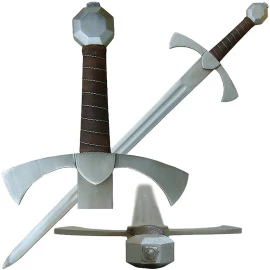
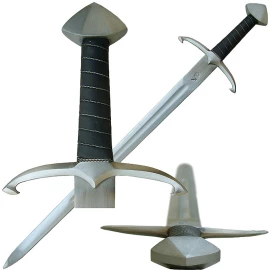
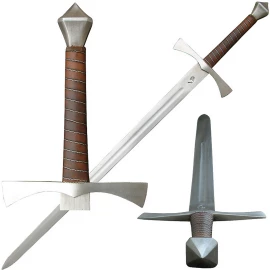
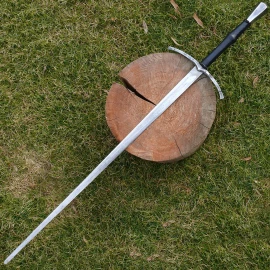
Are you looking for a massive and visually striking weapon for historical fencing, intense re-enactment, or fantasy LARP, warrior? This Gothic single-handed sword Yrwin will immediately capture your attention with its distinctively curved crossguard and hat-shaped pommel. The hand-forged spring steel blade is oil-tempered for excellent toughness, while the leather-and-wire wrapped hilt guarantees a secure grip even in heavy gauntlets. Choose this Czech-crafted sword and command the battlefield with strength and style! Further product information ...

Gothic Single-Handed Sword Yrwin for Stage Combat
Historical Context and Weapon Architecture
The design of this single-handed arming sword draws inspiration from the transitional period between the early and High Middle Ages (12th to 13th century), when classic Gothic knightly swords evolved from Romanesque forms. The curved crossguard with quillons angled toward the blade (featuring a central guard plate) not only protects the hand during blade bindings but also helps deflect incoming strikes. According to the Oakeshott typology, the broad-fullered blade corresponds to Type Xa/XI, while the massive pommel ensures superb balance and prevents the sword from slipping out of your grip.
During the 12th and 13th centuries, arming swords of this style served as the primary sidearm for knights and foot soldiers (measuring approx. 40.16 in / 102 cm overall). They were used in tandem with large heater or kite shields to deliver crushing blows against opponents clad in maille armor and padded gambesons.
Significance of the Name Yrwin
The name Yrwin (or Erwin) has Ancient Germanic roots, translating to "army friend" or "companion in arms". We selected this name intentionally: it symbolizes a loyal comrade-in-arms whom you can trust in the heat of battle. A sword bearing this name stands for brotherhood, reliability, and resilience on the field.
Safe Usage Guidelines and Fencing Practice
If you intend to use this sword for contact re-enactment or stage combat, please adhere to these guidelines:
- Safety Features: For practical combat, the sword comes with blunt edges (2–3 mm thick) and a rounded safety tip. Always exercise caution during sparring.
- Parrying Technique: Block incoming strikes using the flat of the blade. Avoid direct edge-to-edge impacts to prevent deep nicks and unnecessary stress on the steel.
- Protective Gear: Always wear approved safety gear during combat, including a padded gambeson, mesh fencing mask, and heavy leather or gauntleted gloves.
- Blade Inspection: Inspect the blade before every session. Smooth down any sharp burrs along the edges immediately using a diamond file or fine sandpaper.
- Hilt Maintenance: Heavy use may cause the guard to loosen over time. Re-peen the pommel or insert a wire binding into the guard gap to secure it.
- Liability: All combat activities are performed strictly at your own risk. Edge nicks and wear are standard for functional swords and are not covered under warranty. Keep out of reach of children.
- Classification of Battle-Ready-Weapons
Technical Specifications
| Parameter | Value |
|---|---|
| Product Type | Gothic single-handed sword for stage combat |
| Historical Era | 12th–13th century (Transitional Romanesque/Gothic) |
| Typology (Oakeshott) | Blade Type Xa/XI, Hat-shaped pommel |
| Blade Material | Spring Steel (oil-tempered to approx. 47 HRC) |
| Handle Material | Wood core wrapped in brown leather and steel wire |
| Guard & Pommel Material | Cast/forged steel |
| Overall Length | approx. 102 cm / 40.16 in |
| Blade Length | approx. 80 cm / 31.50 in |
| Guard Width | approx. 24.5 cm / 9.65 in |
| Edge Thickness | 2–3 mm (blunt for combat) |
| Blade Tip | Rounded (safety tip) |
| Weight | approx. 2.10 kg / 4.63 lbs |
| Origin | Made in the Czech Republic |
Care and Maintenance
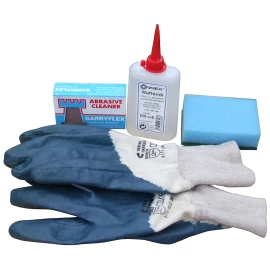
The spring steel blade is not stainless and requires regular care. Wipe the blade dry with a clean cotton cloth after every training session to remove moisture and skin oils. Apply a protective coat of gun oil (such as Ballistol or WD-40) to all steel components. Store in a dry environment and avoid keeping the sword inside a damp leather scabbard.
Directions for the Use of Bladed Weapons from Outfit4Events
Recommended Accessories
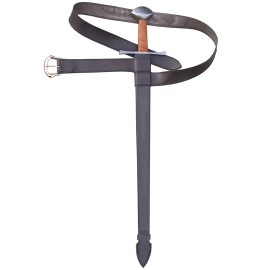
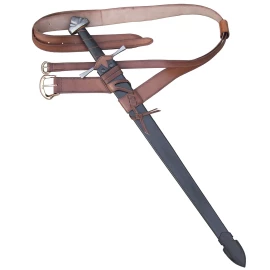
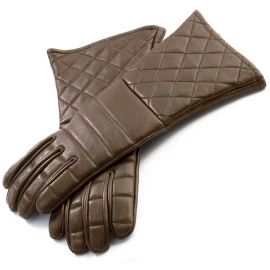
We recommend pairing this Gothic arming sword with a custom leather scabbard with belt suspension (12th–13th century style), heavy leather combat gloves, a padded gambeson, and a wooden kite or heater shield for a complete historical kit.
We are here for you!