Čeština
 Deutsch


Single-Handed Sword Krok in Spring Steel, 13th Century


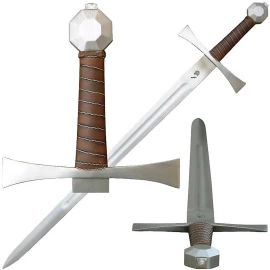
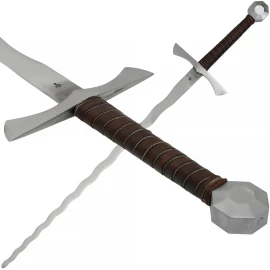
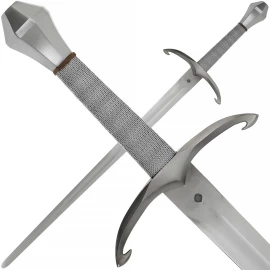
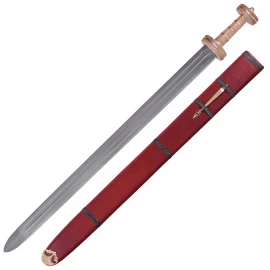
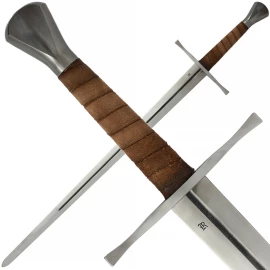
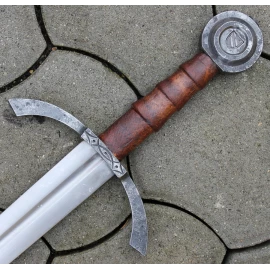
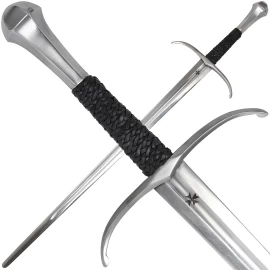
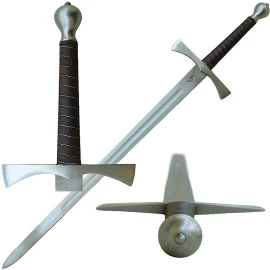
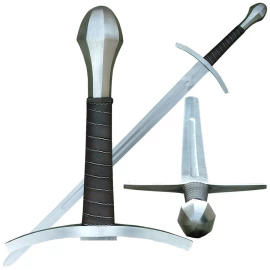
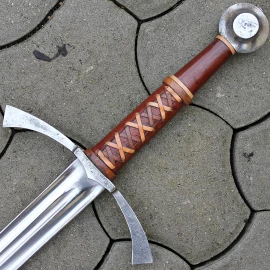
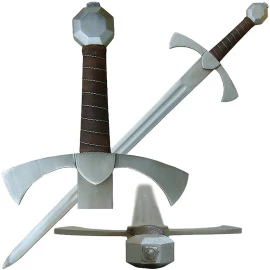
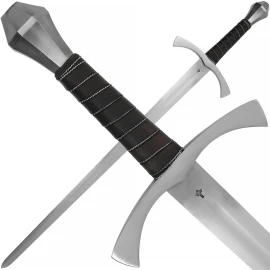
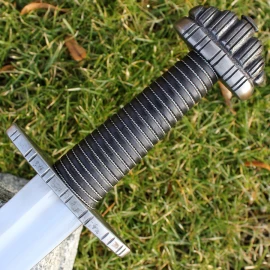
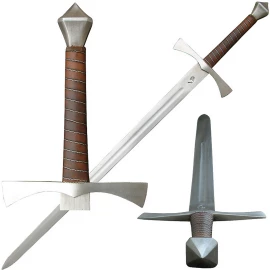
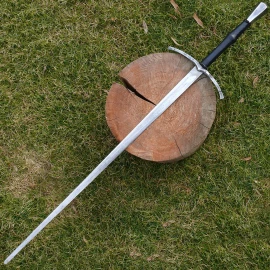
Are you looking for a reliable weapon for practical stage combat and authentic re-enactment, warrior? This early Gothic single-handed sword Krok is a crafted weapon made from high-quality spring steel. The sword features a steel blade with a fuller, a straight crossguard with slightly expanding quillons, and a wood-cored hilt wrapped in brown leather and steel wire. The defining feature is its massive, faceted hexagonal steel pommel. We recommend it for historical fencing practice, combat re-enactments, and completing your 13th-century knight costume. Further product information ...

Early Gothic Single-Handed Sword Krok in Spring Steel, 13th Century
Historical Context and Oakeshott Typology Type Xa / XI
The historical model for this sword is based on surviving artifacts dated between 1200 and 1300 (13th century), representing the High Middle Ages and the Crusades. According to the Oakeshott typology, the blade corresponds to Type Xa or XI, featuring a central fuller designed to lighten the blade while maintaining structural integrity, tapering gently towards the tip. It is paired with a faceted pommel and a straight Style 1 crossguard.
During the 13th century, the single-handed arming sword served as the primary sidearm for knights and heavy infantrymen alike. Carried in a leather-covered wooden scabbard slung from a waist belt (approx. 38 in / 97 cm total length), it was used in conjunction with a heater shield or a steel buckler. Its main function was delivering powerful cutting blows against mail armour and padded gambesons. This version for historical combat and re-enactment features blunt edges (2–3 mm thick) and a rounded safety tip.
Significance of the Name Krok
The name Krok refers to the mythical Czech Duke Krok, a ruler known for his justice and wisdom, and father to Libuše, Kazi, and Teta. The sword is named in his honor to represent stability, authority, and reliability on the battlefield.
Instructions for Use and Safe Combat Guidelines
To ensure the longevity of your sword and safety during combat, please follow these guidelines:
- Inspection: Carefully inspect the blade before every combat session. File down any burrs or sharp nicks along the edges immediately using a diamond file or fine sandpaper.
- Fencing Technique: Deliver cuts with proper martial form without excessive force. Parry incoming strikes primarily with the flat of the blade rather than edge-to-edge to avoid deep notches.
- Hilt Maintenance: Heavy use may cause the crossguard to loosen over time. If this occurs, the pommel should be re-peened. A temporary fix includes inserting a tight wire binding between the guard and grip.
- Liability: All combat activities are performed strictly at your own risk. Edge nicks are standard wear and tear and are not covered under warranty.
- Classification of Battle-Ready-Weapons
Technical Specifications
| Parameter | Value |
|---|---|
| Product Type | Historical single-handed sword for combat re-enactment |
| Historical Era | High Middle Ages (13th century) |
| Typology (Oakeshott) | Blade Type Xa/XI, Faceted Pommel Type R/Z, Guard Type 1 |
| Blade Material | Spring Steel (oil-hardened to approx. 47 HRC) |
| Handle Material | Wood core wrapped in brown leather and steel wire |
| Guard & Pommel Material | Cast/forged steel |
| Overall Length | approx. 97 cm / 38.19 in |
| Blade Length | approx. 79 cm / 31.10 in |
| Guard Width | approx. 16 cm / 6.30 in |
| Blade Profile at Guard | approx. 46 × 5 mm / 1.81 × 0.20 in |
| Blade Profile 10 cm from Tip | approx. 25 × 5 mm / 0.98 × 0.20 in |
| Edge Thickness | 2–3 mm (blunt for combat) |
| Blade Tip | Rounded (safety tip) |
| Weight | approx. 1.30 kg / 2.87 lbs |
| Origin | Made in the Czech Republic |
Care and Safety Instructions
The spring steel blade is not stainless and requires regular maintenance:
- Rust Protection: After each use or contact with bare hands, wipe the blade dry with a clean cotton cloth and apply a protective layer of gun oil (such as Ballistol or WD-40).
- Storage: Store the sword in a dry place out of reach of children. Avoid leaving it inside a damp leather scabbard for extended periods.
- Protective Gear: Always wear approved protective equipment during combat—including a padded gambeson, fencing mask, leather combat gloves, and joint protection.
- Directions for the Use of Bladed Weapons from Outfit4Events
Recommended Accessories
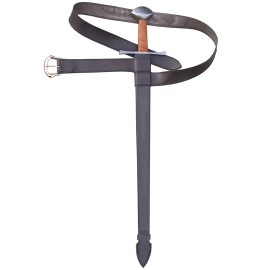
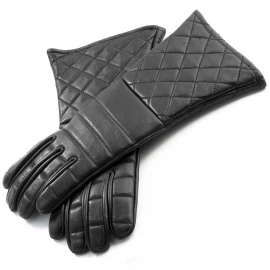
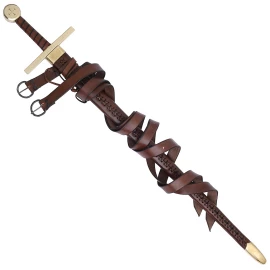
To complement this Gothic arming sword, we recommend a 13th-century leather-covered wooden scabbard with belt suspension, leather fencing gloves, a padded gambeson, and a steel buckler. These accessories accurately match the 13th-century period and create a complete outfit.
We are here for you!