 Čeština
 Deutsch


Munich Town Guard Left-Hand Dagger
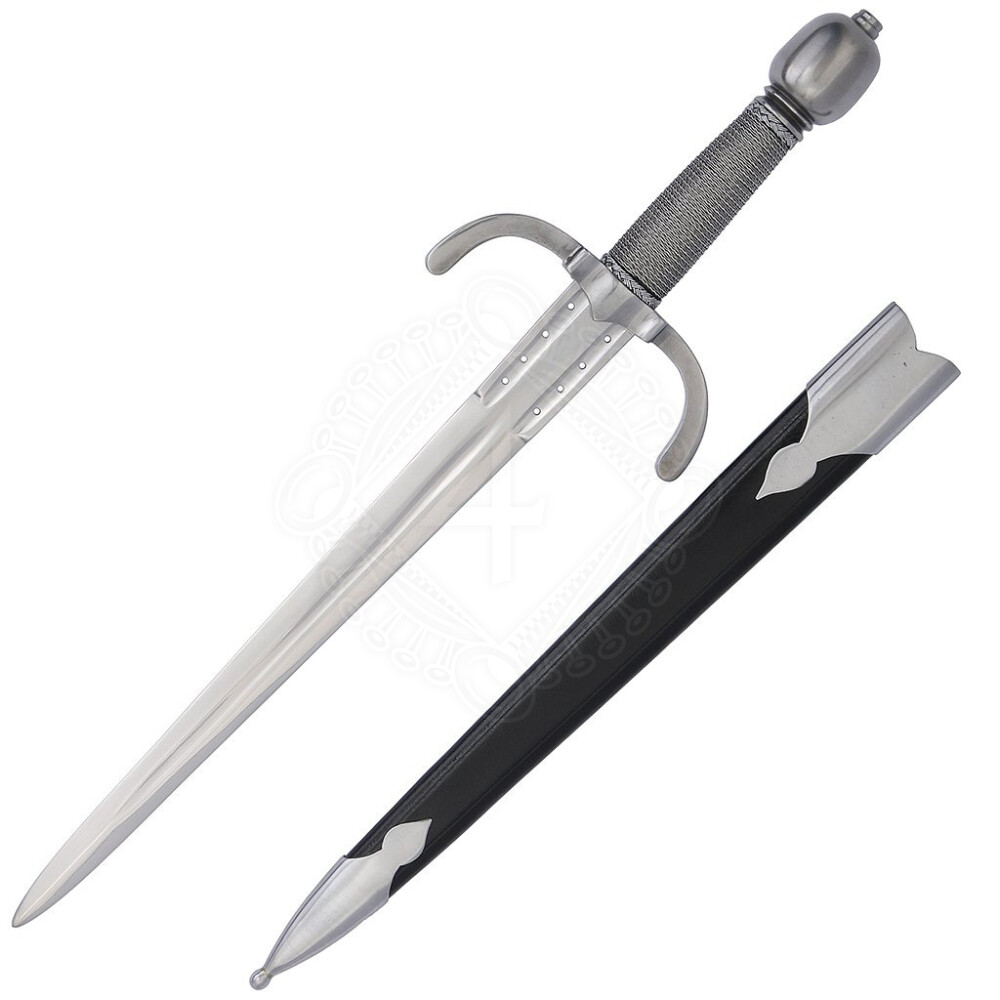
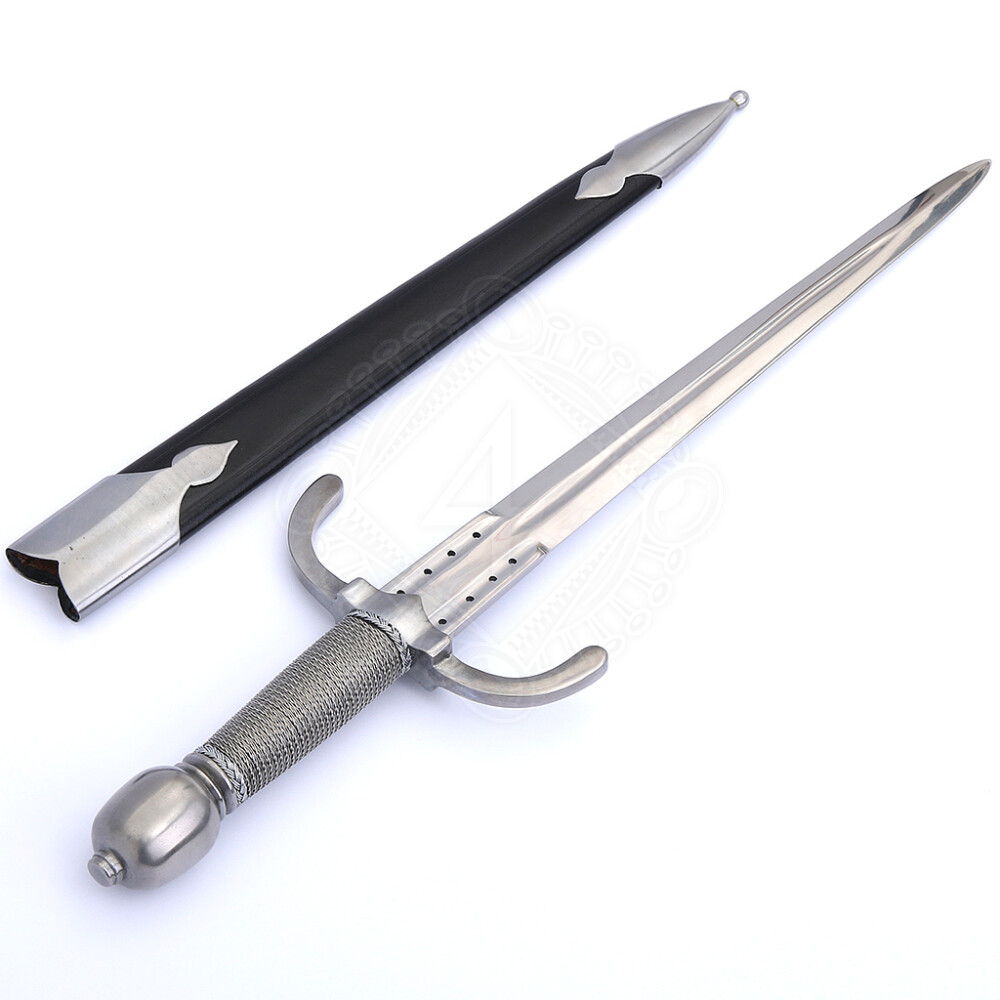
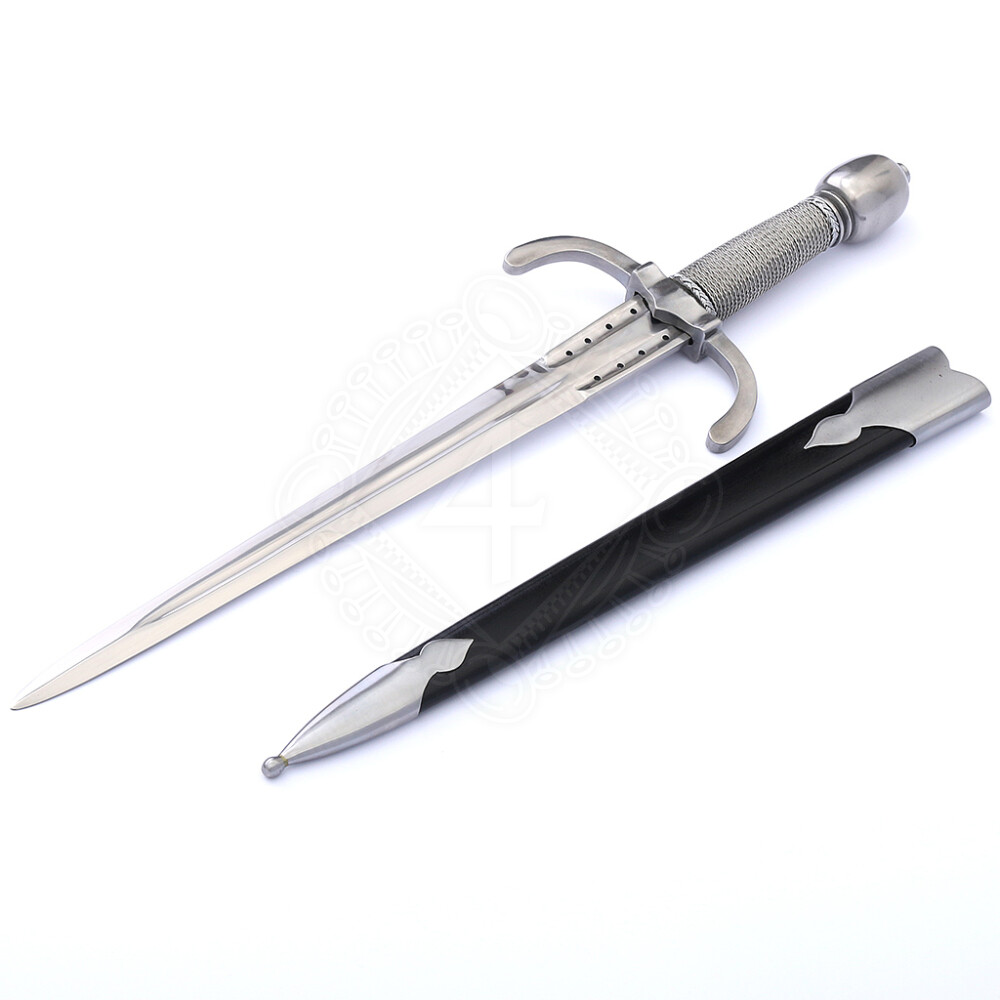
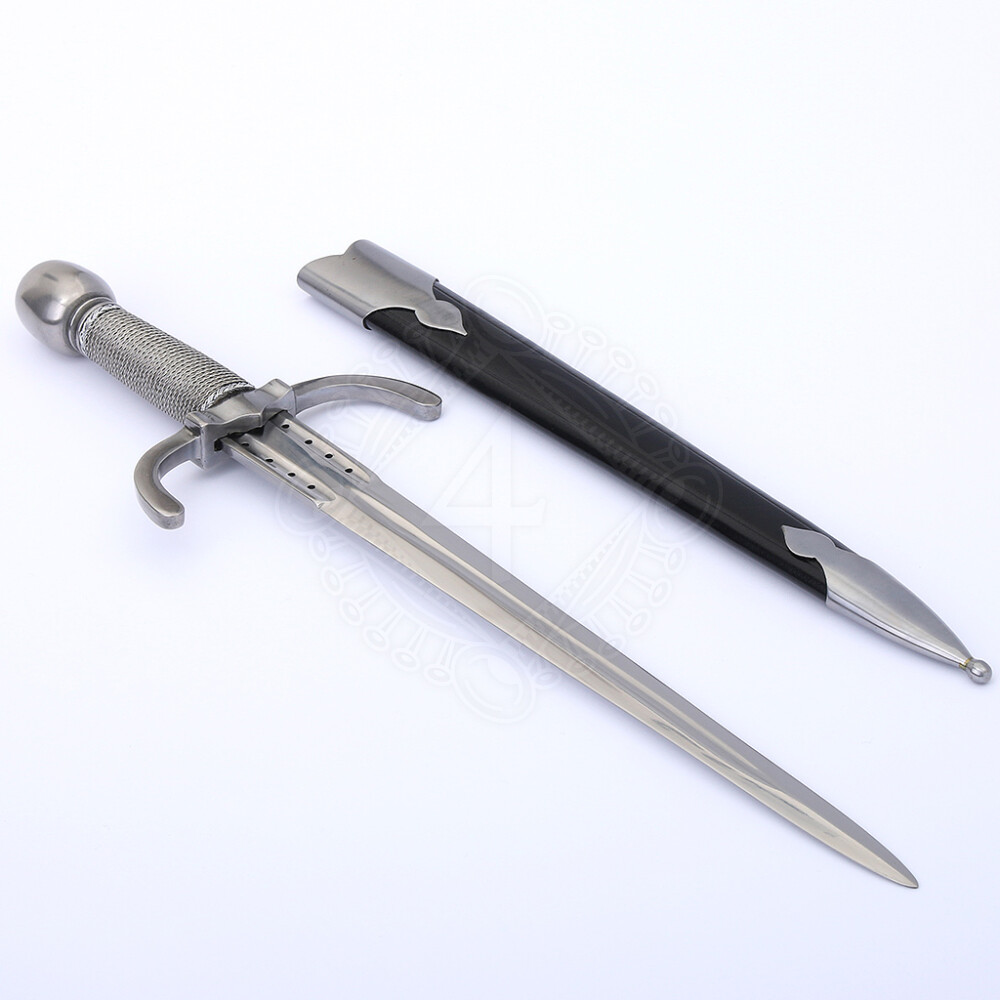
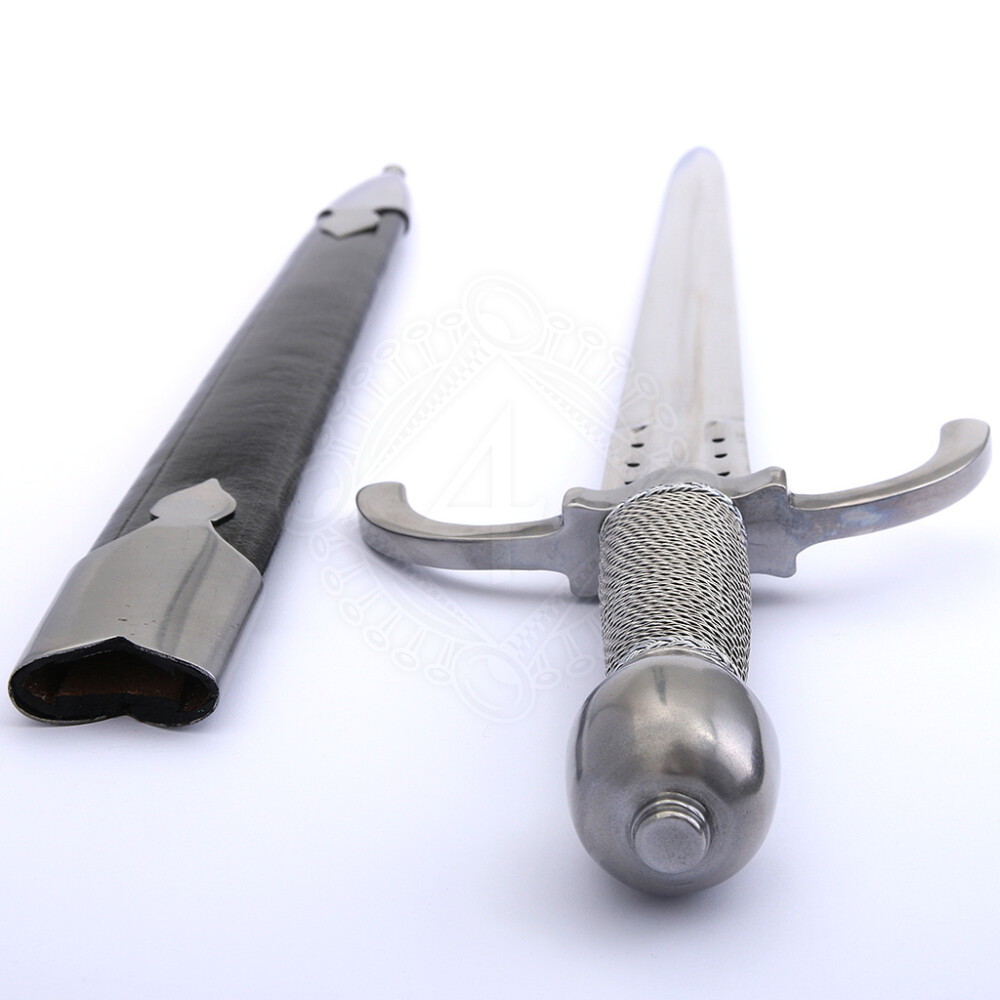

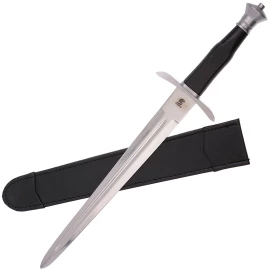
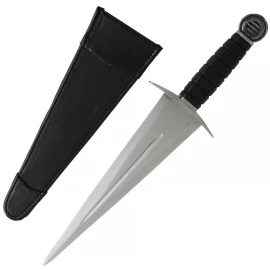
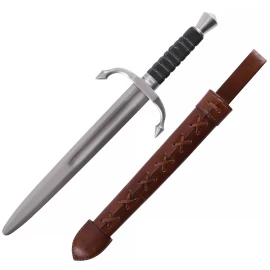
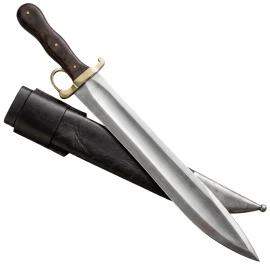
If you are looking for a distinctive Renaissance dagger that offers more than decorative appeal, this Munich Town Guard dagger makes a striking choice. It draws on German left-hand and parrying daggers used around 1600 alongside a sword. The weapon combines a 1065 high-carbon steel blade with fullering and circular piercings, a prominently curved steel guard and a wooden grip wrapped in twisted steel wire. A black scabbard with metal fittings is included. Made by Windlass Steelcrafts®, this substantial replica will appeal particularly to collectors, reenactors and enthusiasts of historic European edged weapons. Further product information ...

Would you like to be notified as soon as the item is in stock?
You will receive a short e-mail as soon as we have it back in stock.
Munich Town Guard Left-Hand Dagger, Early 17th Century
A German Left-Hand Dagger from Around 1600
This dagger is stylistically based on weaponry associated with the Munich Town Guard around the turn of the 17th century. In European Renaissance fencing culture, a dagger was often carried as a companion to a sword, rapier or another one-handed weapon. The principal weapon was normally held in the dominant hand, while the dagger was used in the other.
A left-hand dagger, parrying dagger or main-gauche could historically be employed to deflect, control or bind an opponent's blade and, at very close range, as an offensive weapon in its own right. Its shorter dimensions also made it useful where there was insufficient space to manoeuvre a long blade comfortably. Sword-and-dagger and rapier-and-dagger fencing consequently developed into sophisticated fighting systems during the 16th and 17th centuries.
Fullered Blade with Pierced Detail
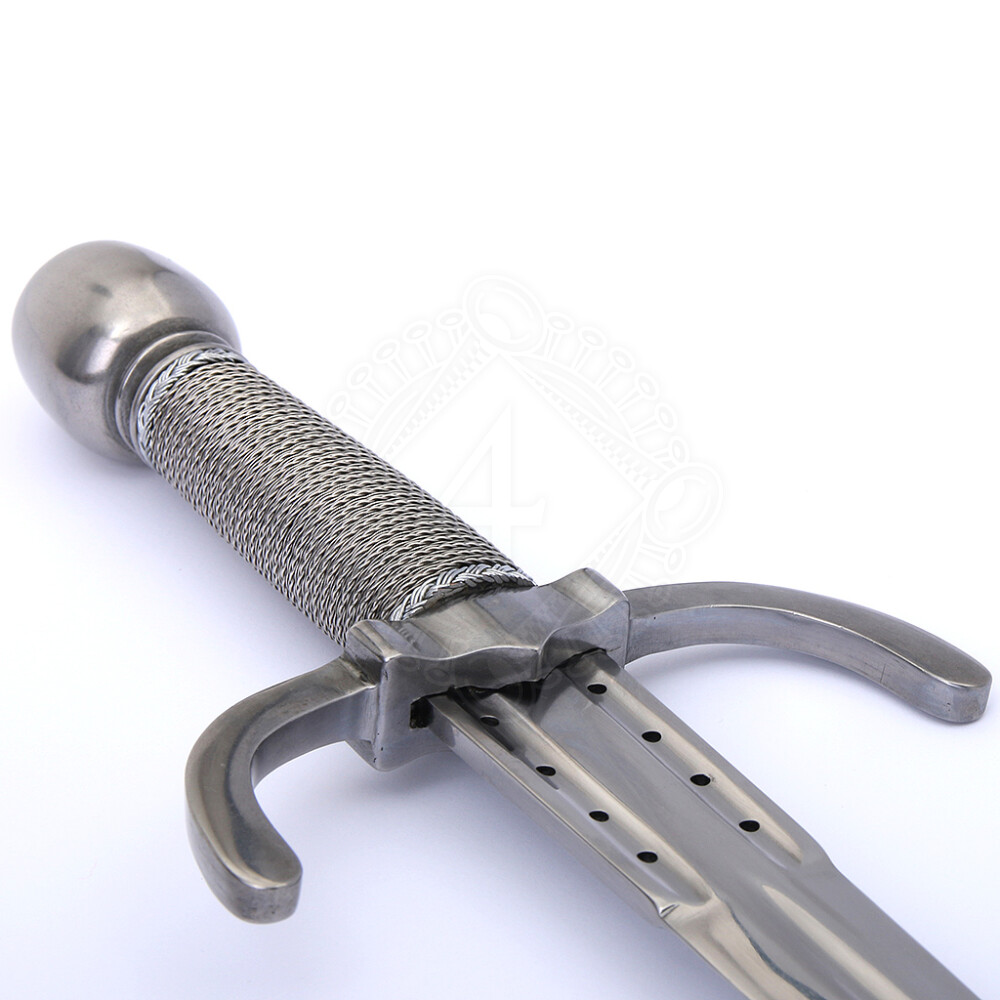
The blade measures approximately 13.4 in (340 mm) long. At the guard it is approximately 1.23 in (31.3 mm) wide and 0.19 in (4.7 mm) thick. It is made from 1065 high-carbon steel with a stated hardness of 48–52 HRC. Longitudinal fullering and a series of circular piercings decorate the approximately 2.28 in (58 mm) ricasso area, while the blade tapers progressively towards the point.
The edge is approximately 0.028 in (0.7 mm) thick. It is not ground to a fine knife-like edge, but it must not be regarded as a safely blunt fencing blade either. For this reason, the dagger is not suitable for contact historical fencing, person-to-person sparring or battle reenactment.
Steel Hilt and Wire-Wrapped Grip
The approximately 5.1 in (130 mm) steel guard gives the dagger much of its characteristic appearance. Its quillons curve noticeably towards the blade, recalling the construction of various Renaissance parrying daggers. The grip has a wooden core wrapped in fine twisted steel wire, finished at either end with decorative braided wire bands. The steel pommel has a rounded, slightly ovoid shape and terminates in a small button.
The dagger is supplied with a black scabbard fitted with metal throat and chape fittings. Its restrained appearance complements the steel hilt while providing a practical way to store and transport the weapon more safely.
How This Type of Dagger Was Used
Historically, a similar dagger would be drawn into the non-dominant hand while the principal sword or rapier remained in the dominant hand. Its purpose was not limited to thrusting. The blade and guard could help redirect or control an opponent's weapon and create an opening for a counter-attack with the primary weapon.
With this modern replica, however, such use should be regarded as historical context only. Its construction and edge geometry are not specified for safe contact fencing. For display, costume, collecting or photography, clean the dagger after handling and return it to its supplied scabbard when not in use.
Why the Name Munich Town Guard?
Munich was an important Bavarian residential and administrative centre. The name of this replica refers to a form of weaponry associated with the Munich Town Guard around 1600. The dagger is conceived as a companion piece to the Munich Town Guard sword and stylistically belongs to the German world of the late Renaissance and early 17th century.
Technical Specifications
| Specification | Value |
|---|---|
| Type | Left-hand dagger / parrying dagger |
| Historical period | Around 1600, early 17th century |
| Overall length | approx. 19.1 in (486 mm) |
| Blade length | approx. 13.4 in (340 mm) |
| Guard length | approx. 5.1 in (130 mm) |
| Blade width at guard | approx. 1.23 in (31.3 mm) |
| Blade thickness at guard | approx. 0.19 in (4.7 mm) |
| Blade width 2 in (50 mm) from point | approx. 0.64 in (16.3 mm) |
| Blade thickness 2 in (50 mm) from point | approx. 0.15 in (3.9 mm) |
| Ricasso length | approx. 2.28 in (58 mm) |
| Blade material | 1065 high-carbon steel |
| Blade hardness | approx. 48–52 HRC |
| Edge thickness | approx. 0.028 in (0.7 mm) |
| Guard and pommel material | Steel |
| Grip | Wooden core wrapped in twisted steel wire |
| Dagger weight without scabbard | approx. 1 lb 5.8 oz (618 g) |
| Scabbard weight | approx. 3.2 oz (92 g) |
| Scabbard | Black with metal fittings; included |
| Manufacturer | Windlass Steelcrafts® |
The stated dimensions, weights and other technical values may vary slightly from one piece to another.
Care and Safe Handling
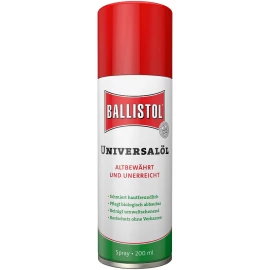
- After handling, wipe the high-carbon steel blade with a soft, dry cloth and regularly protect it with a thin film of suitable blade or gun oil.
- Do not leave moisture, perspiration or fingerprints on the blade, as these may cause surface corrosion.
- Store the dagger in a dry environment and inspect both blade and scabbard periodically during long-term storage.
- Keep the wire grip dry and avoid aggressive cleaning chemicals.
- The edge is not safely blunt. Always handle the dagger as a genuine edged weapon.
- Do not use it for contact fencing, person-to-person combat or uncontrolled thrusting and cutting tests.
- Never point the blade towards people or animals, and maintain a safe working distance whenever handling it.
- Striking stone, metal, concrete or other hard objects may damage the edge, point or construction of the weapon.
Recommended Accessories
- Munich Town Guard sword – a suitable companion weapon for an interpretation centred on around 1600 and the early 17th century.
- Renaissance leather belt – appropriate for carrying weapons and accessories of the 16th and 17th centuries.
- Renaissance belt pouch or purse – a practical accessory for civilian or town-guard impressions of the 16th and 17th centuries.
- Leather gloves – suitable for a soldier or town-guard costume dating to around 1600.
- Renaissance doublet, cloak or hat – useful for creating a coherent late-16th- or early-17th-century costume.
We are here for you!