Čeština
 Deutsch


Musketeer Main Gauche
1x


Complete your rapier costume with an impressive left-hand dagger in a seventeenth-century style. Its long 1080 high-carbon steel blade, exceptionally broad quillons and polished sheet-steel guard evoke the weapons of early Baroque musketeers, officers and gentlemen fencers. A finely engraved cross motif decorates the hand guard, while a textured grey grip provides a secure hold. The dagger is supplied with a black leather scabbard fitted with polished metal mounts. We recommend it for collecting, decorative display, costume presentation, photography and non-contact historical interpretation. Further product information ...

Would you like to be notified as soon as the item is in stock?
You will receive a short e-mail as soon as we have it back in stock.
Musketeer Main-Gauche Dagger with Engraved Guard
A Distinctive Musketeer-Style Main Gauche
This main-gauche or left-hand parrying dagger combines several prominent features associated with early modern off-hand weapons. Its long, narrow and sharply pointed blade is paired with exceptionally wide straight quillons. Turned finials give their ends an elegant decorative finish.
The most striking feature is the large curved sheet-steel guard covering the back of the hand. Its highly polished surface has a formal, courtly appearance and is embellished with an engraved cross surrounded by foliate details. Dark marks visible on the guard are generally reflections of the black scabbard and surrounding objects rather than an uneven surface coating.
Blade with Decorative Catching Notches
The blade is made from 1080 high-carbon steel. It gradually broadens from a long sharp point towards the hilt. Longitudinal facets strengthen its visual profile and create clearly defined reflections along the polished surface.
The reinforced forte incorporates deep curved cut-outs, smaller notches and decorative longitudinal grooves. Comparable features appeared on some historical parrying daggers to obstruct movement or provide momentary control during blade contact. They did not make it easy to break a sound sword blade. This replica must never be used to catch, twist or lever an actual weapon.
Polished Guard and Textured Grip
The curved plate runs from the crossguard towards the pommel and covers the back of the hand when the dagger is held correctly. Together with the long quillons, it creates extensive hand protection. The crossguard measures approximately 31.8 cm / 12.5 in across.
The grip has a fine grey textured covering that improves purchase and complements the polished steel hilt. A prominent spherical metal pommel with a profiled terminal completes the assembly and helps balance the long blade.
Black Leather Scabbard with Metal Mounts
The dagger is supplied with a fitted black leather scabbard. A polished metal throat and long chape protect its most vulnerable areas. The scabbard makes transport easier and shields the blade from ordinary scratches.
Insert the dagger slowly, without sideways pressure, and only when the blade is clean, fully dry and lightly oiled. Because the point is sharp, never press against the end of the scabbard with your hand. For long-term storage, we recommend removing the dagger from the leather, as leather may retain atmospheric moisture.
History of the Main Gauche
Left-hand parrying daggers became particularly widespread in Europe from the late sixteenth through the seventeenth century. Their development was closely connected with the rise of the rapier as an important civilian sidearm for noblemen, officers and prosperous townsmen.
The French expression main gauche literally means “left hand”. The dagger was carried in the non-dominant hand while the rapier remained in the dominant hand. A trained fencer could use it to deflect a thrust, protect the hand, alter the line of attack or briefly control an opposing blade.
Large plate, sail and cup-shaped guards were particularly associated with Iberian and Western European weapons. This model is a romanticised Musketeer-style replica rather than an exact reproduction of one specific surviving museum piece.
Historical Method of Holding the Dagger
- The dagger was generally held in the left hand and the rapier in the right.
- The back of the hand remained beneath the broad curved guard.
- The blade pointed forwards or slightly sideways, depending on the chosen guard.
- The long quillons helped deflect and redirect an opponent's weapon.
- Notches near the forte could momentarily obstruct an engaged blade.
- This decorative replica must only be used for safe, non-contact presentation.
Technical Specifications
| Specification | Details |
|---|---|
| Product type | Musketeer left-hand parrying dagger |
| Alternative names | Main gauche, left-hand dagger, parrying dagger |
| Historical inspiration | Europe, late sixteenth to seventeenth century |
| Blade material | 1080 high-carbon steel |
| Blade form | Narrow, double-edged and longitudinally faceted |
| Point | Sharp |
| Overall length | Approx. 56.7 cm / 22.3 in |
| Blade length | Approx. 43 cm / 16.9 in |
| Blade width at the guard | Approx. 3.8 cm / 1.5 in |
| Blade thickness at the guard | Approx. 4 mm / 0.16 in |
| Edge thickness | Approx. 0.8 mm / 0.03 in |
| Crossguard span | Approx. 31.8 cm / 12.5 in |
| Hand protection | Polished sheet-steel guard with engraved decoration |
| Grip finish | Textured grey covering |
| Pommel | Polished metal with a spherical form |
| Scabbard | Black leather with a metal throat and chape |
| Dagger weight | Approx. 802 g / 1.77 lb |
| Weight including scabbard | Approx. 950 g / 2.09 lb |
| Package contents | 1 dagger and 1 scabbard |
| Intended use | Decoration, collecting, costume and non-contact presentation |
| Suitable for contact fencing | No |
Measurements and weight may vary slightly between individual pieces.
Care and Safety
This is a decorative item and is not suitable for real combat, HEMA sparring, blade-on-blade stage fighting or full-contact LARP. The sharp point can cause serious injury even if the cutting edges have not been fully sharpened.
- Do not thrust or cut towards people, animals or practice targets.
- Do not use the notches to catch, lever or break another blade.
- Do not cross the dagger with a rapier, sword or other metal weapon.
- Inspect the guard, quillons, pommel and grip before every handling session.
- Remove fingerprints with a soft, dry cloth after touching the steel.
- Protect the blade and hilt with a very thin film of conservation oil.
- Do not use wire brushes, coarse abrasives or aggressive chemical cleaners.
- Insert only a completely dry blade into the scabbard.
- Keep the dagger out of the reach of children and untrained persons.
- For long-term storage, keep it dry and outside the leather scabbard.
Recommended Accessories
- Rapier with a cup or swept hilt based on seventeenth-century examples.
- Leather rapier hanger in the style of seventeenth-century civilian equipment.
- Musketeer doublet inspired by clothing from the first half of the seventeenth century.
- Broad-brimmed Musketeer hat in a seventeenth-century Western European style.
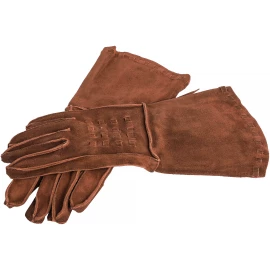
- Leather gauntlet gloves based on seventeenth-century military and equestrian equipment.
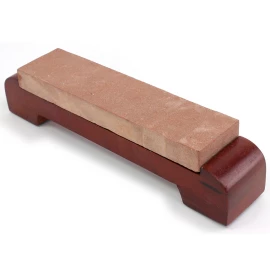
- Wooden rapier and dagger stand for displaying the matched set safely.
We are here for you!