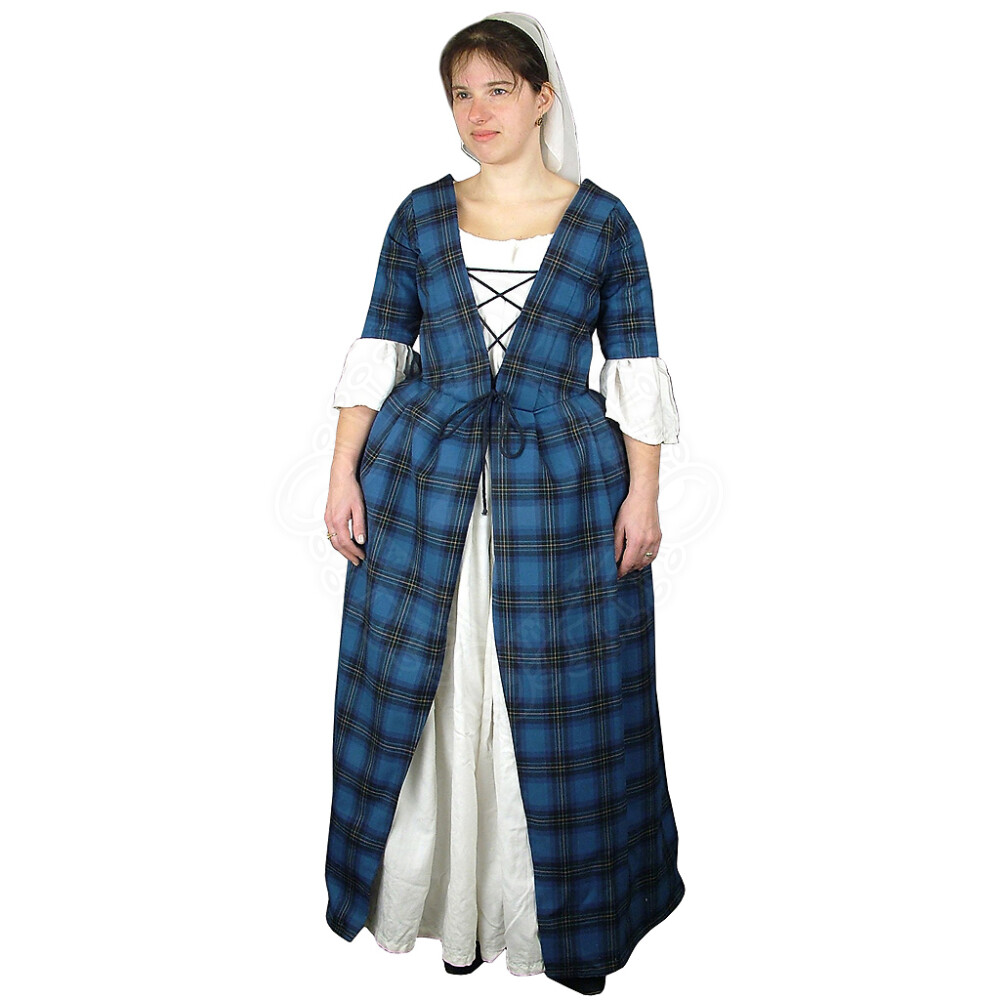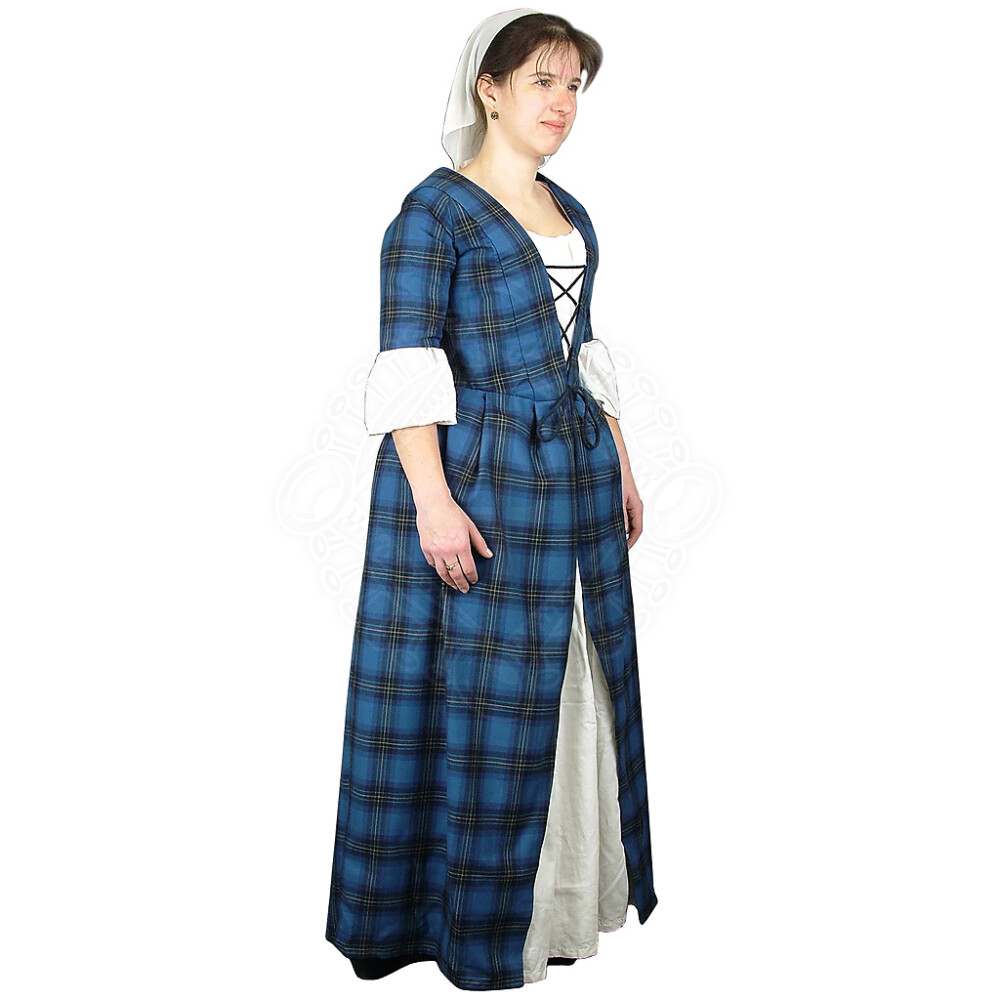
18th Century Scottish Highland Tartan Gown with Bonnet
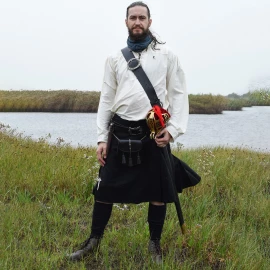
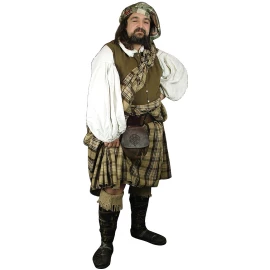
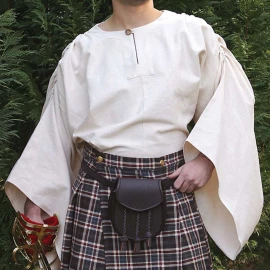
Are you preparing for a historical festival, the Highland Games, or are you captivated by the Jacobite risings of the eighteenth century? This magnificent Scottish gown transports you straight to the rugged and romantic Highlands. Combining a traditional checked tartan skirt, a supportive wool bodice, and breathable linen undergarments, it guarantees maximum comfort and a historically accurate impression all day long. The outfit consists of a linen shift shirt, an underskirt, an overdress with functional front lacing, and a period-correct bonnet. Stand out at any LARP or re-enactment event in a garment that perfectly blends Rococo elegance with rustic Scottish practicality. Further product information ...
18th Century Scottish Highland Tartan Gown with Bonnet
Historical Context and Life in the Scottish Highlands
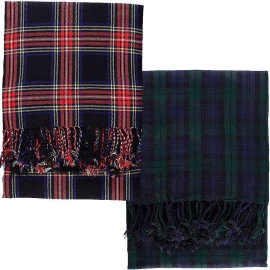
This women's attire faithfully reconstructs the fashion of 18th-century Scotland, specifically around the time of the Jacobite rising of 1745. Women living in the Scottish Highlands required garments that were highly functional and resilient against the unpredictable British weather, whilst also proudly displaying their clan identity. The overskirt section of the dress is tailored from tartan, the specific checked pattern that became the ultimate symbol of Scottish heritage and clan loyalty during the eighteenth century.
An interesting piece of history: following the tragic defeat at the Battle of Culloden in 1746, the British Parliament strictly banned the wearing of tartan via the Dress Act. This gown therefore represents the golden era of the free and proud Highlands. The cut, featuring an open-fronted skirt, is heavily adapted from the broader European fashion trends of the time (such as the Robe à l'Anglaise), localized by Scottish women using homegrown wool and linen for practical country life.
Garment Construction and Proper Layering Guide
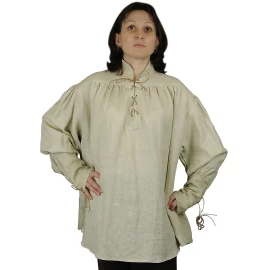
This ensemble is a well-engineered costume consisting of several independent pieces designed to be layered historically. First, don the linen-blend shift shirt, which features three-quarter length sleeves finished with delicate ruffles. Over this, tie the long under-skirt, tailored in a natural cream tone. The centerpiece is the tartan overdress; its integrated, stiffened wool bodice tightens at the front with a functional cord lacing. The overskirt splits open from the waist down, designed intentionally to showcase the contrasting light underskirt underneath. Complete your Highland look by putting on the white linen bonnet, a mandatory headpiece for respectable women of the 18th century.
Technical Specifications and Dimensions
| Garment Component | Material Composition | Design & Cut Details |
|---|---|---|
| Overdress & Bodice | 100% wool (bodice), 100% linen (tartan skirt) | Functional front lacing, open-front design, pleated tartan |
| Shift Shirt & Underskirt | 70% linen, 30% cotton | Three-quarter sleeves with ruffles, floor-skimming length |
| Bonnet (Headwear) | 100% linen / cotton blend | Classic gather with adjustable rear drawstring |
| Historical Period | 18th Century (Rococo / Jacobite Era) | Region: Scottish Highlands |
| Overskirt Length | Approx. 102 cm (approx. 40.1 inches) | Standard floor-skimming historical drape |
Care Instructions and Safety Guidelines
Due to the premium 100% natural wool used in the bodice and the delicate linen tartan, you must never machine wash or tumble dry the overdress; doing so will cause the wool to felt and shrink significantly. We strictly recommend professional dry cleaning for the outer gown. The linen under-shift and underskirt can be safely hand washed in lukewarm water up to 30°C (86°F) using a mild detergent for natural fibers. Iron the linen pieces on a high setting while still damp, but iron the wool bodice only on a low heat setting through a protective damp pressing cloth.
When participating in historical camps, exercise caution around open fires, cauldrons, or sparks. While wool is naturally flame-resistant, the exposed linen ruffles and underskirt can ignite easily if brushed against hot embers. This dress serves as a historical civilian replica; it is not constructed for athletic stunts, stunt combat, or full-contact HEMA sword fighting.
Recommended Accessories
To perfectly complete this Highlander outfit, we recommend pairing it with a traditional penannular Scottish brooch (or kilt pin) to secure a matching shoulder plaid, a period leather belt pouch, and historically accurate leather lace-up shoes from the eighteenth century. Please note that shoes, hosiery, or jewelry pieces shown in the photographs are not included with this item.
This Scottish Highland Tartan Gown can be made in various colors according to these sample cards. Please note the requested color(s) into your order, in the field for your comment. Please specify always (1) the number of the sample card, (2) letter of the color, and (3) description of the colour (Example: 04-F-blue). If you choose a fabric with different composition, the price may change. Possible price change will be consulted with you before processing the order.
This Scottish Highland Tartan Gown will be made exactly to your measure. Please fill in this measurement chart after finishing your order.
We are here for you!