
Hand-Forged Crescent Hunting Arrowhead for Medieval Archery
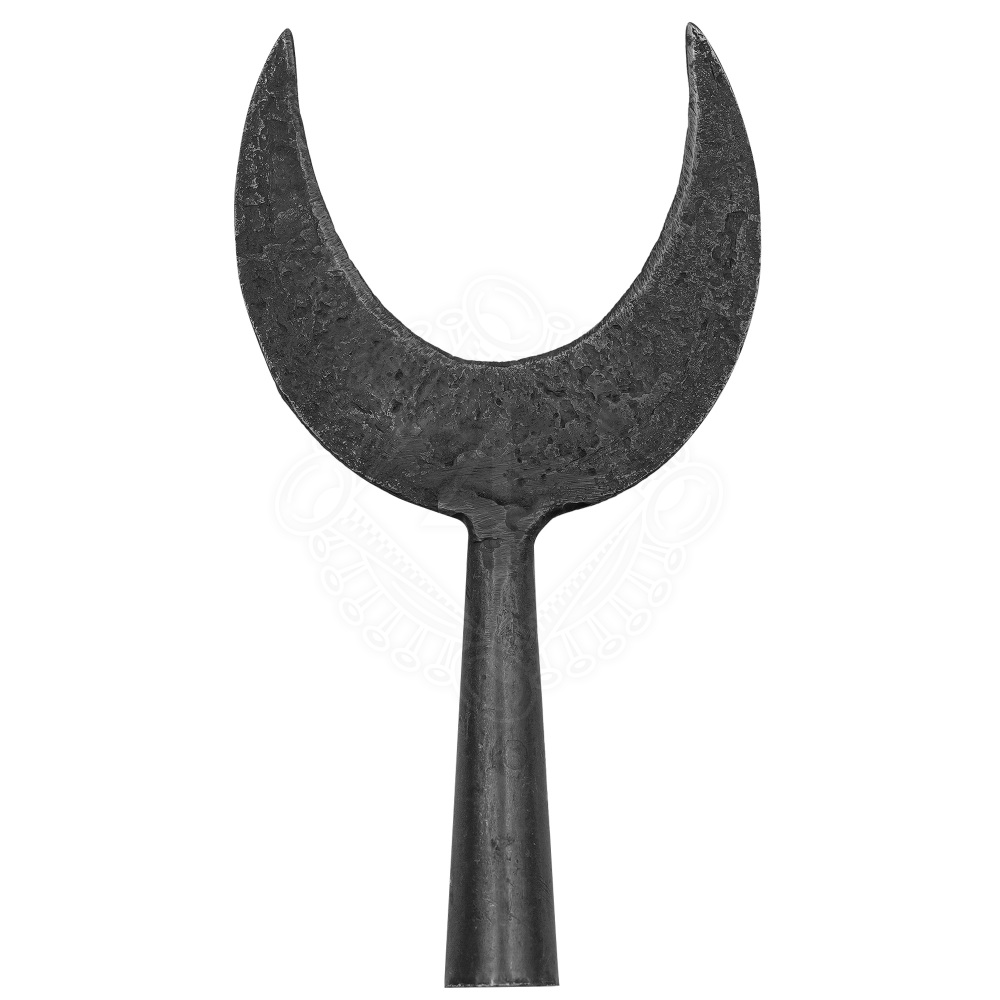
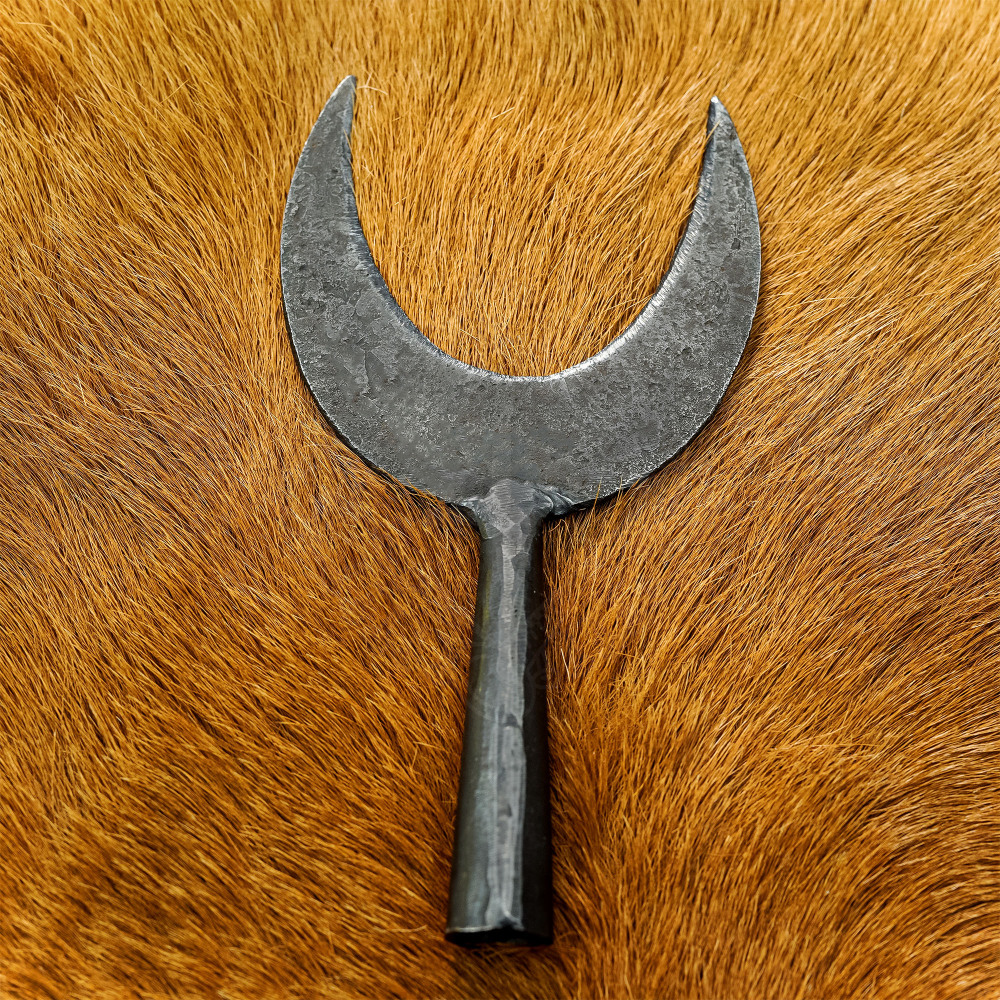
Add a distinctive hand-forged crescent arrowhead to your archery equipment, archer. Its two forward-facing points and broad moon-shaped blade create the unmistakable outline of a late medieval hunting head, also known as a forker or forked arrowhead. Every piece bears subtle evidence of hand forging, whilst the dark natural finish gives it an authentic appearance on a completed arrow, in an armoury display or within a historical collection. The points and inner edge are sharp, so this arrowhead must not be used for LARP, stage combat or shooting towards people or animals. Further product information ...
Hand-Forged Crescent Hunting Arrowhead for Medieval Archery
A Late Medieval Crescent Hunting Arrowhead
The design is inspired by European crescent-shaped and forked arrowheads classified amongst the H2 group of medieval hunting heads. Surviving examples of this form are primarily associated with the late 14th and 15th centuries, although comparable double-forked arrowheads continued to be described in written sources from the 16th and early 17th centuries.
The broad blade terminates in two long points that sweep forwards from the socket. When used historically for hunting birds and small game, this arrangement was intended to provide a considerably wider strike than a narrow conventional point. Its broad form was also less likely to bury itself deeply in grass, scrub or soft ground, helping an archer recover and reuse an expensive arrow.
A Hunting Forker Rather Than a Proven Rope Cutter
Crescent heads are often described in popular accounts as rope-cutting arrowheads designed to sever ropes, sails or the rigging of ships and siege engines. Although the story is appealing, firm historical and practical evidence for this specialised use is lacking. Striking a moving, tensioned rope precisely between the two points from a useful distance would have been extremely difficult.
A hunting purpose is considerably more plausible. French agricultural texts from the second half of the 16th century describe double-forked arrows intended to strike the wing or neck of geese and other large birds. This replica therefore offers an excellent opportunity to explain the contrast between the romantic legend of a medieval rope-cutting arrow and the more likely use of forked heads for hunting birds and small game.
Appearance and Hand-Forged Construction
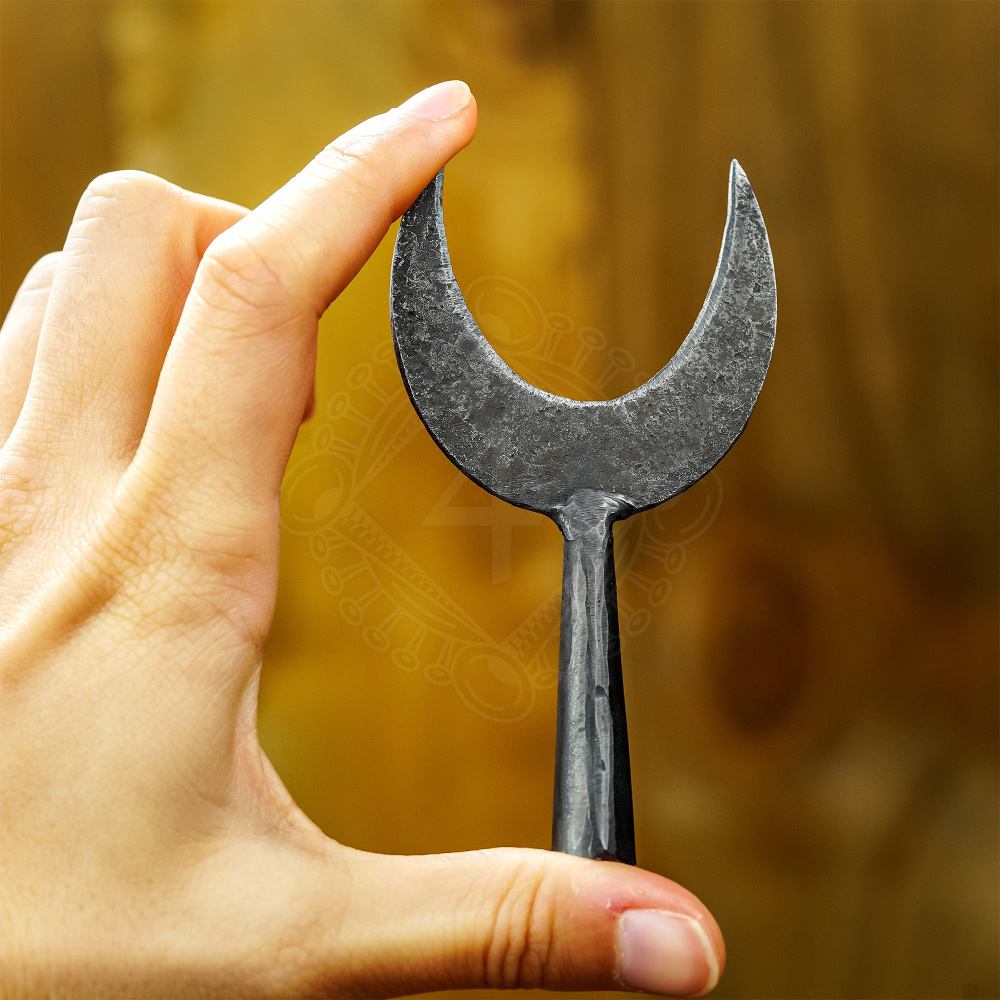
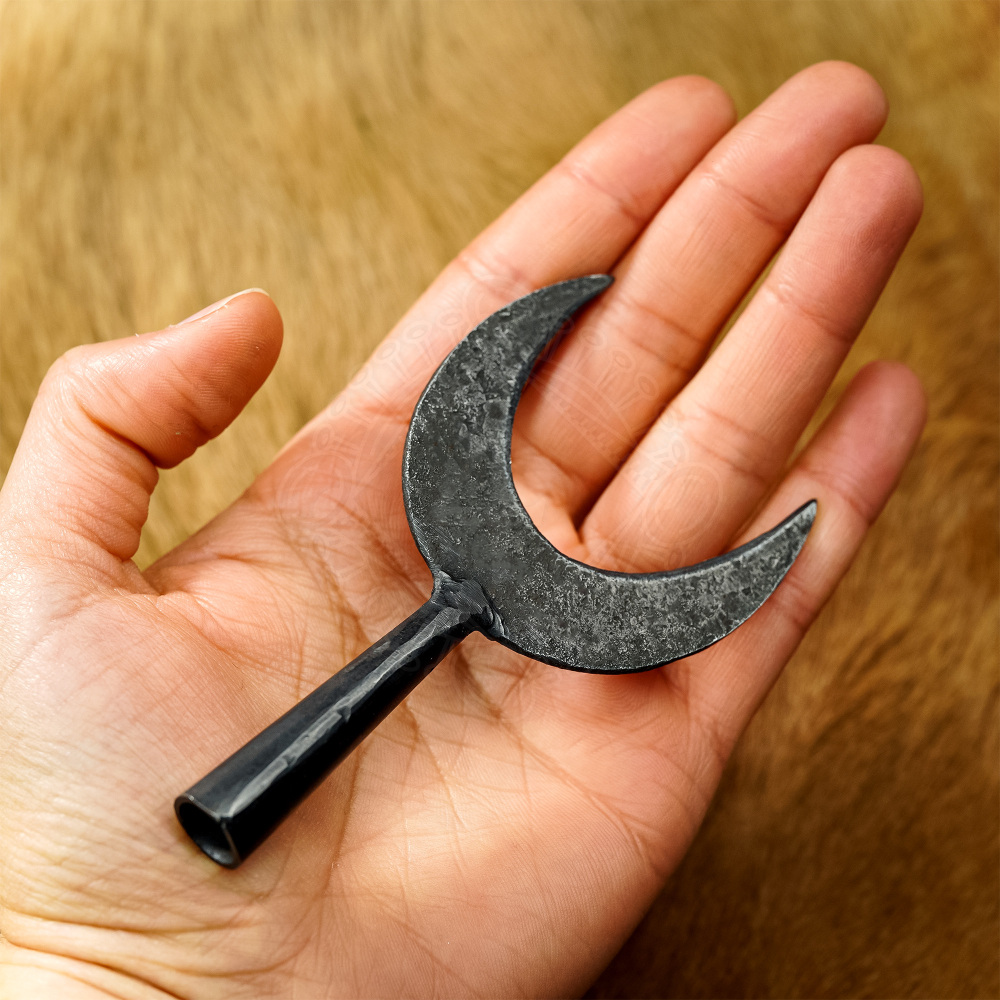
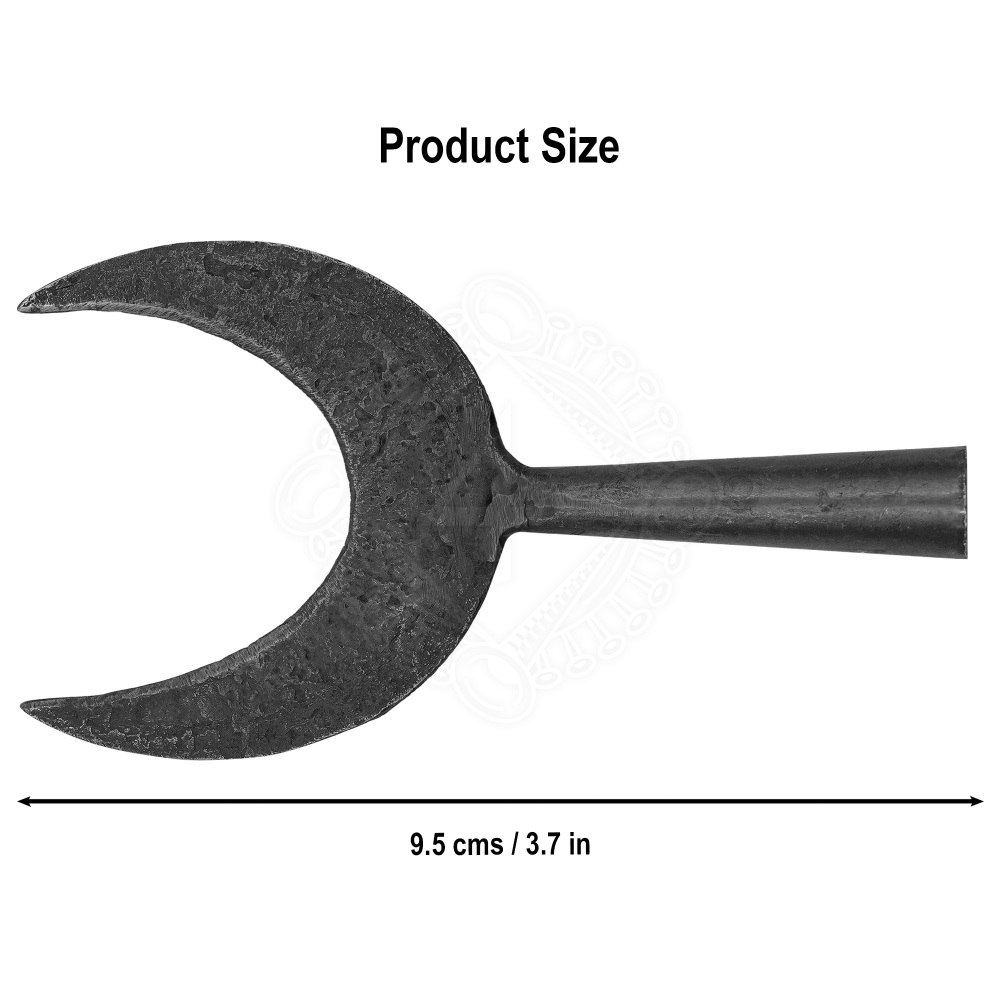
The broad crescent blade has a concave inner cutting edge and two long, slightly curved points. At its base, the blade flows into a tapered rolled socket designed to fit over a prepared wooden arrow shaft. The crescent is approximately 2 mm or 5/64 inch thick, giving it a strong visual profile without making the complete head excessively heavy.
The iron retains a dark natural blacksmith’s finish with visible signs of forging, grinding and final hand finishing. Minor differences in dimensions, symmetry, texture and colour are not defects but normal characteristics of handmade metalwork. A protective film of oil is normally applied before packing to reduce corrosion during storage and transport.
Fitting the Arrowhead to a Wooden Shaft
To assemble a historically styled display arrow, select a straight wooden shaft and gradually reduce its front end to match the internal diameter of the socket. The shaft should fit firmly and remain aligned with the head, but it must not be hammered in with excessive force, as this may split or distort the rolled iron socket.
We recommend carrying out a dry fit first and checking that the crescent blade is accurately aligned with the shaft. For a decorative or collectable arrow, the joint may then be secured with a suitable adhesive formulated for wood and metal. Before any live shooting, the completed arrow must be assessed by an experienced arrow maker, who should check the attachment, shaft stiffness, balance, alignment and compatibility with the intended bow.
Technical Specifications
| Specification | Details |
|---|---|
| Product type | Crescent hunting arrowhead of the forker type |
| Historical inspiration | Europe, principally late 14th–16th century |
| Material | Hand-forged iron |
| Blade shape | Crescent with two forward-facing points |
| Overall length | approx. 97 mm / 3 13/16 in |
| Overall width | approx. 54 mm / 2 1/8 in |
| Crescent blade thickness | approx. 2 mm / 5/64 in |
| Socket length | approx. 45.6 mm / 1 13/16 in |
| External socket diameter | approx. 11.11 mm / 7/16 in |
| Internal socket diameter | approx. 8.54 mm / 11/32 in |
| Weight | approx. 28 g / 0.99 oz |
| Finish | Dark natural blacksmith’s finish protected with oil |
| Attachment method | Socket fitted over a prepared wooden shaft |
| Contents | One iron arrowhead without a wooden shaft |
Care and Safe Handling
- The temporary protective oil applied for transport may be wiped away with a dry cloth or a suitable degreasing product.
- After handling, wipe the arrowhead clean and apply a very thin layer of gun oil or metal preservation oil.
- Store it in a dry place and avoid prolonged exposure to moisture, salt, acids or damp leather.
- Light surface corrosion may be removed carefully with fine steel wool or a very fine abrasive pad and a small amount of oil.
- Both points and the inner edge can cause serious puncture or cutting injuries. Fit a rigid blade protector during transport.
- Do not use this metal head for LARP, stage fighting, contact combat or public demonstrations without a controlled safety barrier.
- Never shoot it towards people, animals, trees, stones, metal targets or other hard objects.
- Always comply with local law, range regulations and the requirement for a secure area and reliable backstop behind the target.
- Keep the arrowhead out of the reach of children.
Recommended Accessories
- Wooden arrow shaft suitable for a late 14th–16th-century display arrow and matched to the socket diameter.
- Natural feather fletching made from goose or turkey feathers for a historically styled appearance.
- Linen thread and hide glue for traditionally inspired fletching appropriate to the 14th–16th centuries.
- Medieval leather quiver in a High Medieval, Late Medieval or Tudor style.
- Longbow or historical crossbow for a static display of European archery equipment from the 14th–16th centuries.
- Rigid edge protector for safer storage and transport.
- Weapon maintenance oil and a soft cotton cloth for regular care of the iron surface.
We are here for you!