Čeština
 Deutsch


Arming belt for suspending leg armour, 13th–14th century
1x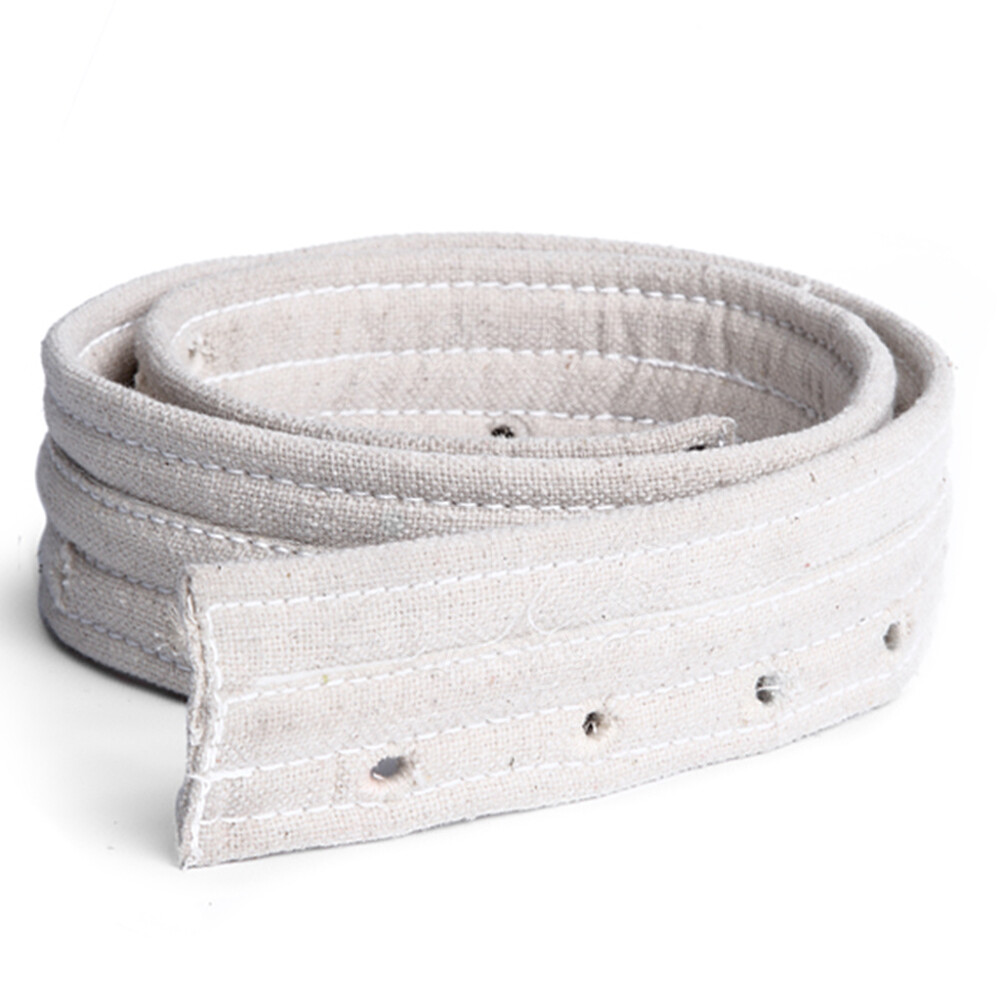
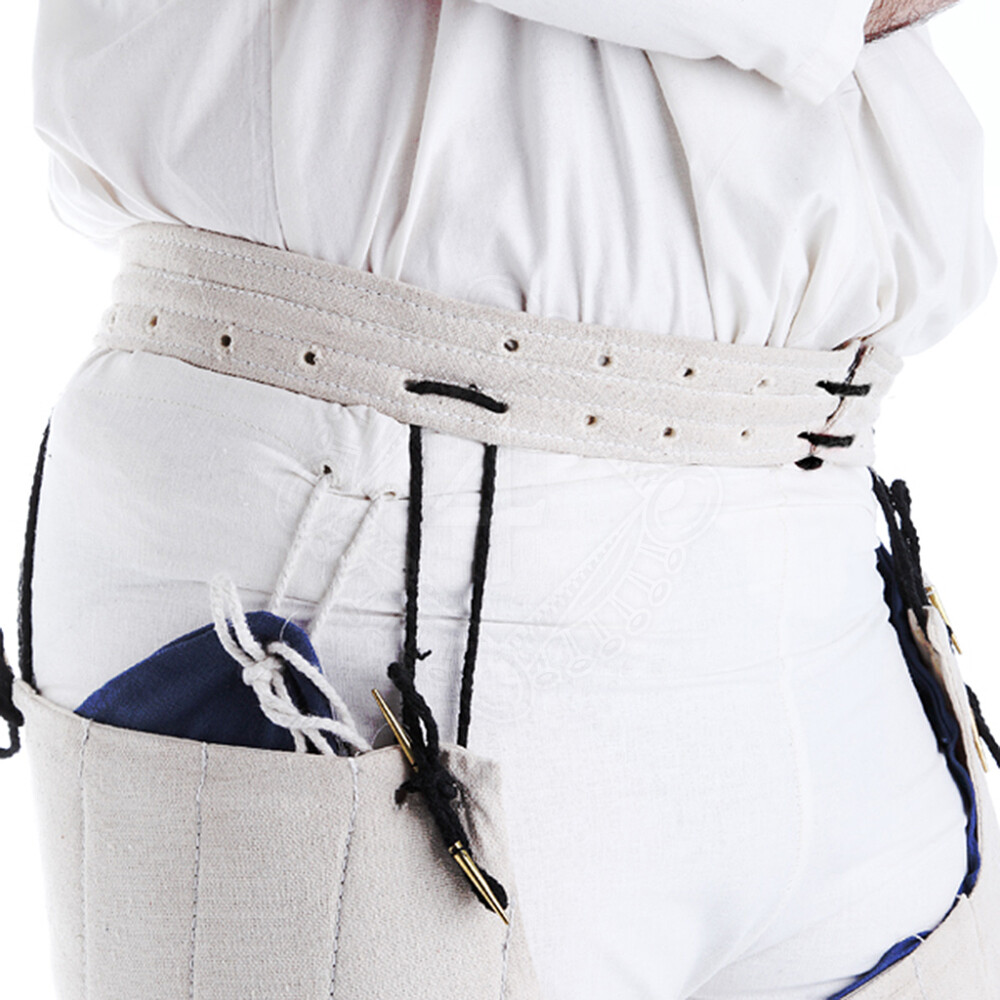

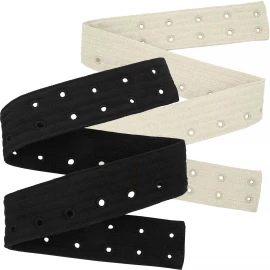
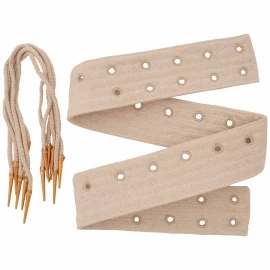
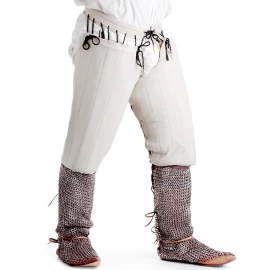
Support your mail chausses or padded leg coverings with a lightly padded arming belt. Worn around the waist, it provides stitched eyelets for attaching your equipment. Multiple ties distribute the load between several points, while a laced closure replaces a metal buckle that might press beneath armour. Pale fabric and simple lengthwise stitching make it an unobtrusive accessory for historical impressions and costume performances. The supplied information places it in the 13th–14th century. Adjust it over the clothing you will actually wear, then test the complete arrangement while walking, sitting and raising your legs. Further product information ...

 Delivery options
The following variants are currently available:
Padded arming belt for suspending leg armour, 13th–14th century
Construction and purpose
The belt has a pale textile surface, lengthwise stitching and light padding. Its holes are reinforced with stitching. The description specifies one eyelet at one end and five pairs at the other. Depending on the required fit, additional eyelets may need to be made and carefully stitched.
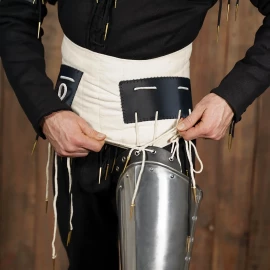
It supports mail chausses, padded leg coverings or other leg defences with suitable suspension points. Position the ties according to your particular equipment.
Historical context
During the 13th and 14th centuries, leg protection included various combinations of mail, textiles and increasingly plate elements. Effective suspension mattered for comfort and freedom of movement.
An interesting detail is that arming points do more than fasten equipment: they transfer the weight of suspended pieces to a garment or belt. Their positioning and the overall fit therefore matter as much as their strength.
Technical specifications
| Feature | Specification |
|---|---|
| Material | Both linen and cotton are stated; exact composition unclear |
| Padding | Light; filling composition requires confirmation |
| Width | 5.2 cm / 2.05 in |
| Thickness | Approximately 4 mm / 0.16 in |
| Hole spacing | 27 mm / 1.06 in |
| Hole radius as stated | 3.3 mm / 0.13 in |
| Eyelets | Reinforced with stitching |
| Closure | Lacing |
| Additional stated length | 120 cm / 47.24 in; relationship to size options unspecified |
| Historical period according to supplied information | 13th–14th century |
Sizes and lengths
| Size | Belt length |
|---|---|
| M | 85 cm / 33.46 in |
| L | 95 cm / 37.40 in |
| XL | 105 cm / 41.34 in |
| XXL | 115 cm / 45.28 in |
| 3XL | 125 cm / 49.21 in |
These lengths do not automatically represent waist circumference. Before ordering, confirm your size, the conflicting 120 cm / 47.24 in measurement and the material composition.
Preparation, care and safety
Lace the belt securely without restricting breathing. The supplied information generally recommends at least four ties for a pair of leg defences. Attach equipment evenly and test it without combat loading first. Check stitching, eyelets and ties regularly. This is not a safety harness.
Air and dry the belt after use. Until its composition is confirmed, use gentle spot cleaning and avoid hot washing or tumble drying.
Suggested accessories
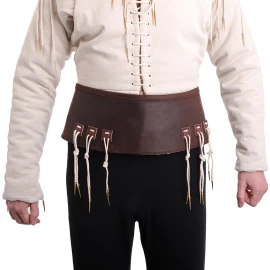
We recommend strong arming ties, mail chausses or padded leg coverings appropriate to the 13th–14th century, and suitable underclothing. Clothing and suspended equipment shown in the photograph are not included.
We are here for you!