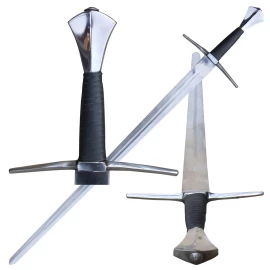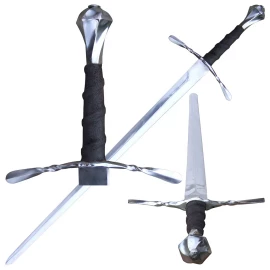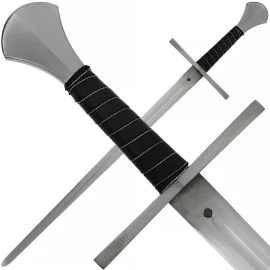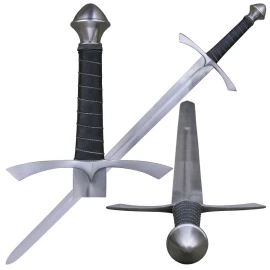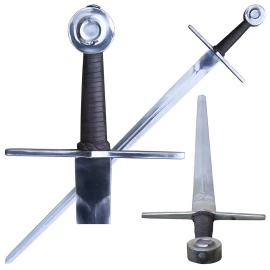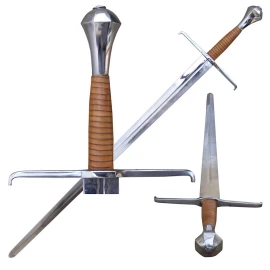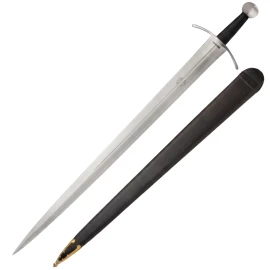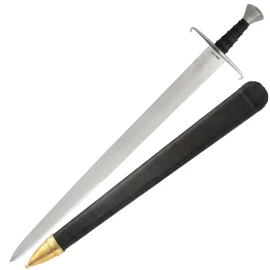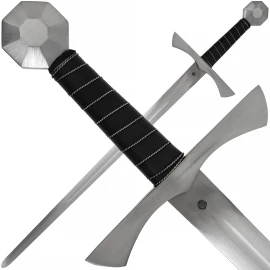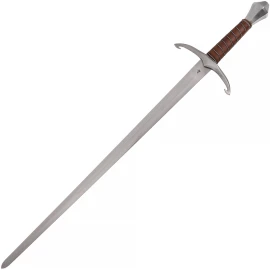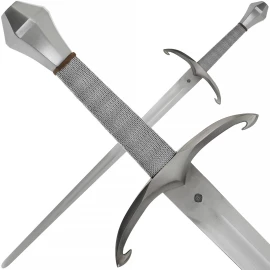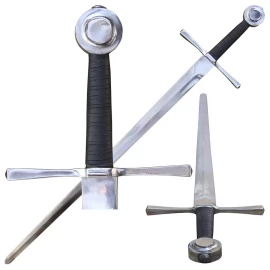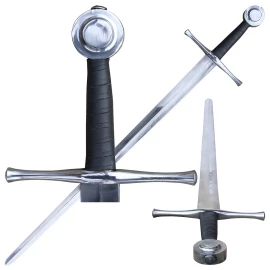

Peter von Danzig Type XVIII Sharp Medieval Arming Sword
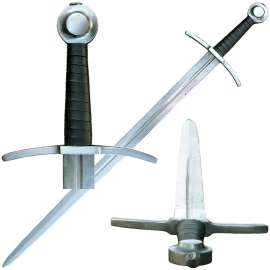
Peter von Danzig Type XVIII Sharp Medieval Arming Sword
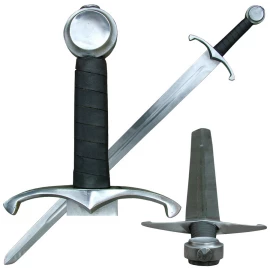
Free shipping

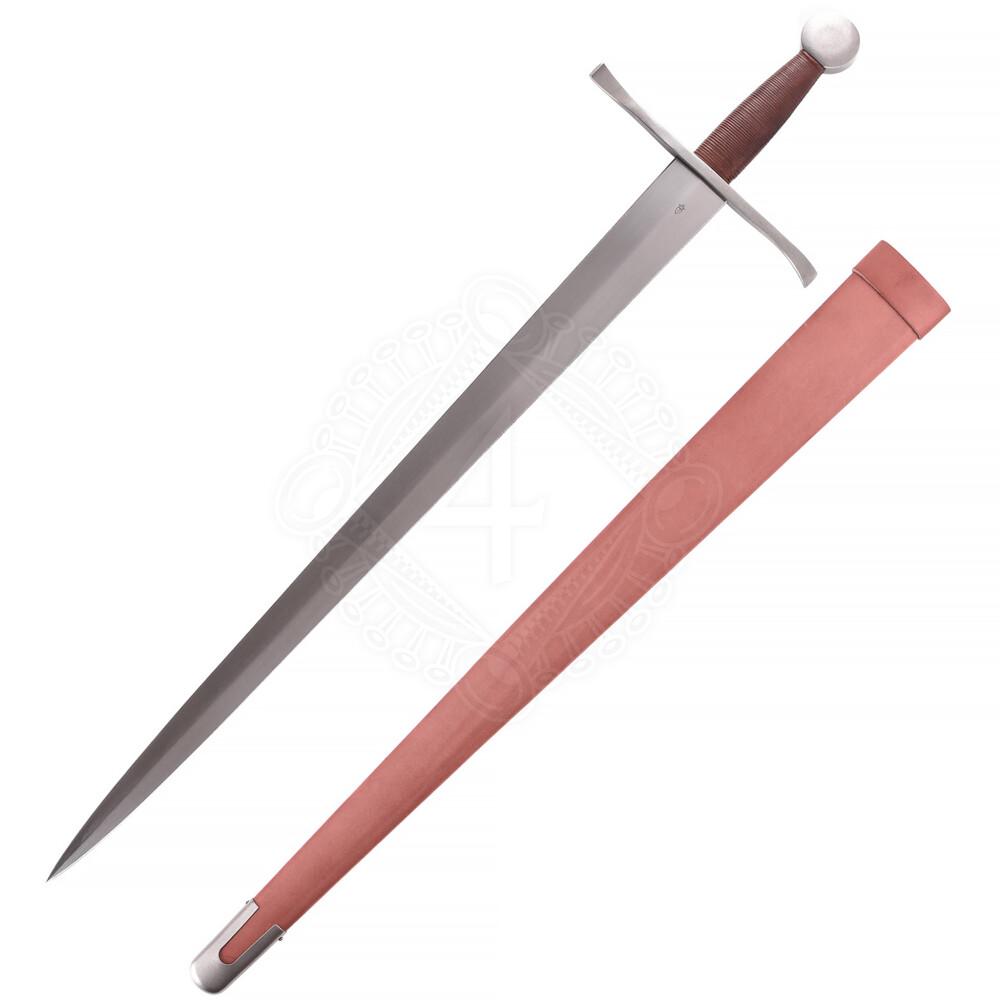
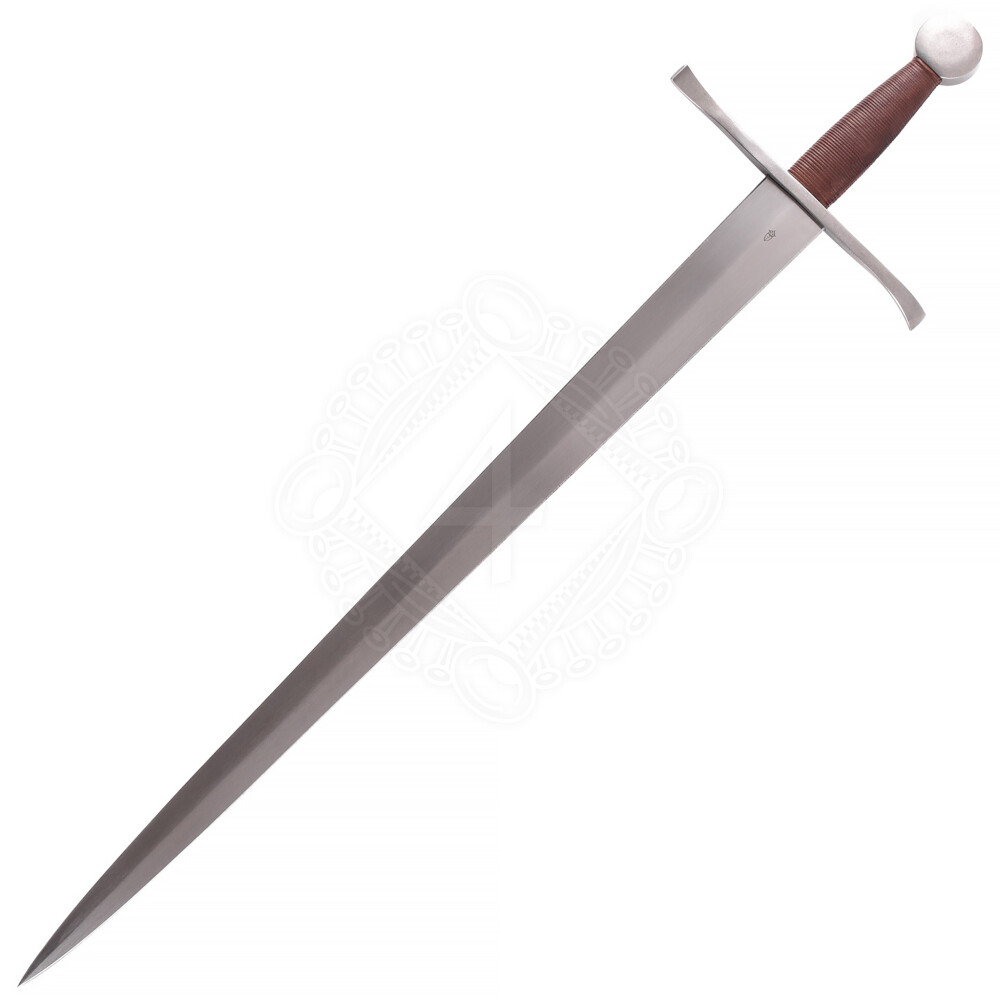
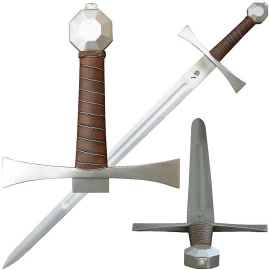
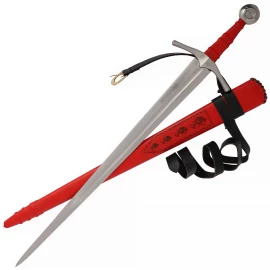
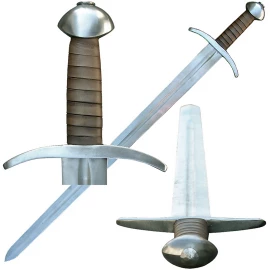
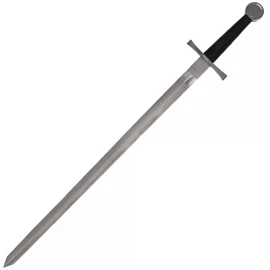
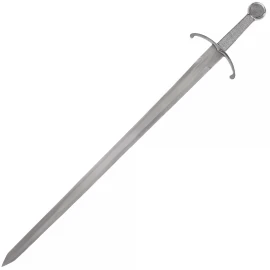
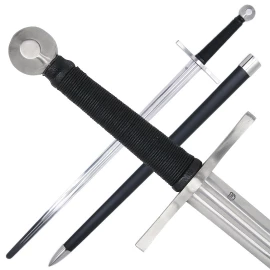
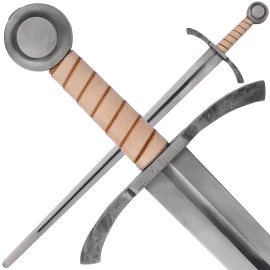
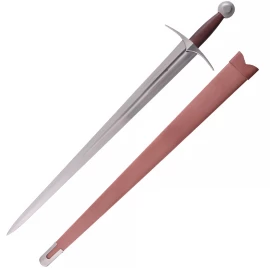
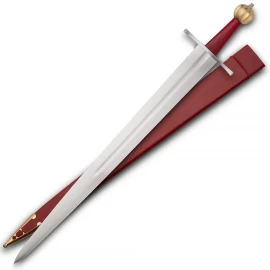
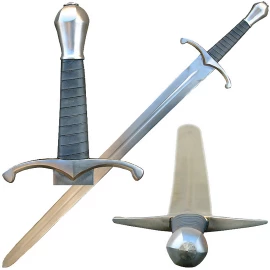
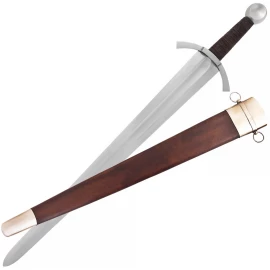
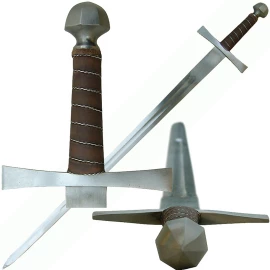
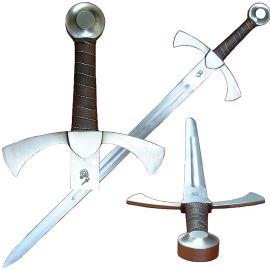
Fencer, if you are looking for a sharp medieval arming sword that combines historically convincing lines with exceptionally lively handling, this Angus Trim Type XVIII is well worth your attention. Its slender 9260 spring-steel blade has the characteristic flattened diamond section, an acute point and geometry suited to both effective cuts and accurately controlled thrusts. Weighing only around 964 g (2 lb 2 oz), it is a remarkably agile knightly sword. A textured leather-covered wooden grip, elegantly curved crossguard, disc pommel and leather-covered scabbard complete a functional design inspired by the fighting swords of the 15th century. Further product information ...

On order - order now and goods will be dispatched on: 12-Oct-2026 Delivery options
556,00 €
459,50 € excl. VAT

Would you like to be notified as soon as the item is in stock?

You will receive a short e-mail as soon as we have it back in stock.

SKU: SM36060

Peter von Danzig Type XVIII Sharp Medieval Arming Sword

A Knightly Sword for the 15th-Century Battlefield

The historical inspiration for this sword is Oakeshott Type XVIII, one of the characteristic European sword forms of the Late Middle Ages. It is particularly associated with the 15th century, when high-quality plate armour provided knights and men-at-arms with increasingly comprehensive protection. A useful sword therefore needed considerably more versatility than brute cutting power alone.

Type XVIII blades are relatively broad at the base and taper gracefully towards a pronounced point. Their defining characteristic is a flattened diamond cross-section. The central ridge produces a comparatively stiff blade and therefore improves point control during a thrust. This should not be confused with attempting to punch directly through solid plate armour. A skilled swordsman instead sought openings between the individual components of armour, including vulnerable areas around the armpits, elbows, groin and visor.

Type XVIII was not a specialised thrusting weapon, however. Its gradual taper leaves sufficient width through the effective cutting portion of the blade to deliver efficient cuts against unarmoured or lightly protected targets. It is consequently an excellent example of a medieval cut-and-thrust sword.

Performance-Orientated Design by Angus Trim

This model is not an exact reproduction of one particular museum sword. It is a historically informed performance sword designed by Angus “Gus” Trim. His approach places considerable emphasis on harmonic balance, mass distribution and appropriate profile and distal taper so that the complete sword behaves naturally in motion.

With an overall length of approximately 84.5 cm (33.3 in) and a weight of only about 964 g (2 lb 2 oz), this is a compact and highly manoeuvrable medieval arming sword. The point of balance sits approximately 8.9 cm (3.5 in) in front of the guard. This leaves enough blade presence for authoritative cuts whilst still allowing rapid changes of direction and accurate point control.

Diamond-Section 9260 Spring-Steel Blade

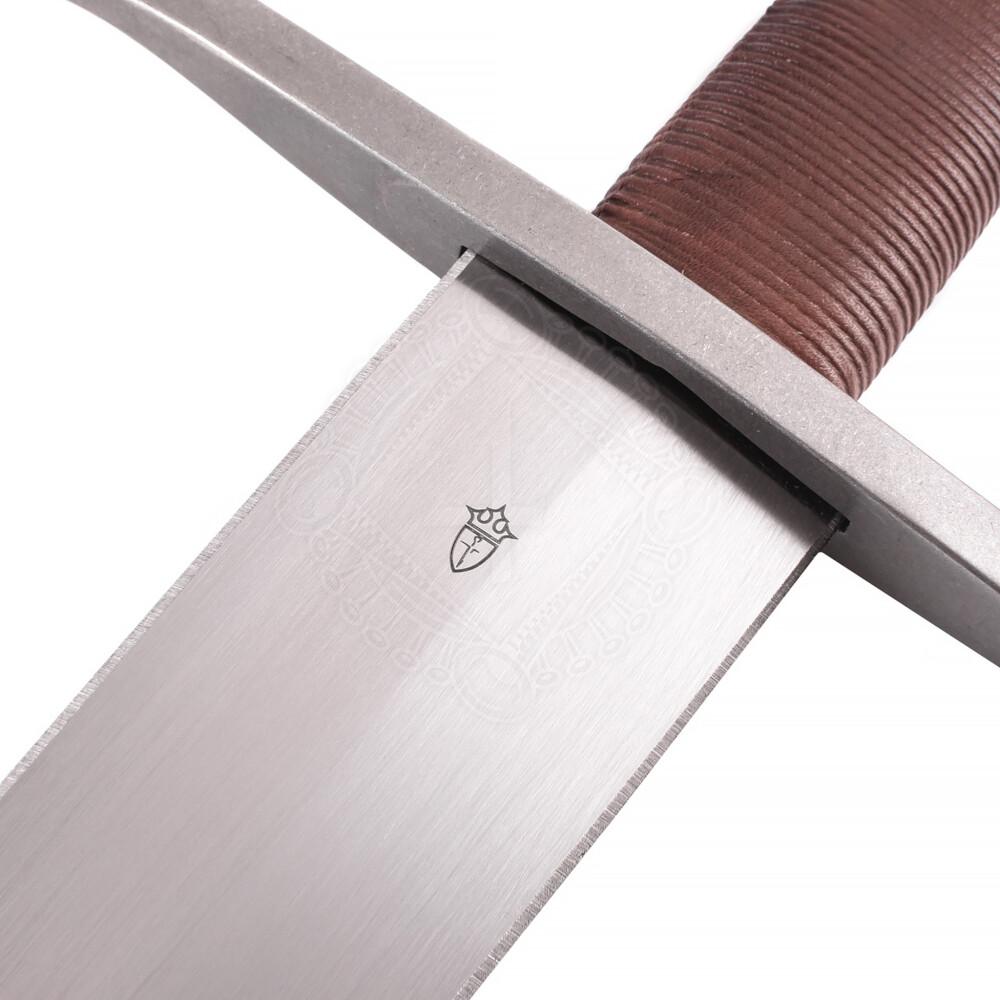
The blade is hand forged from 9260 spring steel, heat treated and given an attractive satin finish. It is flat ground and does not rely upon a conventional fuller for its geometry. Instead, stiffness comes from the flattened diamond section and its pronounced central ridge.

From its broad shoulders the blade tapers progressively towards an acute sharpened point. The geometry illustrates why Type XVIII became such a successful medieval sword form: the stiff point supports accurate thrusting whilst sufficient width is retained through the blade for efficient cutting.

Curved Crossguard and Disc Pommel

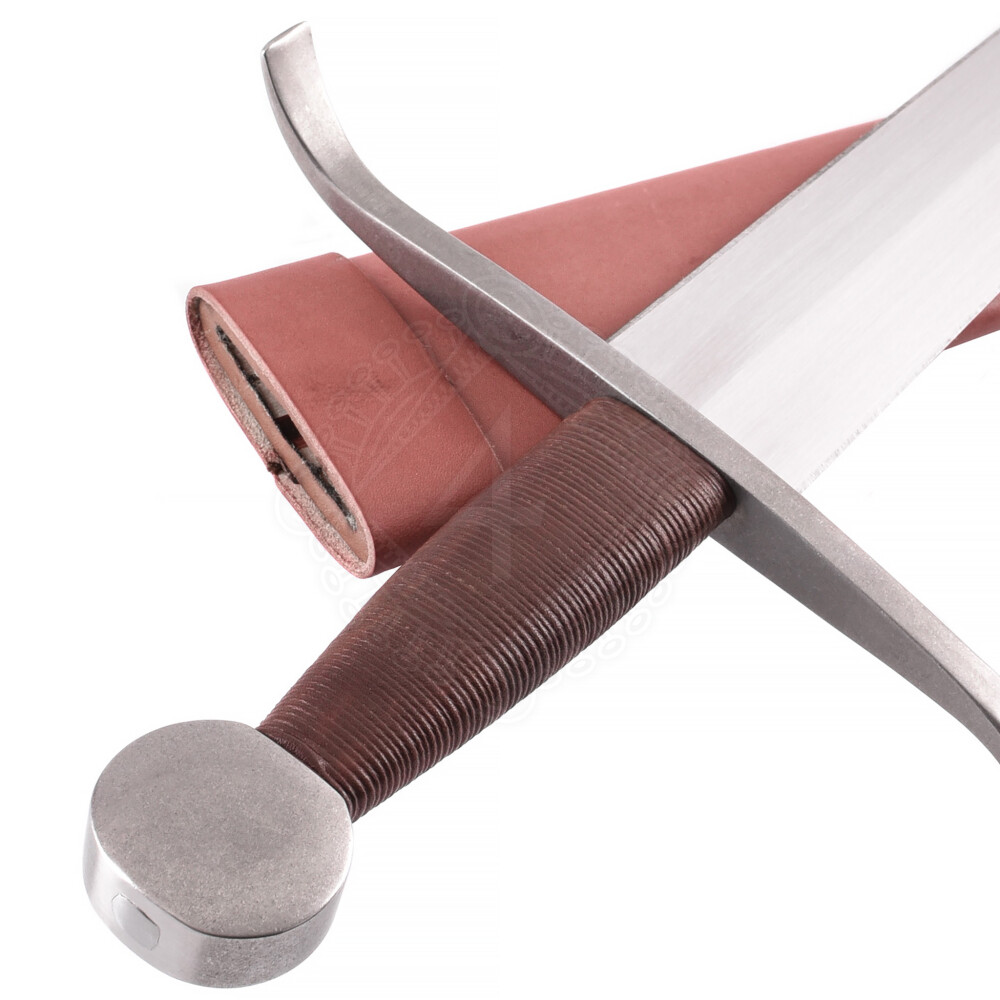
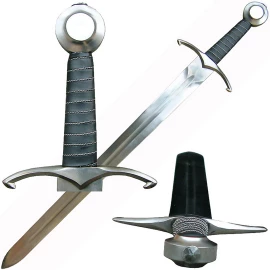
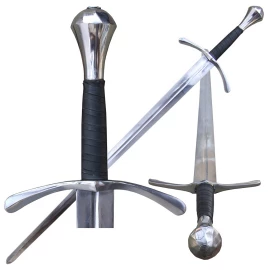
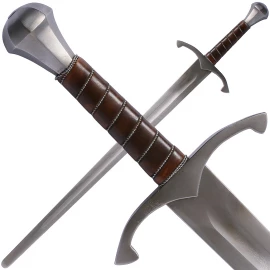
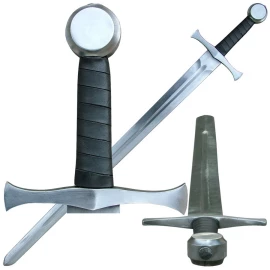
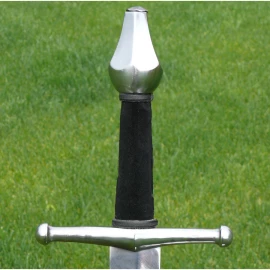
The hilt is elegant without becoming unnecessarily ornate. Its long stainless-steel crossguard curves gently towards the blade and gives the sword a distinctly Late Medieval appearance.

The grip is built around a strong wooden core reinforced with cord and covered in textured brown leather. Fine transverse ribbing improves purchase and gives the hand useful tactile feedback about blade alignment. A restrained stainless-steel disc pommel completes the hilt.

Leather-Covered Wooden Scabbard

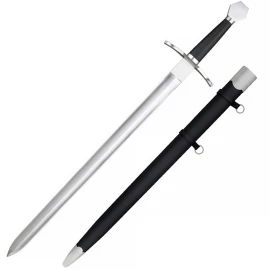
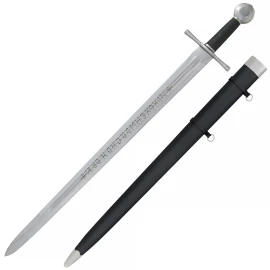
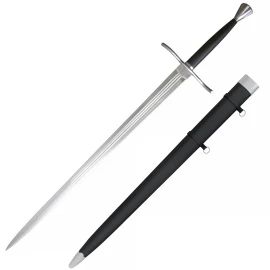
A leather-covered wooden scabbard is supplied with the sword. Its slender profile follows the shape of the blade, whilst a stainless-steel chape protects the lower end. Besides providing more convenient covered storage and transport for the sharp blade, the scabbard completes the sword's historical appearance.

Technical Specifications

Specification Value
Sword type Sharp medieval arming sword, knightly sword
Blade typology Oakeshott Type XVIII
Historical inspiration Europe, particularly the 15th century
Weapon character Cut-and-thrust sword
Blade material 9260 spring steel
Blade cross-section Flattened diamond section with central ridge
Blade grind Flat ground
Blade finish Satin finish
Overall length Approx. 84.5 cm (33.3 in)
Blade length Approx. 67.6 cm (26.6 in)
Grip length Approx. 10.8 cm (4.3 in)
Weight Approx. 964 g (2 lb 2 oz)
Point of balance Approx. 8.9 cm (3.5 in) in front of the guard
Blade point Sharp and pointed
Blade edge Sharp, up to 0.5 mm (0.02 in)
Grip core Wood reinforced with cord
Grip covering Textured brown leather
Crossguard Stainless steel, gently curved
Pommel Stainless steel, disc form
Scabbard Leather-covered wooden core
Scabbard chape Stainless steel
Suitable use Collecting, historical presentation, safe solo handling and controlled cutting practice
Not suitable for Contact HEMA, stage combat, contact reenactment or LARP

Because the sword receives a degree of manual finishing, these measurements, weights and other specifications are approximate and individual supplied examples may vary slightly.

Peter von Danzig and 15th-Century Fencing

Peter von Danzig is a name associated with the German fencing tradition of the 15th century and the teachings of Johannes Liechtenauer. The circle of masters to which he belonged left surviving manuscripts that provide an exceptionally valuable insight into sophisticated Late Medieval European martial arts. Although this tradition is now particularly famous for the longsword, its principles of distance, timing, control of the line and accurate use of the point demonstrate the technical sophistication of medieval fencing in general. This sword bears Peter's name in his honour and as a reminder of the period in which Type XVIII swords flourished.

Care and Maintenance

  • After handling, wipe the blade with a clean, soft and dry cloth. Fingerprints contain moisture and salts that can encourage corrosion.
  • Apply a very thin film of suitable sword, gun or mineral oil to the cleaned blade.
  • After cutting practice, inspect the edge, point, crossguard, pommel and grip for damage before storing the sword.
  • Do not leave the sword inside a damp scabbard for prolonged periods. Leather can retain moisture and promote corrosion.
  • Treat the leather grip sparingly with a product suitable for natural smooth leather.
  • Never cut against metal, stone, concrete, hard knots in timber, bone or other unsuitable targets.
  • Do not use the sword as a pry bar, axe or general-purpose tool.

Safe Use

This model is a genuinely sharp functional sword, not a safe fencing simulator. Do not use it for contact HEMA sparring, partner drills, stage combat, reenactment battles or contact LARP. Controlled cutting practice should be carried out only on suitable inanimate targets, with ample clear space around and beyond the path of the blade. Keep other people outside this area at all times. Transport the sword with the blade covered by its scabbard and always observe the applicable local laws and the rules of the venue or event.

Recommended 15th-Century Accessories

  • Sword belt and scabbard suspension based on 15th-century examples for historically convincing wear.
  • Rondel dagger based on 15th-century originals as a characteristic sidearm for a knight or man-at-arms.
  • Gambeson or padded arming garment in a 15th-century cut as the foundation of a Late Medieval outfit.
  • Brigandine based on 15th-century examples for the equipment of a Late Medieval soldier or nobleman.
  • Sallet, barbuta or late bascinet chosen to suit the particular region and part of the 15th century being portrayed.
  • Sword stand or lockable wall mount for displaying a sharp weapon securely and beyond unauthorised reach.
  • Blade oil and a soft maintenance cloth as modern essentials for regular care of the spring-steel blade.

Kingston Arms and Angus Trim Design

Kingston Arms is a premium brand of the American company CAS Iberia, established in 2016. It specialises in functional and historically inspired European edged weapons for collectors, reenactors and historical fencers.

One of the brand's major strengths is its collaboration with renowned sword designer Angus “Gus” Trim. His designs place particular emphasis on harmonic balance, efficient mass distribution and dynamic handling. This Type XVIII demonstrates that philosophy particularly well: at less than a kilogram in weight it combines a stiff blade, fast point control and convincing cutting characteristics. Tough 9260 spring steel, a solid wooden grip core, cord reinforcement and textured leather covering create a production sword intended for customers who expect considerably more than decoration. Kingston Arms therefore occupies an attractive middle ground between affordable production swords and substantially more expensive bespoke swordsmithing.

Similar products (50)