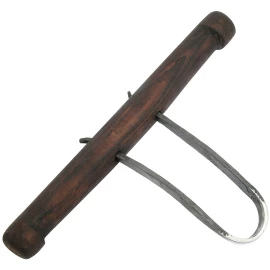

Hand-Forged Iron Corkscrew
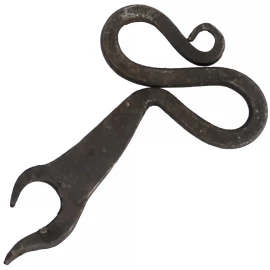
A dependable corkscrew needs no gears, levers or plastic handles. This hand-forged iron corkscrew combines a straightforward working design with the character of a traditional artisan-made tool. Its broad S-curved loop provides a secure grip, while the long tapered worm penetrates deeply into the cork. It is equally at home in a modern kitchen, a rustic wine bar, an early modern tavern display or a LARP setting. As every piece is shaped by hand, small variations in its outline and surface make each corkscrew slightly different. Further product information ...
Winemaker’s Hook Hand-Forged Iron Corkscrew
Rustic One-Piece Construction
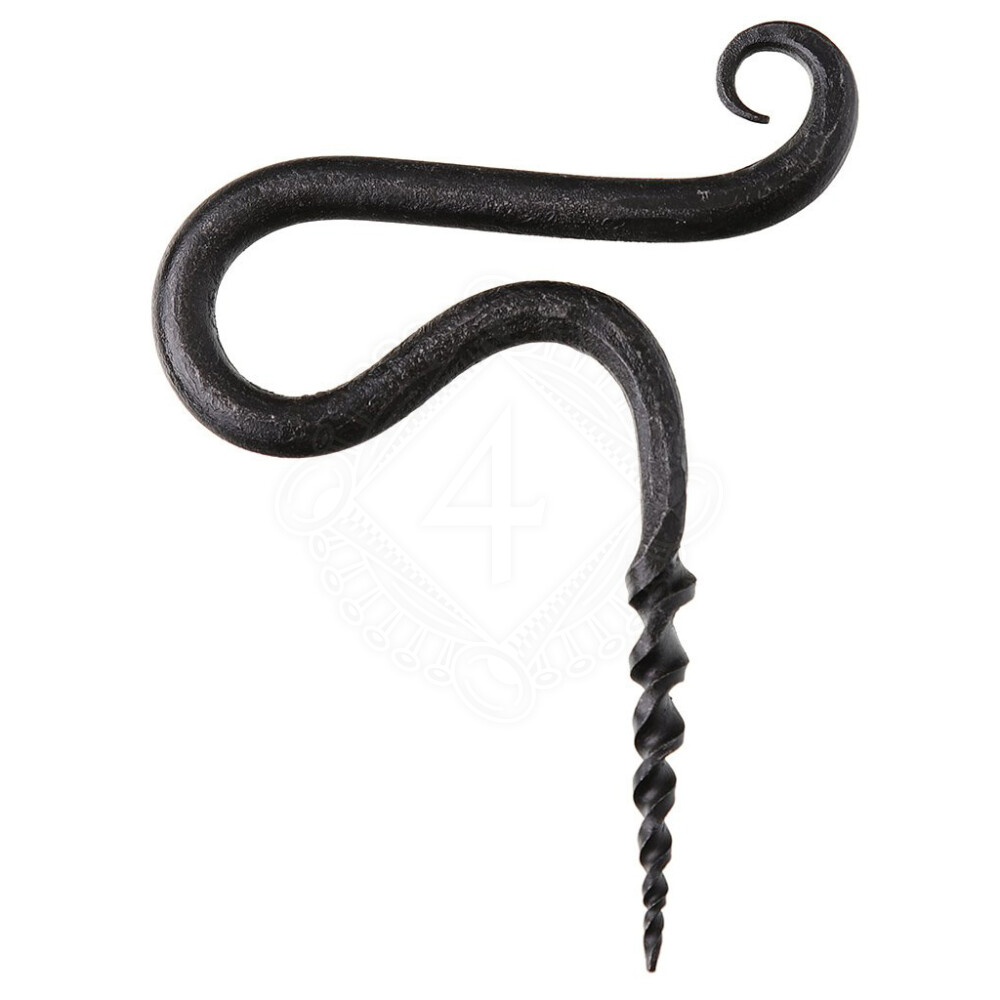
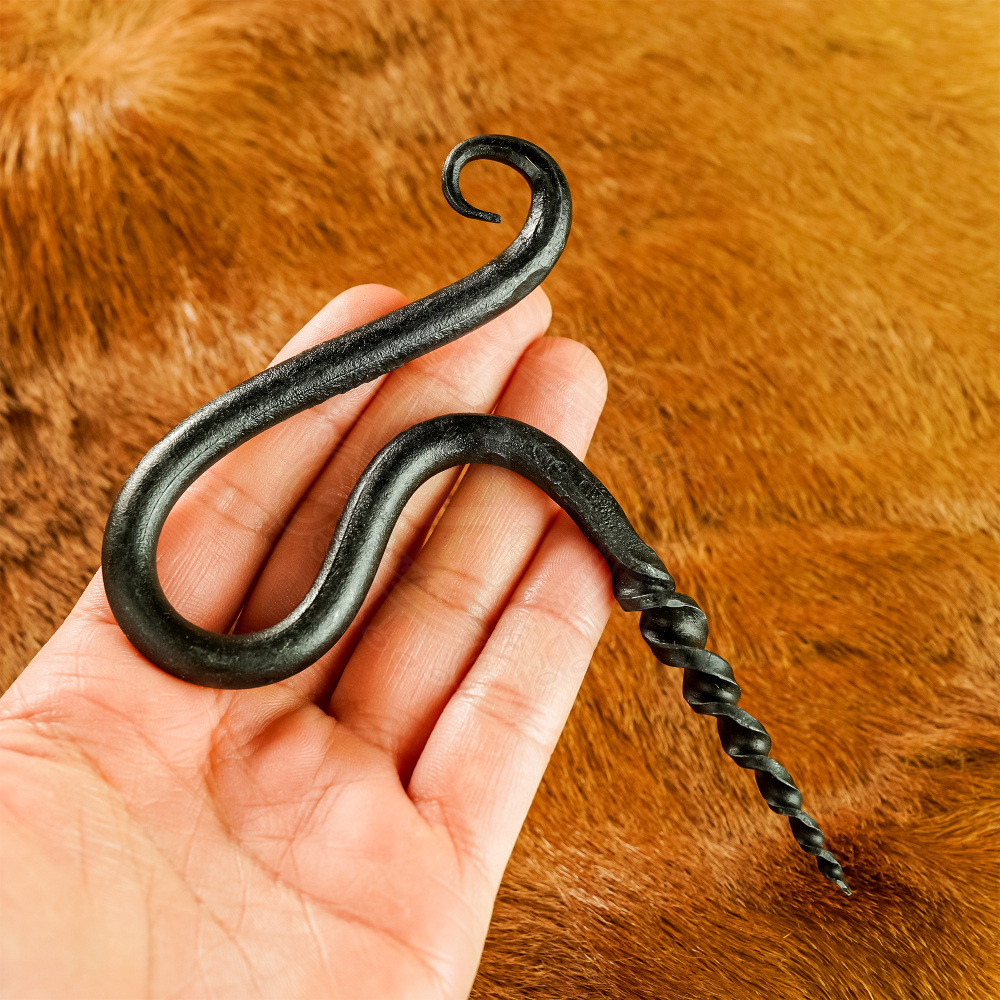
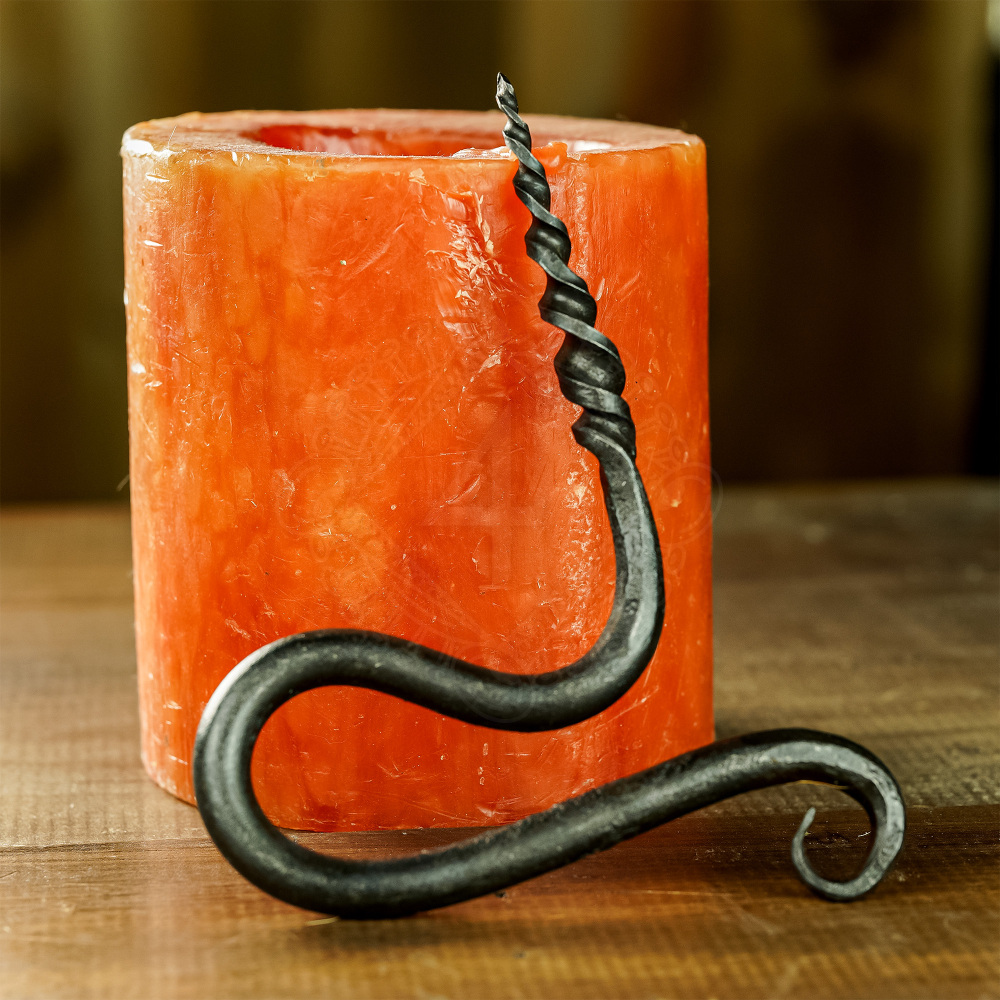
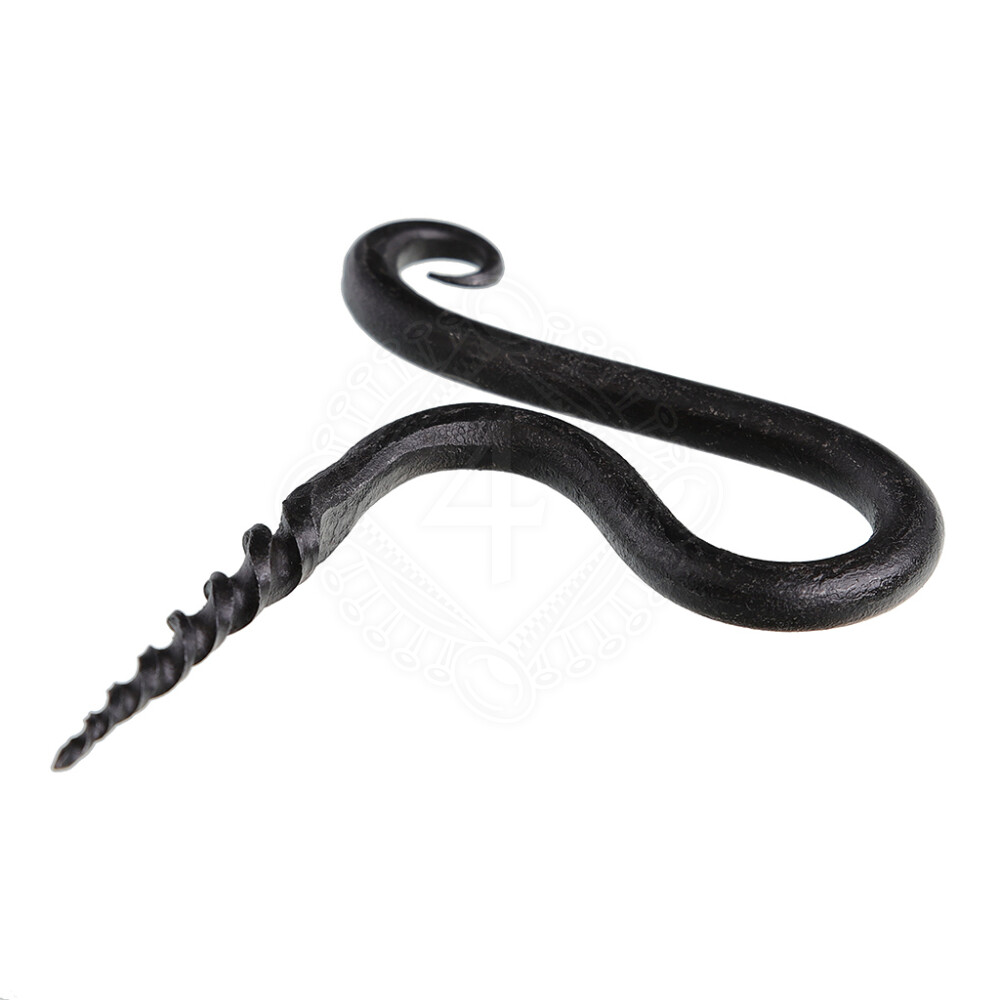
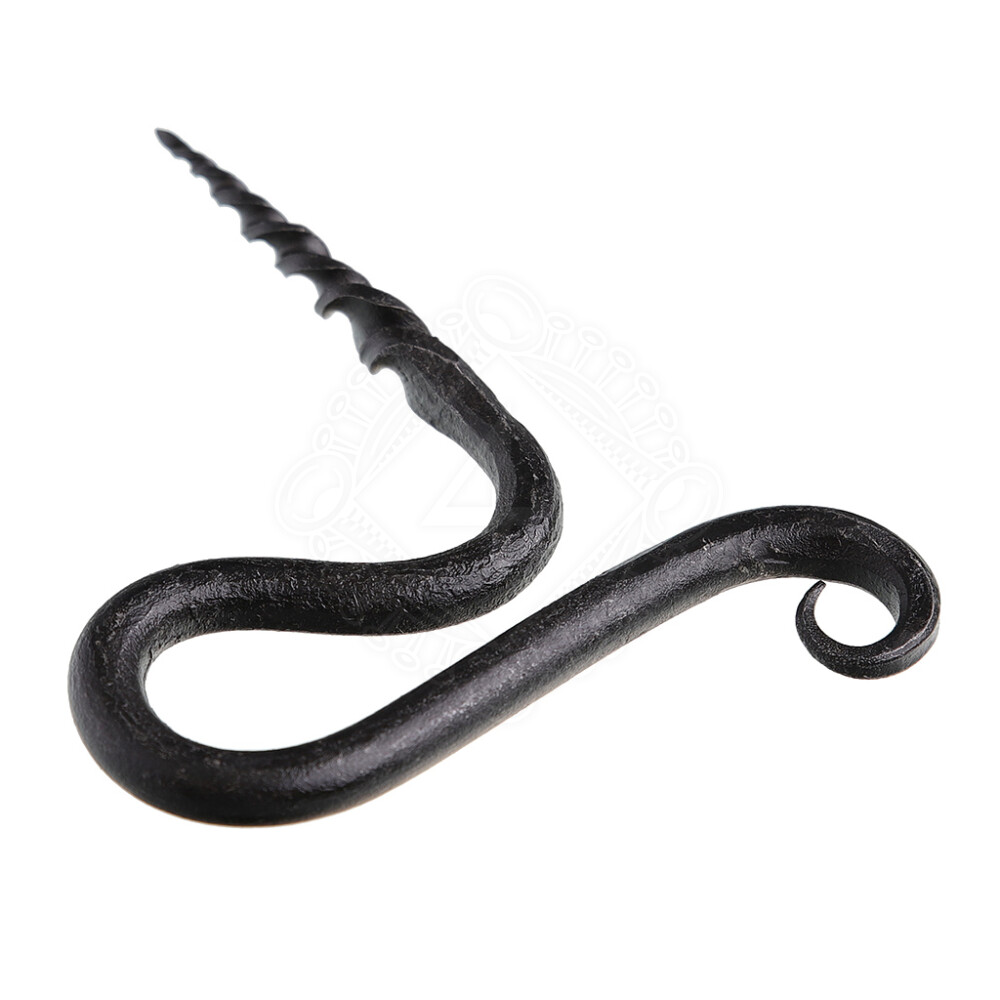
The corkscrew is formed from a single substantial piece of iron. Its upper section creates a distinctive S-curved handle, with a large finger loop at one end and a small decorative scroll at the other. The lower arm continues into a long, tapered and twisted worm with a sharp point.
The irregular black surface retains the visual character of hand working. This is a traditional direct-pull corkscrew rather than a geared or lever-operated opener. Once the worm has been inserted, the cork is removed by pulling the handle upwards. The generous loop spreads pressure across the hand and provides a firmer purchase than a narrow straight handle.
How To Open A Bottle
- Remove the foil or capsule from the neck of the bottle.
- Stand the bottle upright on a firm, non-slip surface.
- Place the point as close to the centre of the cork as possible.
- Keep the corkscrew vertical and turn it clockwise, allowing the worm to enter the cork gradually.
- Insert most of the worm, but avoid driving the point completely through the bottom of the cork.
- Hold the bottle securely with one hand. Pull the handle slowly upwards with the other, adding a gentle twisting motion when necessary.
- Once removed, unscrew the cork from the worm by turning it anticlockwise.
A very old, dried or crumbling cork may be damaged by any conventional screw-type opener. For valuable older bottles, we recommend using a twin-prong cork puller, which removes the stopper without piercing it.
Historical Background
The design recalls the simple direct-pull corkscrews used from the late 17th century and throughout the 18th century. Their development accompanied the growing use of glass bottles sealed with firmly fitted cork stoppers. Early examples generally consisted of little more than a metal worm and a handle, without the mechanical levers found on later bottle openers.
The first patent for an improved corkscrew was granted in England to the Reverend Samuel Henshall in 1795. His design incorporated a small button or disc intended to rotate and loosen the cork when the worm had been fully inserted. This product is a rustic historically inspired implement rather than an exact reproduction of a particular museum piece. It is best suited to 17th- and 18th-century tavern, kitchen or camp settings and should not be presented as an authentically medieval accessory.
Technical Specifications
| Specification | Details |
|---|---|
| Product type | Manual direct-pull corkscrew |
| Material | Hand-forged iron |
| Construction | One-piece S-curved handle with twisted worm |
| Finish | Black rustic finish |
| Overall height | Approx. 10.2 cm / 4 in |
| Overall width | Approx. 8.9 cm / 3.5 in |
| Extraction method | Manual pull without a lever mechanism |
| Suitable for | Wine bottles with natural or synthetic corks |
| Style | Rustic, historically inspired, early modern |
| Package contents | 1 corkscrew |
As this item is made by hand, minor differences in shape, surface texture and exact dimensions may occur. These natural variations are part of its individual character and are not manufacturing defects.
Care And Safe Use
- After use, wipe the corkscrew with a slightly damp cloth and dry it immediately.
- Do not soak it in water or clean it in a dishwasher. Prolonged exposure to moisture may cause corrosion.
- The dry surface may occasionally be protected with a very thin coating of oil suitable for metal kitchen utensils. Always wipe away any excess.
- Do not use acidic cleaners, coarse abrasives or steel wool.
- The pointed worm can cause a puncture injury. Keep the corkscrew away from children and do not carry it loose in a pocket or bag.
- Do not use it as an awl, pry bar, hanging hook or tool for piercing wood or sheet metal.
- Never attempt to open a cracked or damaged bottle, and do not lever the corkscrew against the glass neck.
Recommended Accessories
- Wine knife or foil cutter for removing the capsule cleanly.
- Twin-prong cork puller for old, fragile or valuable corks.
- Glass, pewter or brass drinking vessel in a 17th- or 18th-century style.
- Decanter and bottle stopper for serving and preserving opened wine.
- Wooden serving tray and tavern accessories suitable for an early modern setting.
We are here for you!