
I-Beam HEMA Longsword Training Sword

I-Beam HEMA Longsword Training Sword
Free shipping

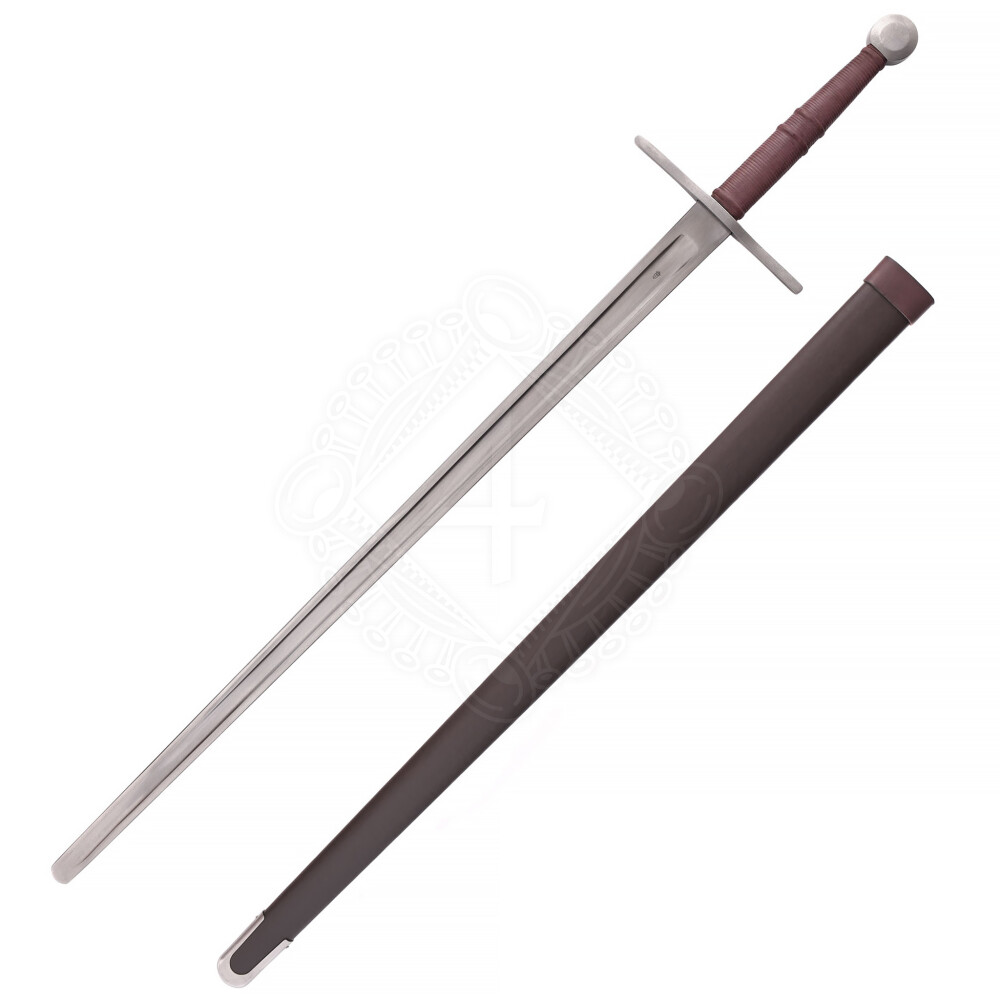
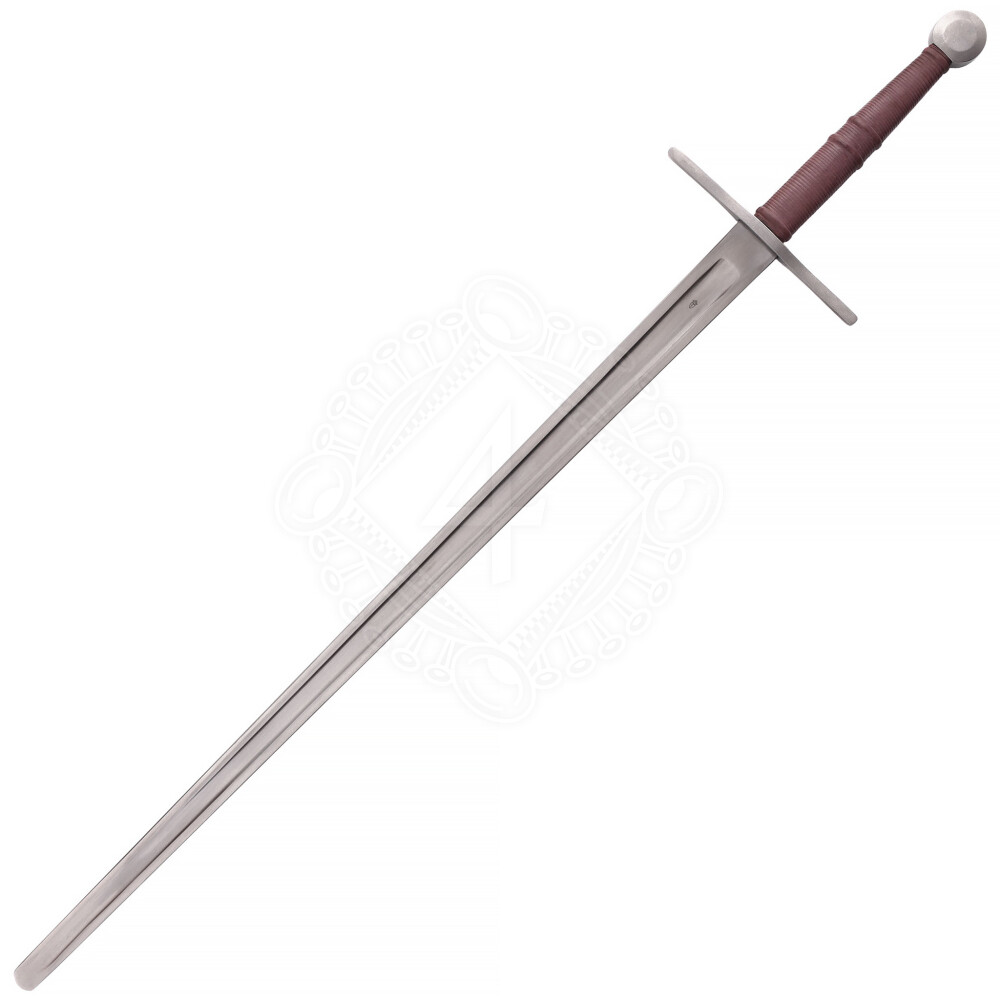
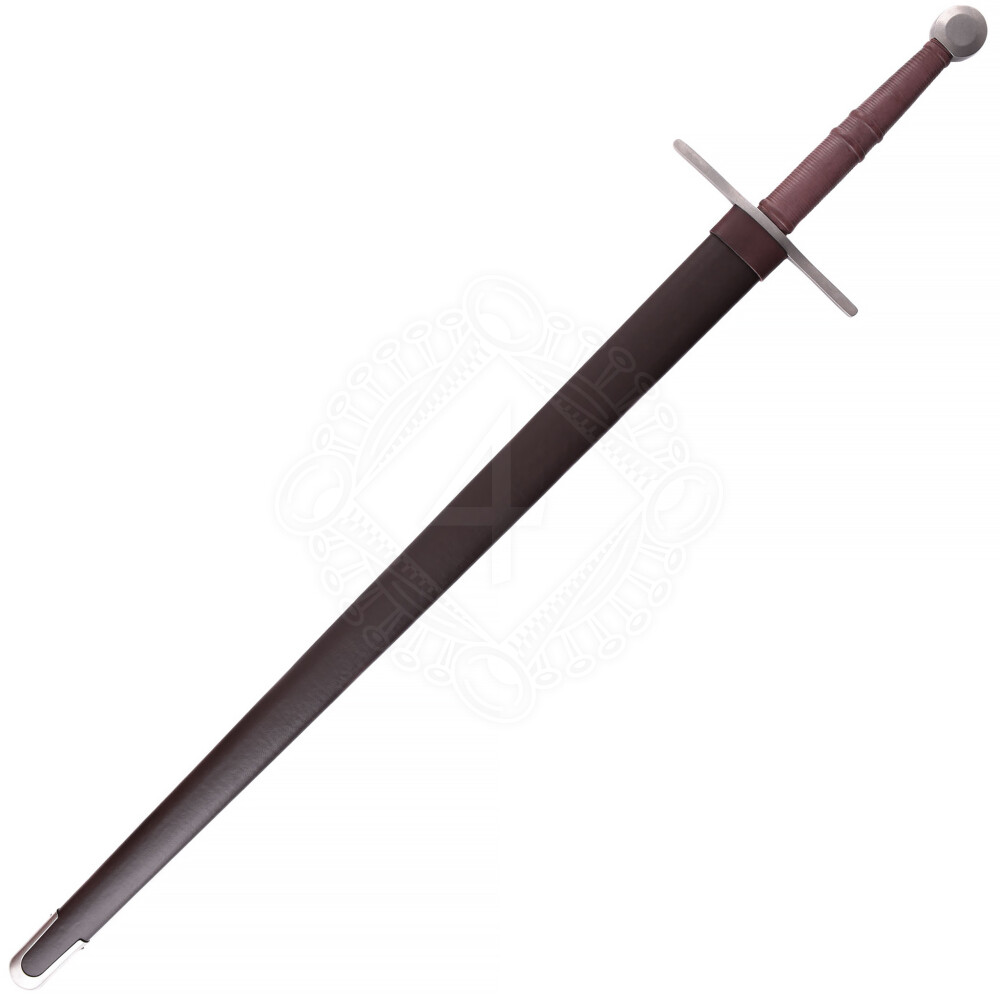
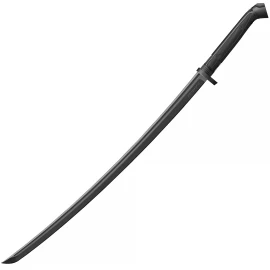
Fencer, if you want a steel HEMA longsword trainer without the sluggish feel of an unnecessarily heavy blunt, the I-Beam concept deserves attention. Angus Trim developed its distinctive blade profile to combine durable striking edges with lively, controllable handling. The 9260 spring-steel blade is paired with a straight crossguard, long leather-covered grip and simple disc pommel. The result is a functional training sword suitable for longsword drills, technical practice and controlled HEMA sparring. A smart dark-brown scabbard completes the package and makes transportation and storage considerably more convenient. Further product information ...

On order - order now and goods will be dispatched on: 12-Oct-2026 Delivery options
453,00 €
374,38 € excl. VAT

Would you like to be notified as soon as the item is in stock?

You will receive a short e-mail as soon as we have it back in stock.

Paulus Kal I-Beam HEMA Longsword Training Sword

A Modern HEMA Trainer Inspired by the Medieval Longsword

This sword is not an exact reproduction of one particular surviving historical weapon. It is a modern HEMA longsword trainer whose proportions and handling draw upon European longswords of the High and Late Middle Ages. The longsword became particularly important between the 14th and 16th centuries and is one of the best documented weapons in the German tradition known as Kunst des Fechtens, or the art of fencing.

Surviving 15th-century fencing manuscripts demonstrate that longsword combat involved far more than powerful cuts. Historical masters taught thrusts, blade engagements, changes of line, close-range techniques and sophisticated two-handed actions. Modern HEMA therefore requires training swords capable of reproducing appropriate mechanics whilst withstanding repeated steel-on-steel contact.

I-Beam Profile: Strong Edges Without Crowbar Handling

The defining feature of this trainer is its I-Beam blade profile, developed by noted sword designer Angus Trim. The concept was intended to address two common compromises found in blunt training swords. Thin blunt edges may become damaged relatively quickly under repeated contact, whereas heavily built training blades can become unnecessarily cumbersome.

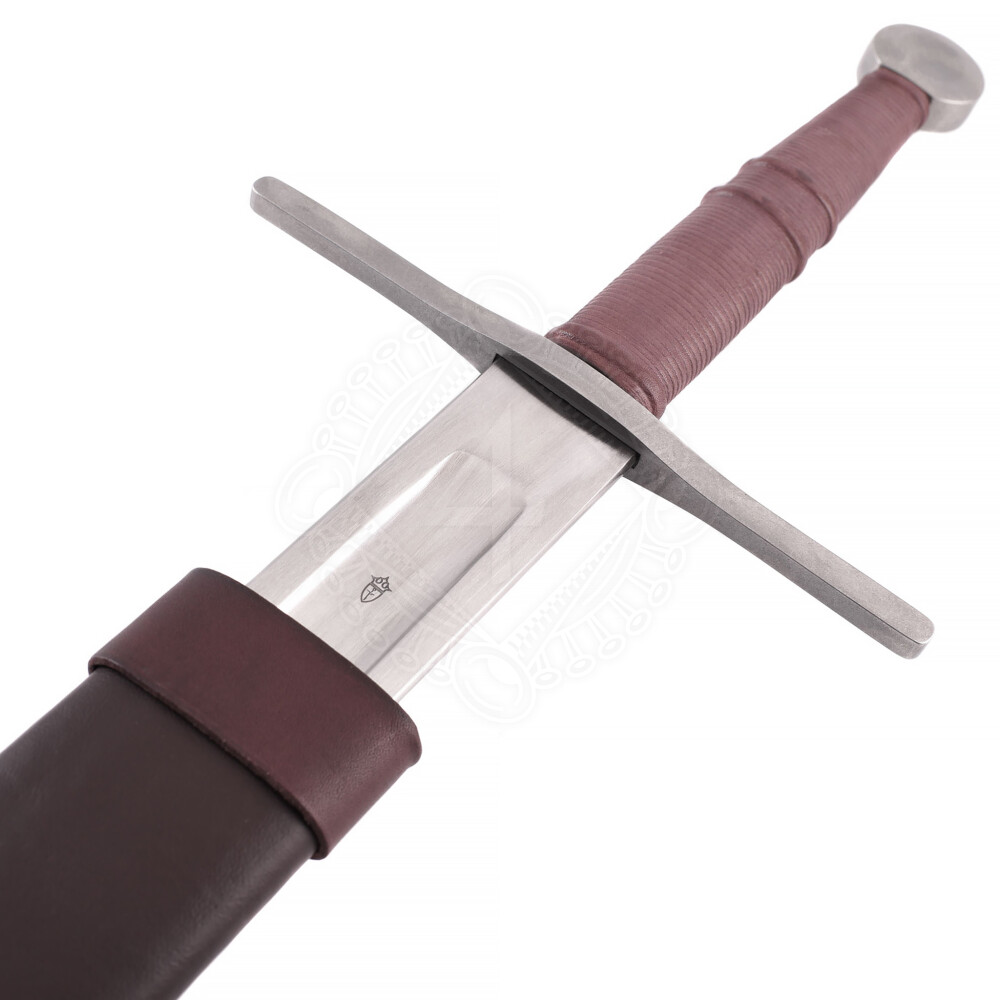
The I-Beam construction therefore employs an exceptionally pronounced central fuller. Removing material from the centre of the blade helps reduce unnecessary mass whilst leaving more steel around the striking edges. The principle is straightforward: reinforce the areas subjected to repeated contact without making the entire sword excessively heavy.

9260 Spring-Steel Blade

The blade is manufactured from 9260 spring steel, a material well suited to functional training weapons thanks to its toughness and ability to cope with repeated dynamic loading. The profile gradually tapers towards the point but, rather than terminating in the acute point of a sharpened historical sword, it ends in a broadly rounded blunt tip.

Both striking edges are likewise blunt, reinforced and rounded. This is therefore a training sword rather than a cutting sword and it should not be sharpened. Remember that a blunt edge prevents cutting; it does not remove the considerable kinetic energy generated by a full-length steel longsword.

Functional Hilt for Two-Handed Control

The hilt has a deliberately restrained and practical appearance. Its straight steel crossguard tapers gently towards the ends, avoiding excessive decorative features that could interfere with intensive training.

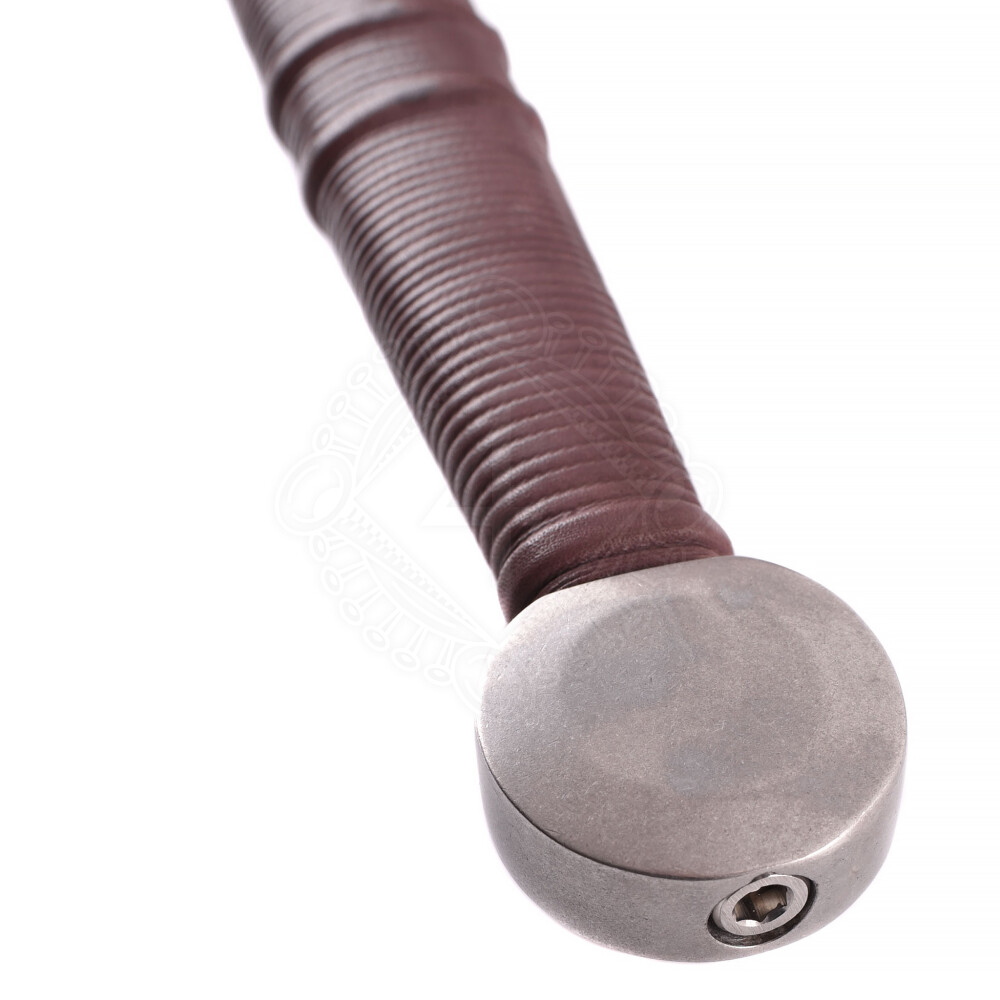
The long grip is covered in brown leather and has pronounced transverse ribbing. This texture provides a secure hold and helps you sense the orientation of the blade through your hands. At approximately 20.3 cm long, the grip provides ample room for typical two-handed longsword fencing and allows the distance between your hands to change according to the technique being performed.

A simple rounded disc pommel completes the hilt. The product photographs also show a mechanical fastening in the pommel assembly, contributing to the functional, deliberately utilitarian character of the trainer.

Scabbard for Transport and Storage

The set includes a long dark-brown scabbard with a smooth outer surface, contrasting reddish-brown throat and protective metal chape. It helps keep the training blade covered during transport and storage and gives the complete sword a considerably more traditional appearance away from the fencing hall.

Technical Specifications

Specification Value
Sword type HEMA longsword training sword
Blade construction I-Beam profile with pronounced central fuller
Historical inspiration European longsword tradition, particularly 14th–16th century
Intended use HEMA, technical practice, drills and controlled sparring
Blade material 9260 spring steel
Overall length Approx. 114.3 cm (45 in)
Blade length Approx. 88.6 cm (34.9 in)
Grip length Approx. 20.3 cm (8 in)
Weight Approx. 1.2 kg (2 lb 10 oz)
Point of balance Approx. 15.2 cm (6 in) in front of the guard
Blade point Blunt and rounded
Blade edge Blunt, reinforced and rounded, 2 mm (0.08 in) or more category
Grip Brown leather with transverse ribbing
Crossguard Straight steel guard
Pommel Rounded disc pommel
Scabbard Dark brown with protective metal chape

Because the sword receives a degree of manual finishing, the stated dimensions, weight and other specifications are approximate. Individual supplied examples may vary slightly.

Paulus Kal and the German Longsword Tradition

Paulus Kal was a 15th-century German fencing master associated with the tradition of Johannes Liechtenauer. He is known principally through several surviving fencing manuscripts containing richly illustrated techniques for the longsword and other weapons. His works are consequently important sources for the modern reconstruction of historical European martial arts. We have chosen his name for this trainer in his honour, linking the historical tradition of longsword fencing with the modern HEMA practice for which the sword is intended.

Care and Maintenance

  • Wipe the blade completely dry after every training session, removing perspiration, fingerprints and moisture.
  • Apply a very thin coat of suitable sword, gun or mineral oil to the clean steel surface.
  • Inspect the striking edges after regular blade contact. Any sharp burrs should be carefully smoothed before the sword is used for partner training again.
  • Check the guard, grip and pommel regularly. Do not train with a sword that has loose fittings or visible structural damage.
  • Do not leave a damp blade inside the scabbard for extended periods, as trapped moisture can promote corrosion.
  • Keep the leather grip dry and occasionally treat it with a suitable product intended for smooth natural leather.
  • Never sharpen the blade if the sword is to remain suitable for HEMA training.

Safe HEMA Training

A blunt training sword is not inherently safe. For partner exercises and sparring, we recommend suitable HEMA protective equipment appropriate to the intensity of the session and strict compliance with the rules of your club or event. Take particular care with thrusts, as even a rounded point can transfer substantial force at speed. Never strike stone, concrete, trees or other hard objects, and do not use the sword as a lever, pry bar or general-purpose tool.

Recommended Accessories

  • HEMA fencing mask with back-of-head protection – modern protective equipment for contact training.
  • HEMA gorget – modern protection for the throat and front of the neck.
  • Heavy fencing gloves – use modern HEMA gloves for sparring; for historical presentation, 14th–15th century hand protection provides suitable visual inspiration.
  • HEMA fencing jacket or gambeson – a modern protective jacket for sport practice, or a 14th–15th century-style gambeson for historical presentation.
  • Sword belt and suspension – for reenactment or display, choose a form based on 14th–15th century examples.

Kingston Arms and Angus Trim Design

Kingston Arms is a premium brand of the American company CAS Iberia, established in 2016. Its range focuses on functional European swords for HEMA, reenactment and historical fencing. One of the brand's major strengths is its collaboration with respected sword designer Angus “Gus” Trim, whose designs are particularly valued for harmonious balance and dynamic handling.

The I-Beam profile is an excellent example of this philosophy. Rather than simply making a training blade heavier, the design distributes steel where it is useful for durable striking edges whilst the deep central fuller removes unnecessary mass. Combined with tough 9260 spring steel, the result is a trainer focused on function, durability and responsive handling. If you are ready to move from synthetic simulators to a steel HEMA longsword, we recommend putting this model high on your shortlist.

Similar products (50)