Čeština
 Deutsch


Belt Buckles Lyra, 14th–15th Century, Set of 5 - Outlet


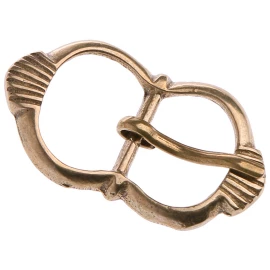
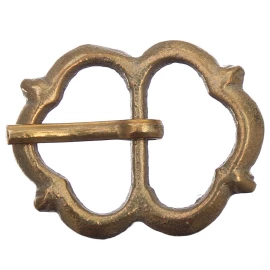
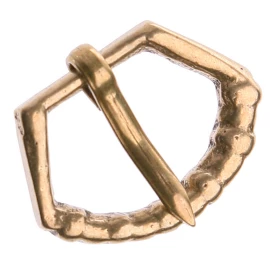
Looking to give your historical belt or leather strap a distinctive late medieval appearance? The Lyra medieval brass belt buckle combines an unusual openwork frame with elegant sculpted decoration and an ornamental rectangular plate. Its golden surface features raised details, while a long movable pin provides a practical fastening mechanism. Cast from solid brass, this buckle takes inspiration from decorative belt fittings of the 14th and 15th centuries. It is an excellent choice for medieval costumes, historical belt-making and traditional leathercraft projects. With five matching buckles in one set, you can create several coordinated accessories or equip multiple costumes with the same attractive design. Further product information ...

 Delivery options
Medieval Brass Belt Buckles Lyra, 14th–15th Century, Set of 5
Decorative Openwork Frame with Gothic-Inspired Details
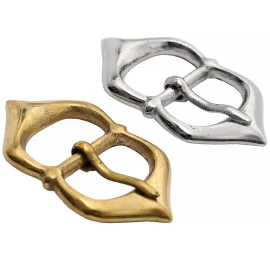
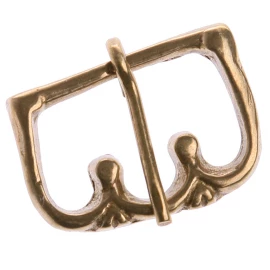
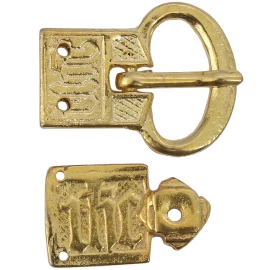
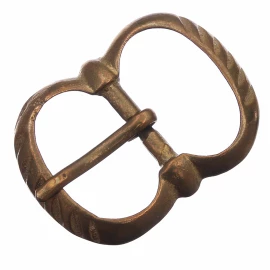
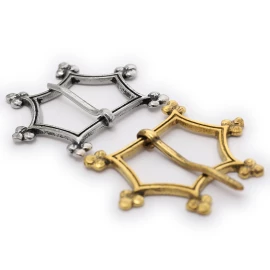
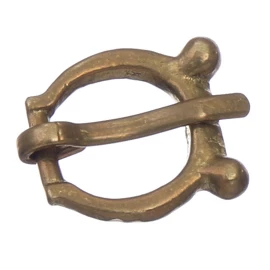
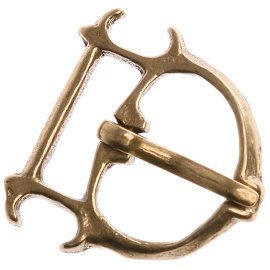
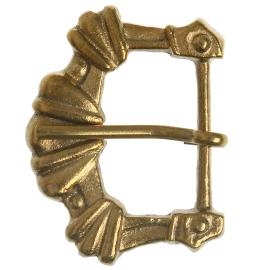
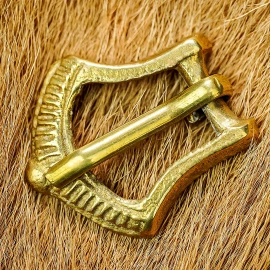
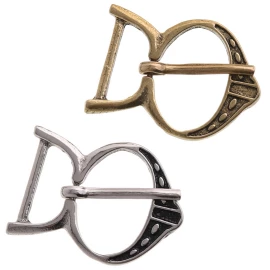
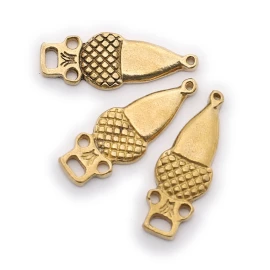
The most striking feature of this buckle is its elongated, intricately shaped openwork frame. Its gently curved sides widen towards a decorative terminal, while small scroll-shaped ornaments project from either edge. These curling details resemble stylised plant tendrils and give the fitting an appearance well suited to high and late medieval costume designs.
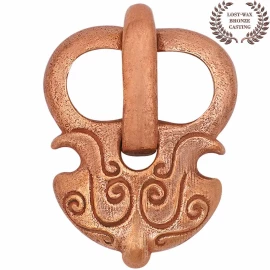
At the opposite end is a rectangular decorative plate featuring a raised geometric relief. The central motif resembles two stylised arrow shapes or opposing hooked forms, set against a textured ornamental background. A simple smooth border surrounds the design, creating a pleasing contrast between the relief and the surrounding brass.
The buckle incorporates a long movable pin, pivoting at the rectangular plate. Two small circular holes are visible in the opposite end of the frame, alongside a sculpted terminal. The surface combines relatively smooth, gently polished areas with more textured recessed ornamentation.
Measuring approximately 64 mm (2.52 in) long and 32 mm (1.26 in) at its widest point, this buckle is intended for leather straps approximately 21–23 mm (0.83–0.91 in) wide.
How to Attach and Use the Buckle
Unlike a simple modern belt buckle, this design features an unusual combination of a long pin and two holes at the decorative end of its frame. We therefore recommend planning your fastening arrangement carefully and testing it on a spare piece of leather before fitting it permanently.
- Prepare a leather strap approximately 21–23 mm (0.83–0.91 in) wide.
- Check the buckle's orientation and make sure its pin moves freely before installation.
- Depending on your strap construction, the two holes at the end of the frame may be used with suitable fasteners to secure the buckle.
- Make the necessary hole or holes in the opposite strap section to engage the movable pin, according to your chosen fastening arrangement.
- Once assembled, check that the pin engages securely and the buckle remains correctly positioned under normal use.
For leatherworking, we recommend using an appropriate leather punch, a sharp cutting tool and suitable riveting or assembly equipment. Separate fastening hardware is not specified as included, so plan to obtain any necessary components independently.
The buckle can be incorporated into medieval belts, decorative leather straps, costume suspension straps and other accessories designed to accommodate this particular fastening arrangement.
Historical Background: Decorative Belts of the 14th and 15th Centuries
During the 14th and 15th centuries, belts were much more than practical devices for securing clothing. They were important fashion accessories that could communicate the wearer's social standing, wealth and personal taste.
Across high and late medieval Europe, leather belts were frequently fitted with metal buckles, strap ends and decorative mounts. Wealthier townspeople, nobles and members of courtly society could afford particularly elaborate belt fittings. Brass and other copper alloys were valued for their golden appearance and suitability for casting intricate decorative objects.
Gothic artistic styles influenced not only architecture but also jewellery, metalwork and personal accessories. Openwork shapes, flowing outlines and stylised plant ornamentation were among the decorative features found in the material culture of the period.
The Lyra buckle draws inspiration from this late medieval aesthetic. However, it is not documented as a reproduction of a specific archaeological find and is best described as a historically inspired accessory in the style of the 14th and 15th centuries.
Why Is This Buckle Called Lyra?
The name Lyra refers to the lyre, a stringed musical instrument known since antiquity. Its characteristic open silhouette, with arms extending along either side, offers a loose visual comparison with the openwork frame of this buckle. The name is a decorative designation rather than a claim of any direct historical connection with the instrument.
Technical Specifications
| Specification | Details |
|---|---|
| Model name | Lyra |
| Product type | Medieval belt buckle |
| Material | Solid brass |
| Manufacturing method | Cast brass |
| Overall length | Approx. 64 mm (2.52 in) |
| Maximum width | Approx. 32 mm (1.26 in) |
| Recommended strap width | Approx. 21–23 mm (0.83–0.91 in) |
| Colour | Natural golden brass |
| Decoration | Raised relief, openwork frame and scroll ornaments |
| Fastening mechanism | Movable buckle pin |
| Mounting holes | 2 holes at the decorative end of the frame |
| Historical inspiration | 14th–15th century |
| Artistic style | Gothic-inspired ornamentation |
| Quantity supplied | 5 pieces |
| Brand | Lord of Battles |
All measurements are approximate. Minor differences in surface texture may occur between individual cast pieces.
Care and Safety Instructions
Brass is a durable material, but its surface naturally reacts to environmental conditions. Over time, it may develop a darker patina. This is often desirable for historically styled accessories, as it creates a naturally aged appearance.
- Wipe the buckle with a soft, dry cloth after use.
- Remove stubborn dirt using a slightly damp cloth, then dry the buckle thoroughly.
- If you prefer to maintain a brighter brass finish, carefully use a suitable brass cleaning product. Avoid excessive polishing of the raised decorative details.
- Do not use abrasive cleaners, wire wool or aggressive chemicals.
- Keep the buckle dry during storage and avoid prolonged exposure to moisture.
- Check the attachment to the strap and the movement of the pin before use.
- Never use the buckle for personal safety, securing heavy loads or as part of safety equipment.
- Take care when handling sharp leatherworking tools and any exposed metal edges during installation.
Recommended Accessories
We recommend pairing the Lyra buckle with a plain leather strap measuring 21–23 mm (0.83–0.91 in) wide, allowing its decorative form to stand out. Other useful accessories include brass strap ends, ornamental belt mounts and suitable fixing rivets for creating a complete historical belt.
For a costume inspired by the 14th or 15th century, you could combine this buckle with a Gothic-style tunic, medieval hood, merchant's clothing or noble attire. The set of five identical buckles is also useful for creating coordinated leather accessories for group reenactment, theatrical productions or LARP events.
The package contains 5 Lyra brass buckles. Leather straps, rivets, tools and other illustrated or recommended accessories are not included.
We are here for you!